Dostoevsky's Notes from Underground delves into the complexities of human consciousness, highlighting the struggles of isolation, the burden of excessive awareness, and the paradox of seeking belonging while rejecting society. Through the character of the underground man, Dostoevsky critiques the limitations of rationality and the dangers of an overly analytical mindset, ultimately suggesting that embracing suffering and uncertainty can lead to a deeper understanding of life.
Fyodor Dostoevsky’s novel Notes from Underground, published in 1864, opens with a striking declaration: "I am a sick man. I am a spiteful man. I am an unattractive man. I believe my liver is diseased." These words introduce the protagonist, known as the underground man, who embodies the darkest aspects of human consciousness. This blog post explores the key themes and insights from this profound work, analyzing the implications of Dostoevsky's exploration of human nature.
The underground man is not merely a character; he serves as a symbol of rebellion against the positivism of his time. Dostoevsky critiques the prevailing belief that science and rationality can explain every facet of existence. The underground man voluntarily isolates himself from society, despising it while simultaneously craving its attention. He is consumed by his intellect and indulges in suffering, viewing it as an inescapable truth.
Dostoevsky warns of the dangers associated with an overly developed consciousness, which can become an unbearable burden. The underground man’s internal conflict illustrates the struggle between the desire for autonomy and the need for belonging, a theme that resonates deeply in contemporary society.
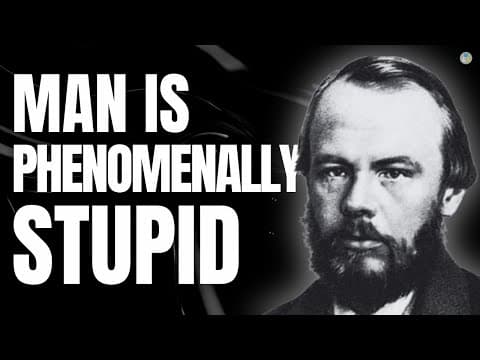
Dostoevsky presents a paradox in human nature through the underground man’s reflections. He states, "Man is phenomenally stupid, even though he is anything but unintelligent." This contradiction highlights how, despite possessing intelligence, humans often behave irrationally and ingratitude becomes a defining trait. The underground man rejects the world yet remains obsessed with it, criticizing society while longing for recognition.
This internal conflict is particularly relevant today, as social isolation and alienation become increasingly common. Modern cities, much like Dostoevsky's St. Petersburg, are crowded yet emotionally empty, leaving individuals feeling alone amidst the throngs of people.
Dostoevsky confronts the reader with a stark assertion: "I swear to you gentlemen that being overly conscious is a disease, a genuine absolute disease." He argues that heightened awareness complicates the search for peace, as it leads to an incessant internal examination of every choice and action. This hyper-awareness creates doubt and inner conflict, making fulfillment elusive and trapping individuals in a cycle of analysis and uncertainty.
The underground man’s inability to accept the world as it is, coupled with his powerlessness to change it, results in a spiral of consuming thoughts. He encapsulates this condition with the phrase, "Thought kills action," illustrating the paralysis that can arise from excessive self-analysis.
Dostoevsky’s message is not a condemnation of consciousness itself but a warning about its potential dangers. A life dominated by rationality and analysis risks leading to inertia and existential paralysis. The underground man is both a critic of society and a product of it, reflecting a world that rewards conformity while punishing sensitivity.
In an age where data and algorithms attempt to define human behavior, Dostoevsky’s insights serve as a cautionary tale. Human beings cannot be reduced to mere patterns or numbers, and ignoring the irrational aspects of human nature can have dire consequences.
The question arises: how can one embrace a better life in light of these insights? Would being less aware truly be the solution? Dostoevsky suggests that the answer is not a return to ignorance, as once a person reaches a certain level of consciousness, unlearning becomes impossible. Instead, the path to a better life may lie in accepting one’s consciousness without being overwhelmed by it.
Rather than fighting awareness or longing for lost innocence, individuals can learn to live with uncertainty. This involves developing a form of detachment that is not indifference but rather an ability to tolerate doubt and paradox. Philosophies such as Buddhism advocate for maintaining curiosity without succumbing to over-analysis, while modern psychological approaches encourage observing mental discomfort without being overwhelmed.
Throughout his works, Dostoevsky often suggests that suffering, when accepted, can transform into a form of redemption. Awareness becomes a burden only when experienced as a condemnation. If embraced as an inevitable part of human existence, it can guide individuals toward a deeper understanding of life and others.
At the conclusion of Notes from Underground, the underground man remains alone with his consciousness, fully aware that there are no simple solutions to the dilemmas of existence. Dostoevsky invites readers to reflect on the essence of being alive, encapsulating this idea in the phrase: "The secret of human existence is not only to live but to know what one lives for."
Dostoevsky’s exploration of the dark side of human consciousness raises profound questions about the nature of awareness and existence. The true price of awareness and the extent to which one can understand oneself without becoming lost in thought remain complex dilemmas. Ultimately, Dostoevsky’s work encourages a deeper reflection on the human condition, urging us to seek purpose and understanding in a world that often feels like a labyrinth with no exit.