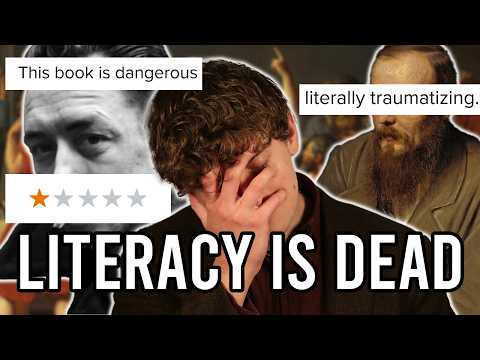
Exploring one star reviews of classic philosophy and literature reveals common frustrations such as slow pacing, unrealistic characters, and challenging themes. These critiques often highlight misunderstandings or differing expectations, while also offering insights into the depth and complexity of these works. This article examines reviews of classics like The Brothers Karamazov, Blood Meridian, On Love, Philosophical Investigations, The Ego and Its Own, The Trial, and The Plague to understand读
Many people harbor strong negative feelings toward classic philosophy and literature. Understanding these critiques is important because they sometimes offer astute observations about the content, while at other times they reveal common misunderstandings about these complex works. Here, we explore some one star reviews from Goodreads of some of the most influential philosophical and literary classics.
One reviewer expressed frustration with the slow pace of the novel, noting that "nothing really happens for 300 to 400 pages," and that the main event occurs around page 500 or 600. They found the early parts filled with people talking and walking, which did not engage them. Another reviewer described the characters as engaging in "High School drama," with extreme emotional swings and behaviors that felt unrealistic.
The slow pacing is a shared experience for many readers. Dostoevsky uses this time to deeply explore each brother's worldview, such as Dmitri's passionate and flawed nature, Alyosha's spiritual goodness, and Ivan's atheistic intellectualism. The "Grand Inquisitor" chapter, often seen as a central theological contribution, appears late but sets up many of the novel's key themes.
Dostoevsky's characters are often exaggerated to represent broader philosophical ideas rather than realistic individuals. This heightens the emotional stakes and dramatizes philosophical debates, which some readers find engaging while others find off-putting.
One reviewer harshly criticized the book as "garbage" appealing only to readers who enjoy contrived, violent literature. They dismissed it as "idiot bait."
While Blood Meridian is not for everyone, especially those sensitive to violence, the novel's brutality serves a purpose. It immerses readers in the harsh world of a psychotic gang of cowboys, illustrating the normalization of violence and moral decay. The increasing desensitization to violence mirrors the characters' psychological states.
The novel also contains underlying Gnostic philosophy, exploring themes of evil and human nature. The violence is integral to the atmosphere and message, making it meaningful literature rather than mere shock value.
Some readers felt the book was "the ravings of a pissed off teenager" and criticized it for focusing only on infatuation and courtship, neglecting long-term companionship.
Stendhal's work primarily examines the initial, obsessive stages of love, often called "crystallization," where idealization and doubt dominate. This stage is akin to infatuation and is intensely emotional and sometimes embarrassing.
While it does not address mature, long-term love, On Love offers a systematic and insightful analysis of early romantic obsession, a topic often overlooked in philosophy. It resonates with many who recognize the awkwardness and intensity of early love.
One reviewer dismissed the book as "a mountain of gibberish" with no remarkable insights into the human condition.
Philosophical Investigations is a complex work focusing on the functional use of language rather than traditional semantic meaning. Wittgenstein introduces the concept of "language games" and "family resemblances" to explain how words acquire meaning through use in various contexts.
While it may not offer a grand theory of the human condition, its analysis of language has been highly influential. Understanding diverse language games can improve comprehension of dialogue and communication nuances.
A reviewer described the book as "dangerous" and feared its ideas might impact their salvation due to its pessimistic worldview.
Stirner promotes egoism, emphasizing individual agency and criticizing moral ideals and religion as "spooks." His work has influenced anarchist thought across the political spectrum.
The concern about salvation reflects a serious engagement with the book's ideas, highlighting its provocative nature. While some find Stirner's egoism unconvincing, his critiques of moral systems raise important philosophical questions.
One reviewer found the book bizarre and unrealistic, describing the protagonist as pretentious and the narrative as filled with meaningless discussions.
Kafka's protagonist, Joseph K., is intentionally unlikable and the story disorienting, reflecting themes of absurdity and alienation. The novel's strange and surreal elements are deliberate, inviting readers to explore complex psychological and societal issues.
The psychosexual elements and Kafka's unique style may alienate some readers but are often praised for their depth and insight.
A reviewer felt the story used the plague as an excuse to explore personal moral dilemmas, which they found unrealistic and frustrating.
The Plague is an existentialist novel illustrating how individuals respond to crisis, inspired by the Nazi occupation of France. The moral decisions faced by characters reflect real dilemmas people encounter in extreme situations.
Camus's philosophy of absurdism involves using reason to confront life's lack of inherent meaning, contrary to the reviewer's misunderstanding. The novel emphasizes living authentically despite absurdity.
One star reviews of classic books often reveal more about readers' expectations and interpretations than the works themselves. Many critiques stem from the challenging nature of these texts—slow pacing, exaggerated characters, complex themes, or unconventional styles.
Understanding these critiques can deepen appreciation for classics and highlight the diverse ways literature and philosophy engage readers. Whether through Dostoevsky's psychological depth, McCarthy's brutal realism, Stendhal's romantic analysis, Wittgenstein's linguistic philosophy, Stirner's provocative egoism, Kafka's surreal narratives, or Camus's existentialism, these works continue to inspire passionate responses and meaningful reflection.
Engaging with both praise and criticism enriches our reading experience and encourages thoughtful dialogue about the enduring value of classic literature and philosophy.