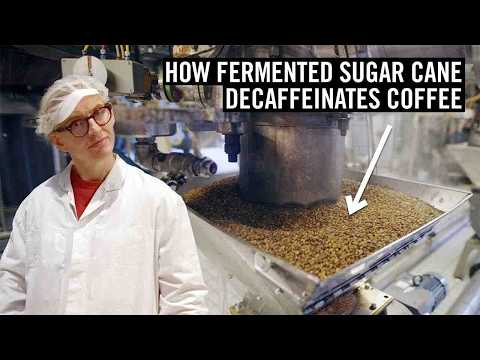
The Ethyl Acetate process, also known as the Sugar Cane process, is a fascinating method of decaffeinating coffee that utilizes a naturally occurring compound derived from sugarcane. This blog post explores the entire journey of coffee through the Coffein Compagnie facility in Bremen, Germany, detailing each step from arrival to decaffeination and quality control, ultimately revealing how caffeine is extracted and purified.
Decaffeination is a crucial process for many coffee lovers who wish to enjoy their favorite beverage without the stimulating effects of caffeine. One of the most intriguing methods of decaffeination is the Ethyl Acetate process, often referred to as the Sugar Cane process. This blog post delves into the fascinating journey of coffee through the Coffein Compagnie facility in Bremen, Germany, where this method is employed.
Founded in 1931, Coffein Compagnie is the largest decaffeination facility in the world, processing over 120,000 tonnes of coffee annually. The facility operates 24/7, utilizing various decaffeination methods, including Methylene Chloride and their proprietary Hanseatic Water process. However, our focus today is on the Ethyl Acetate process.
Upon arrival at the facility, coffee is unloaded and cleaned to remove any dust or foreign objects. The coffee is not delivered in containers but rather in trucks, and due to the facility's size, incoming coffee is warehoused at a separate site called Müller Weser before being transported to the main facility.
Once the coffee is unloaded, its journey is monitored from a control room where staff track the weight, moisture content, and the specific decaffeination process it will undergo. The Ethyl Acetate process was introduced at Coffein Compagnie in the early 1980s and utilizes ethyl acetate, a naturally occurring compound derived from sugarcane molasses fermentation.
Ethyl acetate is an ester formed from ethanol (alcohol) and acetic acid (the primary acid in vinegar). It is commonly found in fruits like apples and pears and is chosen for its selectivity in extracting caffeine without removing too many other compounds from the coffee beans.
Before the decaffeination begins, the coffee undergoes a preparation step where the silver skin is removed, and the beans are steamed to open them up for more efficient caffeine extraction.
The coffee is then transferred to one of the facility's twelve massive extraction tanks, each capable of holding around four tonnes of raw coffee. During the eight-hour decaffeination process, the ethyl acetate is added and changed multiple times, depending on the initial caffeine content of the coffee.
Throughout the extraction, the control room monitors various parameters, including time and temperature, ensuring optimal conditions for caffeine removal. The ethyl acetate effectively washes out the caffeine while leaving most of the other flavors intact.
After extraction, the coffee undergoes steam stripping to remove any remaining ethyl acetate. This two-stage process involves pumping steam into the tanks, boiling away the solvent while preserving the coffee's integrity.
Following steam stripping, the coffee is dried to achieve a moisture content of 10% to 12%. An additional polishing step involves applying a small amount of carnauba wax, which some believe enhances the coffee's longevity, although evidence of quality improvement is limited.
Quality control is a critical aspect of the decaffeination process. The coffee is tasted by a dedicated team who samples 80 to 100 cups daily to ensure the final product meets quality standards. The lab assesses both raw and finished coffee for moisture and caffeine content using high-performance liquid chromatography.
Once approved, the decaffeinated coffee is packaged into various options, including 60-kilo jute bags or one-ton bulk bags, depending on customer preferences. The facility prioritizes quick shipping to ensure freshness.
The caffeine extracted during the process is not wasted. It is converted into a water-based solution for purification. This involves adding active carbon to bind unwanted substances, followed by fine filtration and crystallization to produce refined caffeine. The final product is a highly concentrated form of caffeine, which can be packaged for various uses.
The Ethyl Acetate process for decaffeinating coffee is a remarkable blend of science and tradition, allowing coffee enthusiasts to enjoy their favorite brews without the jitters. The journey from raw coffee to decaffeinated product at Coffein Compagnie showcases the intricate steps involved in maintaining quality while effectively removing caffeine. If you haven't tried coffee decaffeinated using this method, it might be time to explore the unique flavors it offers.
This blog post is part of a series exploring different coffee decaffeination methods. We invite you to share your experiences with decaffeinated coffee and any thoughts you may have on the Ethyl Acetate process.