This blog post details an experiment to create a vacuum fryer, comparing its results with traditional frying methods. The vacuum fryer produced crispier, juicier fried foods, particularly chicken wings, showcasing its potential as a revolutionary cooking method.
In a recent experiment, the concept of vacuum frying was revisited to explore its potential in cooking fried foods, particularly fried chicken. The experiment aimed to create a vacuum fryer that could produce better results than traditional frying methods. This blog post will detail the process of building the vacuum fryer, the cooking experiments conducted, and the results observed.
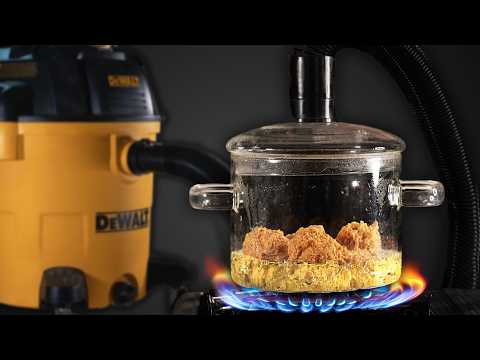
A vacuum fryer is a cooking device that operates under low pressure, allowing food to be fried at lower temperatures. The basic setup involves a pot filled with oil, a lid with vacuum gauges, and a cooling system to manage steam produced during cooking. The vacuum pump removes air from the container, creating a low-pressure environment that helps in frying food while retaining moisture and flavor.
The construction of the vacuum fryer began with a pressure cooker designed for positive pressure, which was repurposed to hold negative pressure. Key components included:
The assembly involved drilling holes for the vacuum hose and gauge, sealing all connections with JB Weld to ensure airtightness. After several adjustments and tests, the vacuum fryer was ready for cooking experiments.
The first test involved frying bananas in both the vacuum fryer and a standard fryer. The frying temperatures were kept low, around 275°F for the standard fryer and slightly higher for the vacuum fryer. The results were:
Next, apple slices were tested. The vacuum fryer produced:
French fries were prepared using the par-frying method, where they were first cooked at a lower temperature and then fried again at a higher temperature. The results showed:
Using raw biscuit dough, the vacuum fryer produced:
The final and most anticipated test involved frying chicken wings. The vacuum fryer produced:
The vacuum fryer experiment demonstrated significant advantages over traditional frying methods, particularly in terms of texture and moisture retention. The chicken wings, in particular, showcased the potential of vacuum frying to revolutionize how fried foods are prepared. With its ability to produce crispier and juicier results, the vacuum fryer could indeed be the future of fried chicken and other fried foods.
As the experiment concluded, the idea of starting a restaurant dedicated to vacuum-fried foods emerged, highlighting the commercial potential of this innovative cooking method. The journey of exploring vacuum frying has opened up new possibilities in the culinary world, inviting further experimentation and development in the future.