Gold has experienced a significant drop of over 20% from its highs, sparking speculation about its future. Despite this pullback, historical data from 1973 and 2008 recessions indicate that gold tends to recover and reach new highs after corrections, especially in late business cycle environments. Comparing gold's performance against the S&P 500 and Bitcoin reveals gold's resilience as a portfolio asset, with potential for growth into the 2030s.
Gold has recently dropped by nearly 30% from its highs, a significant pullback that has raised questions and speculation about its future trajectory. Despite this decline, there are compelling reasons to believe that gold will eventually rise again, likely toward the end of this decade and into the 2030s.
To understand gold's role in a portfolio, it's important to compare its performance against the S&P 500. Although the stock market has seen impressive returns in recent years, especially with the rise of AI and major tech stocks like Nvidia, Microsoft, Meta, and Google, the S&P 500 index as a whole has actually declined by 44% against gold since 2022, the year ChatGPT was launched.
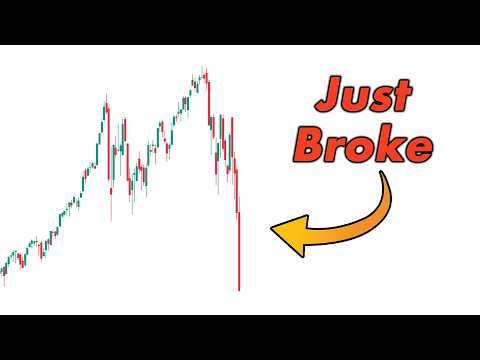
This comparison highlights gold's relative strength despite its recent pullback. Historically, during periods when the S&P 500 breaks down against gold, it often signals a market top and a forthcoming recession.
Looking back at previous market cycles, the current environment shares similarities with the years 1973 and 2008, both of which were marked by recessions in the United States.
In both cases, gold had significant pullbacks during recessions but ultimately resumed its upward trajectory, outperforming the stock market in the recovery phase.
Predicting recessions is notoriously difficult because the stock market is forward-looking. Typically, the market drops first, which then leads to a recession. Key indicators such as initial jobless claims and layoffs remain relatively low, suggesting that a recession has not yet begun, although it could develop if the stock market continues to weaken.
Gold's behavior during past recessions shows that it can endure deep corrections yet still be part of a larger bull market. For example:
These patterns demonstrate that gold does not move in a straight line and that corrections are a natural part of its bull market cycles.
Currently, we are in a late business cycle environment, similar to 1973 and 2008. This environment tends to favor gold's outperformance relative to stocks and other risk assets. The late cycle is characterized by rising inflation and interest rates, which historically have been positive for gold.
While Bitcoin and altcoins have been popular investment choices, their performance against gold has been weak over the last few years. Bitcoin, for instance, is down about 60% against gold since December 2024, and Ethereum's market cap relative to gold has been trending downward since 2021.
This trend suggests that gold has been a more resilient store of value compared to cryptocurrencies and even the broader stock market during this period.
Including gold in a portfolio has historically provided better returns relative to portfolios heavily weighted in stocks or cryptocurrencies, especially during market downturns. While gold can experience corrections, its long-term trend has been upward, making it a valuable diversification asset.
Gold's recent drop should not be viewed as a failure but rather as a natural correction within a larger bull market. Historical data from previous recessions and business cycles support the view that gold will eventually rise again, potentially outperforming stocks and cryptocurrencies.
Investors should consider gold's role as a portfolio diversifier and store of value, especially in uncertain economic environments. Patience and a long-term perspective are essential, as gold's recovery and growth may take several years but have historically rewarded those who hold through corrections.
Remember, trade the market you have, not the market you want, and always base investment decisions on data rather than hype or narratives.