Silver has transitioned from a forgotten commodity to a fiercely contested industrial asset due to a quiet but impactful rule change known as Basel 3. This regulation forces banks to hold more capital against unallocated silver, pushing them towards physical silver and tightening supply. Coupled with China's new export controls and rising industrial demand, silver's market dynamics are shifting dramatically, offering unique investment opportunities and risks.
Silver, once considered a mundane asset relegated to your grandmother's cutlery drawer, has emerged as one of the most fiercely contested industrial commodities globally. Yet, surprisingly, most regular investors remain unaware of the seismic shifts occurring behind the scenes.
While public attention focuses on tech stocks, Federal Reserve policies, geopolitical conflicts, and presidential actions, a quiet but profound rule change has been implemented that fundamentally alters the relationship between silver and stock markets. This change, largely ignored by mainstream media and Wall Street, has the potential to reshape investment landscapes forever.
If you own stocks, index funds, a 401(k), or even gold and silver investments, this development is crucial. Historically, the silver-to-S&P 500 ratio has experienced rare but dramatic spikes, each followed by significant market moves that either made or broke fortunes. Currently, this ratio is near historic lows, signaling a potential major rally in silver relative to stocks.
Prices fluctuate due to various factors like inflation, currency strength, or media hype, but ratios provide a clearer picture by comparing one asset directly to another. The silver-to-S&P 500 ratio measures silver's value relative to the American stock market. When this ratio is high, silver is expensive compared to stocks; when low, silver is cheap.
In the 1980s, this ratio peaked at levels 30 times higher than today, marking a period of extraordinary silver market activity. Similar spikes occurred in 2011, where silver traded at approximately 2.5 times its current relative value. Between these peaks, silver has occasionally become extremely cheap compared to stocks, and each of these lows was followed by multi-year rallies.
Currently, silver is among the cheapest it has been relative to stocks in the last 50 years, suggesting a potential for significant upward movement.
The most critical but overlooked factor driving this shift is a regulatory change known as Basel 3. Basel 3 is a global regulatory framework developed in Basel, Switzerland, aimed at strengthening bank capital requirements and risk management.
For decades, banks have held "unallocated silver," essentially paper silver—promises or IOUs without specific physical silver bars backing them. This system allowed banks to trade vast amounts of silver on paper, often with leverage ratios as high as 7.6 times the physical silver available.
Under Basel 3, banks must now hold 85% capital against unallocated silver holdings, making it extremely costly to maintain large paper silver positions. This "85% rule" effectively turns what was once a profit center into a costly liability.
As a result, banks are being pushed out of the paper silver market and into holding physical, or "allocated," silver. This shift increases demand for real silver and reduces the ability of paper markets to suppress prices artificially.
Adding to the supply-side pressure, China has overhauled its 25-year-old silver export system, instituting a strict licensing regime. Only a select few firms are now authorized to export silver, significantly limiting silver outflows.
Chinese refiners handle an estimated 60-70% of the world's refined silver exports, so these controls have a global impact. This policy change forces international buyers, including solar panel manufacturers and electronics producers, to compete more fiercely for silver domestically.
Silver is not just a precious metal; it is a critical industrial mineral. The U.S. government has officially designated silver as a critical mineral due to its essential role in modern technologies.
The solar industry alone consumes about 20% of the world's annual silver supply. Silver is also vital in electric vehicles, which use roughly twice as much silver as traditional gasoline cars, as well as in data centers, 5G infrastructure, medical devices, and other high-tech applications.
China's recent surge in silver imports—836 tons in a single month, representing a 78% increase from the previous month and 170% above the 10-year average—reflects both retail investor demand and industrial frontloading ahead of tax changes.
For six consecutive years, the world has consumed more silver than it has produced or recycled, steadily drawing down stockpiles accumulated over decades. This ongoing deficit tightens supply and supports upward price pressure.
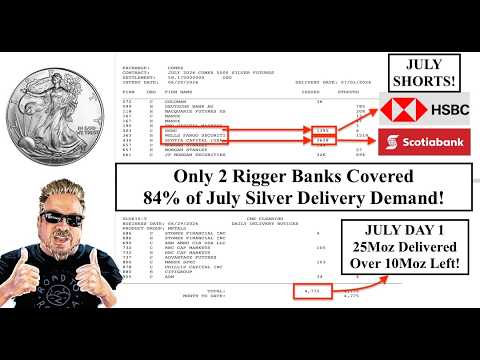
In the U.S., the COMEX exchange is the primary venue for silver futures trading. Its vaults are supposed to hold physical silver backing the paper contracts. However, inventories have declined from 114 million ounces a year ago to 76 million ounces recently, though some additional silver has been found to replenish stocks.
While silver is not running out imminently, the market is undeniably tightening. Industrial buyers and wealthy investors are increasingly locking physical silver away in private vaults, reducing available supply and setting the stage for potential price volatility.
To navigate this complex landscape, a simple yet powerful framework can guide investment decisions:
This ratio serves as a compass. When silver is historically cheap relative to stocks, the risk-reward of adding silver exposure improves. Conversely, when the ratio is stretched, the opportunity diminishes.
Tracking the annual silver deficit reported by the Silver Institute provides insight into market tightness. A persistent deficit signals increasing scarcity and potential price appreciation.
Understanding rule changes like Basel 3 and critical mineral designations helps anticipate shifts in market structure and demand for physical silver.
Silver is more volatile than gold and broad stock indices. It can experience rapid price swings of 10% or more within days due to market dynamics and regulatory changes.
Investors should approach silver with a clear plan, sizing positions appropriately and integrating silver into a broader portfolio framework. It is not a "bet the farm" asset but a strategic component requiring education and discipline.
The quiet rule changes in silver trading, particularly Basel 3, combined with China's export controls and rising industrial demand, are reshaping the silver market fundamentally. These developments create both opportunities and risks for investors.
Understanding the silver-to-stock ratio, monitoring supply deficits, and staying informed about regulatory changes provide a robust framework for making informed decisions.
Education and transparency are key. While silver investing is not without volatility, those who grasp the underlying rules and patterns stand to benefit significantly.
This evolving story is not just about silver; it is about how unseen regulatory shifts can alter entire markets, often without public awareness. Staying informed and prepared is essential for navigating this new landscape.
Thank you for reading. If you found this analysis valuable, consider sharing it to spread awareness about these critical market changes.