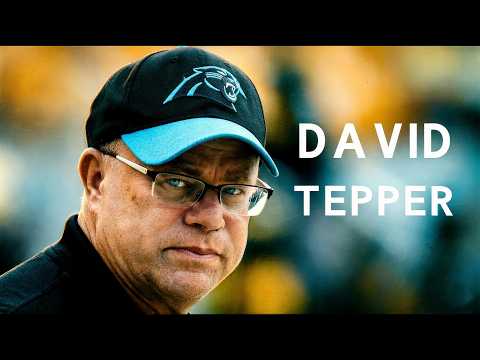
David Tepper, one of Wall Street's most successful investors, built a $30 billion fortune by buying distressed assets during financial crises. From his early days trading penny stocks to founding Appaloosa Management, Tepper's strategy focused on exploiting market panic and mispricing. His contrarian bets during the 1987 crash, Asian financial crisis, Russian default, and 2008 financial meltdown earned him legendary status and billions in profits.
David Tepper is recognized as one of the most profitable investors in Wall Street history. His journey from a college dorm room trader to the founder of a hedge fund that generated over $30 billion in gains spans more than three decades. Tepper is renowned for making billions by buying assets when others are selling in panic, turning crises into opportunities.
Born on September 11, 1957, in Stanton Heights, Pittsburgh, David Alan Tepper grew up in a lower-middle-class neighborhood dominated by the steel industry. His father, Harry, a certified public accountant, was a strict and often abusive man, creating a household filled with silence and fear. Despite this, Tepper's mind worked differently from a young age; he could do math before he could speak and had a passion for memorizing baseball statistics.
At Peabody High School, Tepper never earned a single A but was already tracking his father's stock portfolio and trading penny stocks before he could drive. His early exposure to investing came from his father, who let him invest in stocks like Career Academies, which eventually went bankrupt. Instead of being discouraged, Tepper studied these failures to understand what went wrong.
In 1975, Tepper enrolled at the University of Pittsburgh, working part-time shelving art books to pay tuition. He developed a method for trading options in his dorm room, focusing on exploiting small price spreads for steady income. This disciplined, mechanical approach was unusual for a college student and laid the foundation for his future success.
He graduated with honors in economics in 1978 and earned an MBA in 1982. Tepper then worked in various financial roles, including at Republic Steel and Keystone Mutual Funds, before being hired by Goldman Sachs in 1985 as a credit analyst on their new high-yield bond desk.
Junk bonds were considered risky and stigmatized in the 1980s, but Tepper quickly mastered the market. Within six months, he became head trader, known for his aggressive style and deep understanding of bankruptcy. He could value distressed companies by assessing their real assets, such as real estate and inventory, while others saw only wreckage.
Tepper's skill helped Goldman Sachs survive the 1987 Black Monday crash. While others sold in panic, Tepper bought deeply discounted bonds of financial institutions that the market had priced for extinction but were unlikely to fail due to government backing. This contrarian move earned him millions and established his reputation.
Despite his success, Tepper was passed over for partnership at Goldman Sachs multiple times, largely due to internal politics and his abrasive style. In 1992, at age 35, he left Goldman to start his own hedge fund, Appaloosa Management, with $3 million of his own money and later raised $57 million with a former Goldman colleague.
His first big trade was buying distressed debt of Algoma Steel, a bankrupt Canadian steel company. Tepper recognized that the market undervalued the company's assets and that bankruptcy would lead to restructuring rather than liquidation. This trade returned 57.6% in six months, attracting investor attention.
Tepper's hallmark strategy was to buy when others sold in fear, exploiting the gap between market panic and actual asset value. He applied this during several major crises:
Asian Financial Crisis (1997-1998): Tepper bought South Korean government bonds and currency futures at crisis-level discounts, betting on IMF support and the country's industrial strength. South Korea recovered and repaid its debt in about three years.
Russian Financial Crisis (1998): Tepper bought Russian government bonds priced for default. However, Russia lacked the institutional capacity to recover, and Tepper's fund lost about $80 million. He learned the importance of distinguishing between government willingness and ability to rescue.
California Energy Crisis (2001): Tepper bought shares in Pacific Gas and Electric and Edison International when they neared bankruptcy, betting the state would not allow permanent blackouts. The government intervened, and Tepper earned a 61% return.
Corporate Bankruptcies (2002-2003): Tepper bought distressed debt of Enron, WorldCom, and Conseco during their collapses. His fund returned 140% in 2003, and he personally earned $500 million.
The 2008 financial meltdown was the ultimate test. Lehman Brothers' bankruptcy and AIG's government bailout froze credit markets. Tepper's fund lost 27% in 2008, marking his third major drawdown.
In early 2009, Tepper analyzed the U.S. government's financial stability plan and concluded that bank stocks would rise regardless of recovery or bailout. He bought massive positions in Bank of America, Citigroup, AIG, and others at deeply discounted prices.
By late 2009, these investments soared, with returns exceeding 200% to 500%. Appaloosa Management returned 132% for the year, the greatest single-year performance in hedge fund history. Tepper earned $4 billion personally, becoming one of the richest men in America.
In 2010, Tepper purchased an oceanfront estate in Sagaponack, New York, demolishing the previous house owned by the ex-wife of Jon Corzine, the Goldman Sachs executive who had blocked Tepper's partnership years earlier. This act symbolized Tepper's triumph over past adversities.
By 2013, Tepper's market influence was so significant that his public statements could move markets, exemplified by the "Tepper rally" following a CNBC interview.
In 2018, Tepper expanded beyond finance by purchasing the Carolina Panthers NFL franchise for $2.275 billion, the highest price ever paid for an NFL team, and later acquiring Charlotte FC in Major League Soccer.
Tepper's 2015 bet on Chinese energy stocks faltered due to misreading Beijing's opaque policy signals, resulting in significant losses. However, he emphasized learning from mistakes by replaying and dissecting every trade.
In 2019, Tepper converted Appaloosa into a family office, returning outside capital to investors. By 2025, the firm managed approximately $16.6 billion, mostly Tepper's own money.
David Tepper's career is a testament to the power of temperament, discipline, and contrarian investing. He consistently bought assets when the world was selling in fear, exploiting the gap between market panic and intrinsic value. From his early days trading penny stocks to making the greatest single trade in hedge fund history during the 2008 crisis, Tepper turned the world's worst moments into the greatest fortunes. His story is one of resilience, insight, and bold conviction in the face of uncertainty.
Tepper's legacy is not just wealth but a unique approach to investing that combines rigorous analysis with the courage to act against the crowd. His journey offers valuable lessons for investors and entrepreneurs alike about the importance of temperament, learning from failure, and seizing opportunity amid chaos.