Jerome Powell's recent commentary has dramatically shifted market expectations, leading to a significant change in Federal Reserve rate hike projections. Despite mixed geopolitical signals, including Donald Trump's remarks on the Iran conflict and ongoing tensions, markets are reacting more to changes in the Fed rate futures. This article analyzes these developments and their impact on market movements and investment strategies.
Recent market movements have been influenced by a complex interplay of geopolitical developments and Federal Reserve policy expectations. Jerome Powell's commentary has notably flipped market expectations regarding interest rate hikes, while geopolitical tensions, including remarks from Donald Trump about the Iran conflict, add layers of uncertainty.
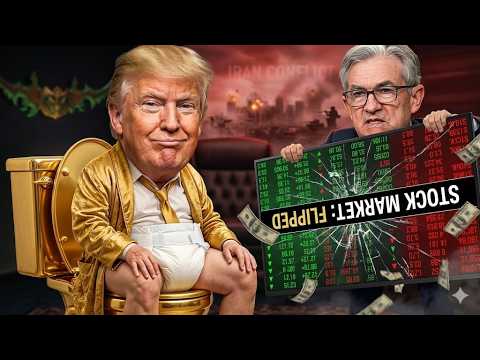
Donald Trump recently suggested that the United States might end the ongoing war without reopening the Strait of Hormuz. He implied that European countries such as the United Kingdom, Germany, France, and Italy, as well as Asian countries—which receive about 80% of the oil flowing through the Strait—could source oil and jet fuel independently.
This statement sparked some market optimism that the war might end sooner than expected, potentially reducing long-term inflation concerns. However, this optimism contrasts with other reports, such as those from Pete Hgset, who indicated the conflict could last another four to eight weeks.
Trump's history of making optimistic comments before military actions, such as the June 19th announcement last year about potential B2 bomber strikes followed by Operation Midnight Hammer, suggests his remarks might be strategic rather than indicative of imminent peace.
Despite Trump's comments, recent headlines indicate ongoing tensions:
These developments suggest that the geopolitical situation remains volatile and could continue to impact markets.
The latest JOLTS report showed private sector hiring at its lowest rate since February 2010, a 16-year low. Despite this, layoffs remain relatively low, slightly under expectations. This steadying in the labor market adds another dimension to the economic outlook.
While geopolitical news and economic data are important, the most significant market movement comes from the Federal Reserve rate futures market.
A key chart projecting the Federal Reserve's interest rate policy by December 9, 2026, reveals a complete reversal in expectations following Jerome Powell's recent commentary:
This shift indicates that markets are less nervous about further rate hikes, which is generally bullish for equities.
Examining the odds of one rate hike shows a collapse in expectations for hikes after Powell's interview at Harvard. This trend is consistent across multiple rate hike scenarios, with the market settling on a more dovish outlook.
Energy ETFs such as BNO and USO have been moving down, which has helped propel the NASDAQ and other indices upward. There is an inverse relationship between these energy ETFs and the broader market:
For traders, monitoring these "canaries" like USO and BNO is crucial to understanding underlying market movements. Additionally, end-of-month rebalancing adds volatility, requiring careful attention.
Jerome Powell's recent commentary has dramatically shifted market expectations from anticipating rate hikes to pricing in potential rate cuts. While geopolitical tensions, including Trump's statements and Iranian responses, create uncertainty, the primary driver of market movements appears to be changes in Federal Reserve policy outlook.
Investors and traders should watch energy sector ETFs and rate futures closely to navigate the current market environment. Despite mixed signals, the market's reduced fear of rate hikes is a positive sign, but ongoing geopolitical risks warrant caution.
For those interested in deeper insights and daily market analysis, resources like the alpha reports mentioned provide valuable guidance.
This comprehensive overview highlights the complex factors influencing today's markets and offers a framework for understanding recent shifts in investor sentiment and policy expectations.