This article explores the psychological and structural traps that cause most amateur Bitcoin traders to lose money rapidly, while professional traders use disciplined risk management and strategic tactics to protect capital and build long-term wealth. It explains how whales exploit retail traders' biology and behavior, the dangers of overleveraged positions, and the importance of systematic trading over gambling impulses.
The world of Bitcoin trading is notoriously brutal, with many amateur day traders wiping out years of compounded profits in just a matter of days. This article delves into the profound psychological differences between professional trading mindsets and gambling mentalities, revealing how human biology often becomes a trader's worst enemy. We will explore how whales and smart money exploit overleveraged retail traders, the structural traps set by amateur signal groups, and the disciplined strategies professionals use to build generational wealth.
Amateur traders often fall victim to their own biology. The crypto market's insane volatility can create a dizzying experience, and despite Bitcoin's historic runs, most day traders end up at zero. This is not due to a lack of technical knowledge alone but because of the invisible mechanisms inside their own heads.
Currently, Bitcoin is approaching a significant resistance level at $76,000, backed by technical indicators like the 1.272 Fibonacci retracement and a massive $79 million whale sell wall just below that price. Despite this, short-term momentum shows extreme greed, with retail traders aggressively buying long positions into this resistance.
This creates a behavioral trap where retail traders buy into a ceiling, hoping it will break purely on enthusiasm. However, the order book reveals that whales cannot simply sell their large holdings at market price without crashing the price. Instead, they rely on eager retail traders to absorb their selling pressure quietly.
This setup is akin to walking into a casino where the house hands out free drinks to make you comfortable and greedy before sweeping the table. Retail traders feel invincible right before they get wiped out.
Many Telegram crypto signal groups act as liquidity farms for smart money. They provide false confidence by issuing trade signals with stop losses placed far from entry prices and profit targets very close. This structure results in frequent small wins but is mathematically doomed because one loss can wipe out many small gains.
The frequent small wins trigger the brain's reward circuitry, releasing endorphins and oxytocin, creating a chemical high. Traders become addicted to this immediate gratification, blinding them to the catastrophic risks they are taking. When the inevitable loss hits, traders experience withdrawal symptoms, triggering fear and irrational fight-or-flight responses.
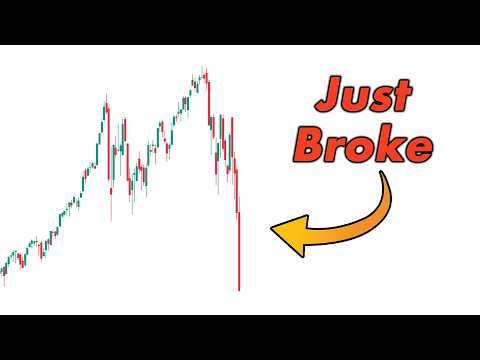
This leads to a spiral of failure where traders abandon their strategies and take even higher leverage to recover losses, often liquidating their entire portfolios in a matter of days.
The market acts as a predator hunting retail traders by exploiting predictable behaviors. For example, many traders place stop losses just below obvious previous lows, creating a cluster of liquidation points. When the price dips into this zone, cascading stop-loss triggers cause a rapid price drop, fueling an avalanche of liquidations.
Professionals analyze heat maps of liquidations and place their stop losses safely below these clusters, letting amateurs act as a buffer. They also use these liquidation clusters as profit targets when building short positions, effectively letting forced selling fill their take-profit orders.
This approach prioritizes capital protection, taking small losses when wrong, and only turning aggressive when probabilities heavily favor the trade.
Retail day traders often play a short-term game of chance optimized for dopamine, while hedge funds play a long-term game of risk management optimized for survival.
An example from the My Crypto Paradise team is their Ethereum trade using a WOVF tactic, capturing a 28% profit with strict 1x leverage and a double position size channel strategy. Instead of entering a high-leverage position at one price point, traders map out support and resistance channels and enter conservatively at 1x leverage.
If the price drops to the lower bound of the channel, the system automatically doubles the position size, lowering the average entry price without risking liquidation. This method absorbs volatility rather than being destroyed by it, trading time and positioning instead of gambling on direction.
Market bottoms are formed not by cheap prices alone but by forced capitulation. Overleveraged entities like miners and institutional funds eventually must sell Bitcoin to cover real-world expenses, often at a loss. Professionals hold cash reserves to buy these forced sales, marking the "exchange of hands" from weak to strong holders.
Trading professionally is compared to a daily cold plunge or strict healthy eating—uncomfortable in the short term but essential for long-term survival.
A critical aspect of professional trading is detachment from ego. Traders cannot rely on willpower alone to admit when they are wrong. Instead, they use rigid predefined systems and algorithmic triggers to manage risk.
For example, if Bitcoin's daily candle closes above $76,000 with volume, the short thesis is invalidated, and the system executes stop-loss orders automatically. Traders physically step away to reset their neurochemistry, avoiding emotional decision-making.
If the market moves contrary to their thesis, professionals do not stubbornly fight it or succumb to FOMO. They wait for confirmation of new support or resistance levels before repositioning.
Simon from My Crypto Paradise outlines two plans:
Professionals prepare for both scenarios with strict rules and triggers, ensuring they can adapt without emotional bias.
The secret to long-term wealth in crypto is not finding perfect technical indicators or catching bottoms but mastering biological impulses. It requires choosing systematic discipline over dopamine-fueled gambling.
Success is defined by flawless risk management, capital protection, and surviving to trade another day, not by immediate profits. Losses are data to refine strategies, and big wins come naturally from disciplined execution.
When tempted by the urge to buy into a rapidly pumping market, ask yourself: Whose bags am I buying? Are you the predator or the prey providing liquidity?
Understanding these dynamics and adopting professional trading philosophies can transform your approach and increase your chances of long-term success in the volatile crypto markets.
This comprehensive insight into the psychology and mechanics of Bitcoin trading reveals why most amateurs fail and how professionals thrive by protecting capital, managing risk, and mastering their own biology.