Food fraud is a $40 billion industry that deceives consumers with counterfeit products. This blog explores various food scams, including fake olive oil, mislabeled fish, and adulterated honey, and highlights how scientific methods like DNA analysis and isotope testing are used to combat these frauds.
In 2023, Italian and Spanish law enforcement officials uncovered a significant counterfeiting ring, seizing tens of thousands of dollars in illegal goods. Surprisingly, the criminals were not faking fine art or currency; they were producing counterfeit olive oil. Authorities confiscated over 260,000 liters of bogus extra virgin olive oil, which had been cut with olive-derived lamp oil, and arrested 11 suspects. This incident is just one example of food fraud, a $40 billion industry that typically involves replacing a food or ingredient with an inferior one. You might think you're enjoying a delicacy like bluefin tuna, only to find out you're actually consuming a cheaper fish dyed with beet juice. This blog will explore some of the most commonly counterfeited foods and how science is employed to detect these frauds and keep them off the shelves.
Olive oil forgery is a prevalent and long-standing issue. Archaeological evidence suggests that even ancient Romans engaged in olive oil forgery to make a quick profit. The cardinal rule of food forgery is that the product must taste, feel, and smell enough like the real deal to fool consumers. For olive oil, this often involves slapping an "Extra Virgin" label on inferior oil or cutting genuine olive oil with other types of oil and altering its color with chlorophyll or beta carotene.
While some olive oil frauds are caught through sting operations, others are detected using scientific methods. A 2019 study found that DNA analysis is one of the most effective techniques for identifying adulterated olive oil. This method involves extracting residual genetic material from the oil and searching for unique molecular markers or specific DNA sequences. This approach can reliably determine if the oil has been mixed with a different type of vegetable oil and even identify the varieties of olives used.
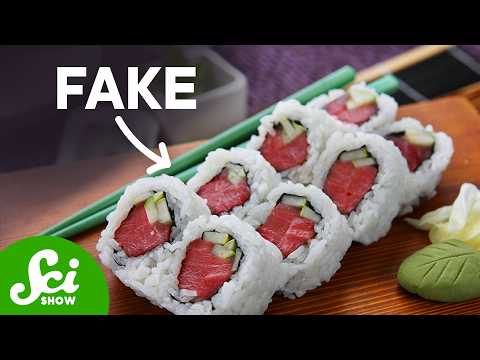
Moving from oil to seafood, fish fraud is another significant issue. Many fish sold at local markets are mislabeled, with cheaper varieties passed off as more expensive ones. This can pose serious risks for individuals with food allergies or those monitoring their mercury intake. For example, a study by Oceana revealed that up to 59% of tuna sold in stores is mislabeled, often substituted with cheaper fish like escolar.
To investigate this, the show Inside Edition hired Applied Food Technologies, which specializes in seafood authenticity testing. They utilized a technique called DNA barcoding, which involves taking a short, specific fragment of DNA from the sample and comparing it against a vast taxonomic library of genetic barcodes. The results revealed that some restaurants were serving seafood that was not scallops at all, but rather different types of seafood or even a homogenized fish paste.
Caviar, a luxury food item, is another target for food fraudsters due to its high price and limited availability. The demand for caviar has outpaced farmed fish populations, leading to illegal poaching of wild sturgeon. A significant bust in 2013 by the US Fish and Wildlife Service apprehended 112 paddlefish poachers, highlighting the scale of the problem. Studies indicate that around 30% of caviar on the European market is harvested in violation of conservation laws.
Fortunately, science can help detect fraudulent caviar. Researchers have identified isotope signals in fish roe that indicate the fish's habitat when the eggs were harvested, allowing for differentiation between wild-caught and farm-raised eggs. Alarmingly, some tested caviar contained no eggs at all, but rather sturgeon offal and other non-biological products.
Honey is another frequently faked food, often diluted with high fructose corn syrup. A 2023 report by the EU found that 46% of imported honey showed signs of adulteration. To combat this, scientists employ DNA barcoding to detect non-honey products in honey samples, with the ability to identify fakes at concentrations as low as 1%. Another simpler test involves adding a reagent to a honey sample and observing color changes and protein coagulation, providing a low-tech method for detection.
Maple syrup, often referred to as liquid gold, is commonly faked with flavored corn syrup. A notable case occurred in 2000 when a Vermont distributor was found guilty of adulterating maple syrup with cane sugar. Researchers are now using phenolics, distinctive molecules produced by plants, to create a profile that can help distinguish real maple syrup from fake products.
Vanilla is another expensive spice that is often faked or mislabeled. A three-year investigation in France found that up to 23% of vanilla products were falsely labeled, containing synthetic vanillin instead of real vanilla. To differentiate between the two, scientists analyze carbon isotopes, as real vanilla plants produce a unique isotope signature through a specific photosynthetic process.
Food fraud may not be a crime that most people think about regularly, but scientists are dedicated to keeping it out of our supermarkets. With the help of advanced scientific techniques, consumers can be assured that their honey is pure, their vanilla is authentic, and their olive oil is genuine. As we continue to enjoy our favorite foods, it is essential to appreciate the efforts made to ensure their authenticity and safety.