The recent Virginia redistricting controversy has revealed significant challenges for Democrats, including misjudgments about their electoral prospects, criticism of the Virginia Supreme Court's role, and debates over racial gerrymandering. The shifting political landscape, especially among minority voters, and upcoming census impacts suggest Democrats face ongoing hurdles in maintaining influence.
The recent redistricting battle in Virginia has become a focal point of intense political debate, exposing deep divisions and miscalculations within the Democratic Party. This article explores the unfolding events, the reactions from various political commentators, and the broader implications for electoral politics in the United States.
Democrats initially approached the redistricting efforts with a sense of confidence, believing they were on the offensive against what they described as the GOP's racist gerrymandering tactics. However, this optimism was misplaced. Despite clear evidence and analysis spanning over a year, it became apparent that Democrats were unlikely to come out ahead in the redistricting war.
This misjudgment stemmed from a tunnel vision effect, where Democrats were caught up in a "fake mirage" created by their propagandist leaders. The result was a dramatic falloff from their earlier gleeful social media posts to a state of shock and misery as the reality of the situation hit them hard.
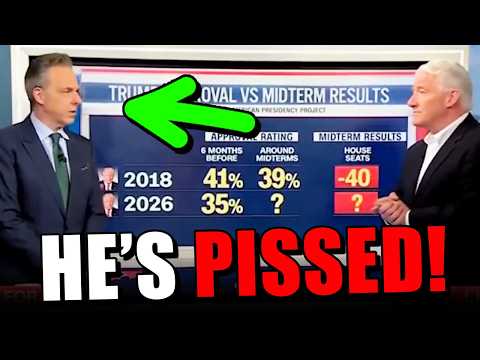
CNN, which markets itself as a trusted news source, provided some revealing moments that hinted at the underlying political tensions. Jake Tapper, during a broadcast, remarked that Republicans could "thank the Virginia Supreme Court" for their improved position in the redistricting battle. This comment, though presented as a literal statement, was perceived as a sly and unprofessional jab, reflecting the network's frustration.
Critics argue that Republicans should instead thank the incompetence and dishonesty of Democrats, who violated procedural rules and rushed the map onto the ballot without sufficient time, violating the Virginia state constitution. The Virginia Supreme Court's role was to review these violations, not to favor one party over another.
On a CNN panel show hosted by Abby Phillips, the situation was described as being "in the depths of hell" regarding redistricting. The panelists expressed a sense of hopelessness and frustration, highlighting the partisan theater surrounding the issue.
However, the conversation often avoided engaging with the constitutional questions at the heart of the matter, particularly the Supreme Court's interpretation of the Voting Rights Act (VRA). Democrats appear reluctant to discuss this, as the Court's ruling aligns with a strict constitutional and legal interpretation.
Bill Maher, in a segment on the issue, pointed out the complexities of racial gerrymandering. He noted that while districts have been carved out to ensure minority representation, this practice is a form of racial gerrymandering that must continue until society reaches a more equitable state.
The discussion emphasized that black people and other minorities will continue to have representation regardless of the political party in office. The color of the representative's skin is less important than the fact that these communities have a voice.
A significant point raised is the flawed assumption that racial identity dictates political beliefs. For example, Texas, a majority-minority state, has 25 Republican representatives compared to 13 Democrats, challenging the notion that minorities uniformly support the Democratic Party.
Polling data shows a notable shift among Hispanic voters nationally. In 2020, Joe Biden held a 27-point lead over Donald Trump among Hispanics, but by 2024, this margin shrank to just seven points. Similarly, Trump's approval among African-Americans increased from 12% to 16%, indicating a break in the traditional monolithic political culture.
The insistence on drawing districts based on race is seen by some as a "plantation style mentality," enforcing rigid ideological boxes that no longer reflect the evolving political landscape. This approach aims to maintain dependable voting blocks but is criticized for being built on weak arguments and failing to acknowledge the diversity of political thought within minority communities.
The recent redistricting battles and the gutting of the VRA are only part of the challenges facing Democrats. The 2020 census miscount disproportionately hurt red states, but the upcoming 2030 census could further impact representation as people continue moving from blue states to red states due to governance issues.
The Virginia redistricting saga highlights the complexities and challenges of modern electoral politics. Democrats' overconfidence, the role of the judiciary, debates over racial representation, and shifting voter demographics all contribute to a dynamic and uncertain political environment.
As the 2030 census approaches, these issues will likely intensify, requiring political parties to adapt their strategies and engage more thoughtfully with the realities of American demographics and constitutional law.
The ongoing discourse underscores the importance of moving beyond partisan theater to address the substantive legal and societal questions that redistricting raises for the future of democracy in the United States.








