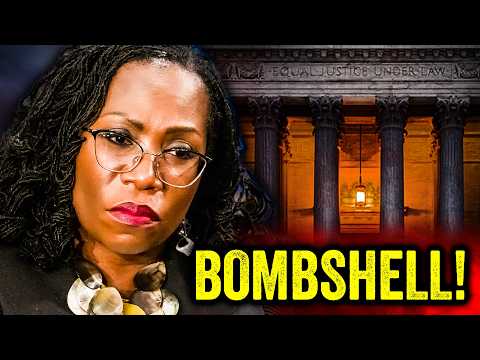
The Supreme Court recently ruled that border agents have the authority to deny re-entry to green card holders charged with crimes, marking another victory for the Trump administration's immigration policies. This ruling is part of a broader pattern of Supreme Court decisions reinforcing executive power over immigration and border security, while also spotlighting Justice Ketanji Brown Jackson's controversial judicial philosophy on constitutional interpretation.
The Supreme Court has delivered a significant ruling in favor of the Trump administration's immigration policies, reinforcing the authority of border agents to deny re-entry to green card holders charged with crimes. This decision is part of a broader series of Supreme Court victories that have strengthened executive power over immigration and border security, despite opposition from lower courts and some political figures.
The Court ruled that border agents have the legal authority to deny re-entry to lawful permanent residents (green card holders) who have been charged with crimes. It is important to note that the ruling concerns individuals who have been charged, not necessarily convicted or sentenced.
The Trump administration argued that under existing immigration law, Customs and Border Protection officers possess discretionary authority to turn back lawful permanent residents at the border when those individuals face serious criminal accusations. The Supreme Court agreed with this interpretation.
A green card is a privilege of legal residency granted by the United States government, not citizenship or a passport. The government retains the authority to make judgments about who may re-enter the country, especially when there are concerns about criminal charges.
This ruling counters the argument often made by the political left that green card holders are untouchable and can pass through the border freely. The Supreme Court clarified that this is not the law.
This ruling is not isolated but part of a sustained and accelerating string of Supreme Court decisions supporting President Trump's immigration and border security policies.
Earlier in the term, the Court upheld the Trump administration's use of the Alien Enemies Act, a law dating back to 1798, to deport members of the Trend Ara gang, a Venezuelan criminal organization operating in American cities. Despite attempts by lower courts to block this action, the Supreme Court affirmed the executive branch's authority to use this law.
President Trump signed an executive order challenging the long-standing interpretation of the 14th Amendment, which grants automatic citizenship to anyone born on American soil, including children of illegal aliens. Although lower courts issued nationwide injunctions blocking this order, the Supreme Court significantly curtailed the scope of these injunctions, preventing district court judges from issuing rulings that block presidential orders nationwide.
Some federal judges had attempted to declare schools, churches, and other "sensitive locations" off-limits for immigration enforcement, effectively creating sanctuary zones. The Supreme Court overturned these restrictions, affirming that immigration enforcement policy is set by the executive branch, not individual district judges.
The Supreme Court is systematically dismantling the legal framework constructed by activist judges in lower courts that aimed to frustrate federal enforcement of immigration laws. The left's strategy of seeking sympathetic judges to issue sweeping nationwide injunctions has been curtailed by the Court's rulings.
Democrats and their media allies have long claimed that Trump's immigration agenda was unconstitutional and would not survive legal scrutiny. However, the Court has repeatedly ruled in favor of the administration on key issues such as alien enemies, birthright citizenship injunctions, ICE enforcement, and green card deportations.
Despite the unanimous ruling (9-0) in the case of United States v. Hammani, Justice Ketanji Brown Jackson issued a concurring opinion that launched a sweeping critique of the Court's framework for evaluating gun regulations, known as the Bruen decision.
Ali Hammani, a recreational marijuana user, was prosecuted under a federal law banning gun ownership for unlawful users of controlled substances. The Court struck down the law as inconsistent with the Second Amendment, noting Hammani was not a drug addict and had not used firearms threateningly.
While agreeing with the outcome, Justice Jackson criticized the Bruen framework, which requires gun regulations to be grounded in historical tradition. She called the framework "unworkable" and argued it imposes difficult historical research tasks on judges.
She advocated for replacing it with "means-end scrutiny," a legal standard allowing judges to decide what gun restrictions seem reasonable today, effectively giving judges more discretion.
Constitutional law scholar Jonathan Turley criticized Jackson's position, stating that studying history and original meaning is essential to constitutional interpretation. He warned that Jackson's approach would lead to judges rewriting laws based on personal policy preferences, undermining constitutional constraints on power.
Jackson's judicial record since her 2022 confirmation has been described as radical, with many solo dissents that have drawn criticism from both conservative and liberal colleagues.
Democrats have openly discussed plans to pack the Supreme Court with justices like Jackson to secure favorable rulings on progressive policies. This would mark a significant shift away from constitutional originalism toward a more flexible, politically driven judicial philosophy.
The Trump administration's successes at the Supreme Court demonstrate the durability of constitutional law grounded in text, history, and original understanding, even after decades of activist erosion.
The Supreme Court's recent rulings affirm the executive branch's authority over immigration enforcement and uphold constitutional protections such as the Second Amendment. Meanwhile, Justice Ketanji Brown Jackson's judicial philosophy represents a challenge to traditional constitutional interpretation, raising concerns about the future of the Court and constitutionalism.
It remains crucial for citizens to understand these developments and their implications for the rule of law and the balance of powers in the United States.
This comprehensive overview highlights the Supreme Court's recent immigration ruling, its broader context, and the ongoing judicial debates shaping American constitutional law.