During a heated session in the Spanish Congress, Prime Minister Pedro Sánchez made a startling admission regarding the alleged illegal financing of the Socialist Party. His statements triggered strong reactions from opposition deputies and political allies alike, exposing deep divisions and accusations of corruption within the government and its associates. This article explores the key moments, responses, and implications of this political crisis.
In a dramatic session at the Spanish Congress of Deputies, Prime Minister Pedro Sánchez made statements that shocked many and ignited a fierce political debate. His remarks, which appeared to acknowledge the possibility of illegal financing within the Spanish Socialist Workers' Party (PSOE), have led to widespread reactions from opposition figures and even his own political allies.
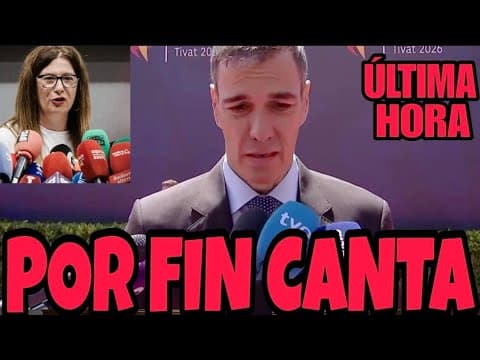
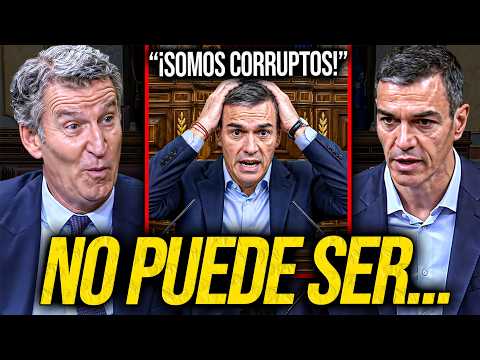
Pedro Sánchez addressed the Congress with a statement that seemed to be a defensive strategy anticipating potential future legal accusations related to the ongoing investigation into the PSOE's alleged illegal financing by the National Court (Audiencia Nacional). He said:
"The Socialist Party has not financed itself irregularly, it has not done so. On the contrary, if something like that has happened, it is because others have taken advantage of its resources. But if it has done so, I have absolutely nothing to do with it. I was not aware, I did not benefit from those resources. It must have been others, from whom I distance myself."
This statement was perceived as a major lapse and caused astonishment among deputies and the public alike.
The reaction was immediate and intense. Deputy Cayetana Álvarez de Toledo called Sánchez a "shameless" for his contradictory remarks. Other opposition members expressed disbelief and outrage, highlighting the gravity of the admission.
Gabriel Rufián, a member of the government coalition, also expressed his disappointment, stating that the session arrived late and poorly, criticizing Sánchez for his defensive posture and the "I didn't know anything" stance. He pointed out the recent conviction of the former number two of the PSOE, who was sentenced to 24 years in prison for a corruption scheme, questioning whether Sánchez was aware of such activities.
Miriam Nogueras from the opposition emphasized that corruption is not just a headline but a deep wound affecting society, stealing from vulnerable groups such as young people, patients, families, and farmers. She criticized the government for tolerating corruption and highlighted the involvement of political groups like Bildu in defending Sánchez.
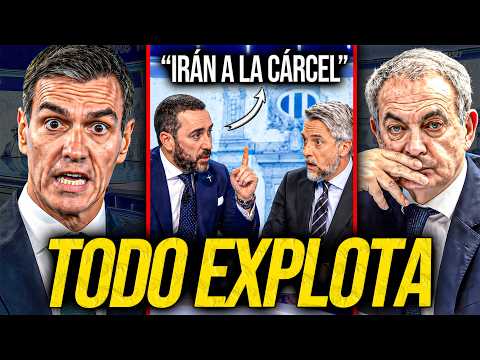
Sánchez also defended former Prime Minister José Luis Rodríguez Zapatero, who is currently under investigation by the National Court. Sánchez claimed that Zapatero had no scandals during his government, has not held public office for 15 years, and deserves the presumption of innocence. However, critics pointed out that Zapatero has not fully cooperated with the justice system, particularly regarding questions about alleged assets.
The government has been criticized for expelling some members like Ávalos immediately after their indictment but not taking similar actions against Zapatero despite his investigation.
The session revealed not only the external political conflict but also internal tensions within the government coalition. Gabriel Rufián's harsh tone towards the PSOE and his acknowledgment of his role in bringing Sánchez to power added complexity to the political dynamics.
The opposition accused the government of blurring lines between politics and justice, attacking judges, prosecutors, police, journalists, and politicians who investigate corruption, while defending their own implicated members.
The debate also touched on historical accusations, with references to the so-called "cloacas" (sewers) of the PSOE, a term used to describe alleged clandestine operations to attack judges, police, and media. The creation of such operations was linked to a letter written by Sánchez following legal proceedings against his wife.
Opposition members accused the government of perpetuating a corrupt model that prioritizes the unity of Spain over democracy, justice, and fundamental rights, drawing parallels with past political violence and terrorism.
The session in the Spanish Congress has exposed deep fractures within the political landscape, with Prime Minister Pedro Sánchez's statements serving as a catalyst for renewed debates on corruption, accountability, and governance. The ongoing investigations and legal proceedings will likely continue to influence Spanish politics, with significant implications for the PSOE and its leadership.
The political theater witnessed in Congress reflects broader societal concerns about corruption and the integrity of public institutions, underscoring the need for transparency and ethical governance.
This article has summarized the key points and reactions from the recent congressional session involving Pedro Sánchez and the allegations of illegal financing within the PSOE. The situation remains dynamic, with further developments expected as investigations proceed.