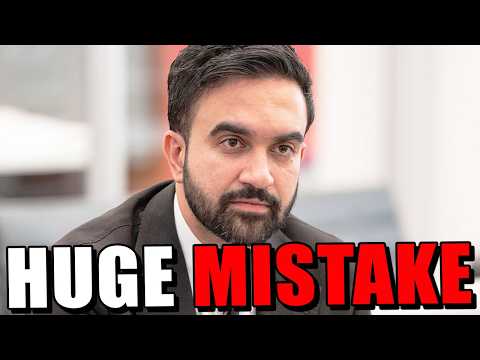
Zohran Mamdani's announcement to freeze rent in New York City recycles historically failed rent control policies. Despite cinematic presentations and popular support, rent freezes have consistently led to housing shortages, decaying properties, and market distortions. Experts like Thomas Sowell explain that such policies benefit politicians but harm tenants, landlords, and developers. The real solution lies in removing regulatory barriers to increase housing supply.
Zohran Mamdani, a young political figure in New York City, recently announced a rent freeze policy aimed at addressing the city's housing affordability crisis. This announcement was accompanied by slick, cinematic videos portraying him as a revolutionary with bold new ideas to rescue the working class. However, a closer examination reveals that Mamdani's approach is not new but rather a repetition of historically failed rent control policies.
Mamdani's rent freeze has been met with enthusiasm by many, with people rallying on the streets holding signs demanding to "freeze the rent." The slogan sounds appealing, promising relief for tenants struggling with rising housing costs. Yet, this policy is essentially a recycling of communist-style price control measures that have been tried and failed repeatedly across different cities and countries.
Rent control and rent freezes have a long history of failure. They have never worked effectively to make housing affordable or increase availability. Instead, these policies have consistently led to:
Economist Thomas Sowell, in his book Economic Facts and Fallacies, explains the dynamics behind rent control failures:
Sowell highlights that landlords lose profits, builders stop constructing new apartments, and tenants face fewer housing options and deteriorating living conditions.
Developers are discouraged from building new apartments when rent controls cap potential profits. The costs of construction, maintenance, taxes, and insurance continue to rise, but rent freezes prevent landlords from adjusting rents accordingly. This leads to a decline in new housing supply.
Landlords, unable to cover rising costs, begin to neglect maintenance and repairs. Buildings fall into disrepair, creating slums and unsafe living conditions. This phenomenon was observed in New York City during the 1960s and 1970s, particularly in areas like the South Bronx.
Mamdani and similar politicians frame landlords as greedy villains exploiting tenants. However, most landlords do not earn massive profits. Real estate investment is often a long-term, capital-intensive endeavor with significant risks and overhead.
The housing market is delicate and cannot be effectively engineered through heavy-handed government intervention. Attempts to do so often result in unintended negative consequences.
The key to reducing housing costs is increasing supply by:
These free-market solutions encourage developers to build more housing, which helps meet demand and stabilize or reduce prices.
Zohran Mamdani's rent freeze policy is a well-packaged but fundamentally flawed approach that repeats the mistakes of the past. While it may be politically popular, economic fundamentals predict it will lead to housing shortages, deteriorating properties, and higher costs in the long run.
New Yorkers have chosen this path through their democratic process, but the consequences will likely be challenging. The sustainable way forward requires embracing policies that increase housing supply rather than imposing price controls that distort the market.
Housing affordability is a complex issue that demands nuanced solutions. Simplistic policies like rent freezes may offer short-term relief but ultimately harm the very people they intend to help. Understanding economic principles and learning from history is essential to crafting effective housing policies that truly benefit working-class families and the broader community.