In September 1983, the murder of a man near Jacksonville, Florida, was solved through meticulous forensic investigation of tire tracks and a gun found in the suspect's vehicle, leading to the conviction of Gregory Coco.
In September 1983, two friends near Jacksonville, Florida, stumbled upon a shocking discovery: the body of a man lying on his side at the foot of a sand dune. The victim had suffered severe head wounds, and investigators from the Jacksonville Sheriff's Office quickly arrived at the scene. With no identification found on the body, the only clues available were a broken pool cue and footprints leading to some tire tracks in the sand.
The police worked diligently to gather and protect all evidence at the crime scene. Among the clues, the tire tracks appeared to be the most promising lead in identifying the killer. The investigation faced challenges, as rain or a slight breeze could easily destroy the fragile traces. Preserving the tire tracks required particular expertise, as the act of making a cast could potentially damage the evidence.
To ensure the integrity of the tire tracks, the Jacksonville regional Crime Laboratory was contacted, and forensic criminalist Ernest was brought in. The crime scene was processed with a focus on the tire tracks. Both the footwear tracks and the tire tracks were photographed, and a plaster cast was made to create a three-dimensional representation of the tire track.
The pouring of the plaster was a critical step, as it needed to be done carefully to prevent the weight from destroying the prints. After the plaster set, the cast was cleaned, providing investigators with a perfect reproduction of the tire tread. This cast included unique gouges and signs of wear that made the tire distinctive.
Despite the millions of tires on America's highways, investigators were determined to find the specific tire that had made these tracks. They studied the plaster cast, noting the ribs and grooves of the tread design. Matching the track with a tire on a suspect's vehicle would be as conclusive in court as a fingerprint.
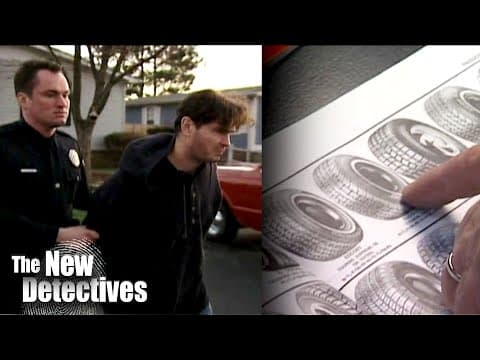
As police traced the victim's movements, forensic expert Hamm undertook the arduous task of searching through a tread guide. After reviewing thousands of images, he finally identified a tire that matched the cast. The tire in question was commonly mounted on pickup trucks, which narrowed down the search but still left the police with the daunting task of finding one truck among thousands in the Jacksonville area.
The investigation took a turn when an officer responding to a robbery call pulled over a suspicious truck. The driver, Gregory Coco, attempted to flee but was apprehended. Upon inspecting his truck, police discovered a gun under the seat. Coco was already known to law enforcement, having been a suspect in a previous murder case, although he had never been charged. Recently, police had received an anonymous tip that Coco had bragged about robbing and killing a man on the beach.
The gun found in Coco's truck was a .357 revolver, the same caliber used to kill the victim. Additionally, the officer noticed that the tires on Coco's truck resembled those involved in the murder.
With Coco now identified as a prime suspect, police needed to establish a connection between him and the crime scene. They compared Coco's right front truck tire to the photograph from the tread guide. The officer described the moment as one where "the hair stood up on the back of his neck" as he realized he was seeing what they had hoped to find.
While the tire matched the brand and model they were looking for, investigators still needed to confirm it was the same tire that left its mark at the beach. Hamm continued his work, scrutinizing every inch of the tread for unique cuts, gouges, and wear that matched the plaster cast.
Every mile driven since the night of the murder had altered the tire's wear marks, making it increasingly difficult to establish a perfect match. However, after careful analysis, investigators found marks on Coco's tire that corresponded with the casting made at the crime scene. This evidence was crucial, but police still needed to prove that Coco himself had been present at the scene of the crime.
Investigators hoped that the .357 revolver would provide the definitive evidence needed to link Coco to the murder. If they could prove that this was the exact gun that fired the fatal bullet, they would have the smoking gun necessary to secure a conviction.
The meticulous work of the Jacksonville Sheriff's Office and forensic experts exemplifies the importance of preserving evidence and the role of forensic science in solving crimes. The tire tracks, once a mere clue in the sand, became a pivotal piece of evidence that ultimately led to the conviction of Gregory Coco for murder. This case highlights how even the smallest details can make a significant impact in the pursuit of justice.