This article explains the process of finding CUSIP numbers related to mortgage-backed securities and performing a forensic audit. It discusses the legal distinctions between ownership and custody of property in foreclosure, the concept of derecognition in securitization, and how notes continue to trade independently of the property. The article also highlights the importance of understanding legal frameworks such as ASC 860, REMIC, and pooling and servicing agreements.
Millions of homeowners and vehicle owners are often unaware of the complex financial and legal structures underlying their loans and mortgages. This article delves into the process of finding CUSIP numbers associated with mortgage-backed securities and how to conduct a forensic audit to understand the true nature of your loan or mortgage.
When a bank forecloses on a property, many believe the bank becomes the outright owner. However, legally, banks act as custodians, not owners. They hold legal title for the purpose of liquidating collateral to satisfy debt but do not own the property in the full proprietary sense.
Trustees and banks operate in a fiduciary capacity and cannot be beneficiaries or owners of the property. This distinction is crucial because it affects the validity of foreclosure and ownership claims.
Loans, including mortgages and car loans, are often securitized into mortgage-backed securities (MBS). When this happens, the original loan agreement is extinguished and replaced by a new security traded on the market.
Derecognition is an accounting and legal concept where the originating bank surrenders control over the financial asset (the loan or note). This means the bank removes the loan from its balance sheet, and the original mortgage contract is extinguished.
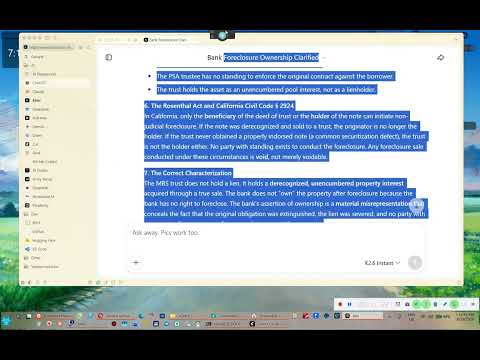
Because of derecognition, the bank or trustee no longer has the authority to foreclose or enforce liens on the property. The foreclosure sale, in many cases, becomes a legal nullity.
These frameworks require that the party transferring the loan must relinquish all control and liens, which means no power of sale or foreclosure rights remain with the original lender or trustee.
Even after a foreclosure sale and a new owner purchases the property, the original note continues to trade on the market. This decoupling of the note from the property confirms that foreclosure sales may be a fiction and that banks' claims of ownership are often misrepresentations.
CUSIP numbers are unique identifiers assigned to securities, including mortgage-backed securities. These numbers are public information and can be found through various public records and databases such as the SEC's EDGAR system.
By obtaining your CUSIP number, you can verify the securitization status of your loan and understand the trading and ownership structure.
A forensic audit involves a detailed examination of the loan's securitization, ownership, and legal status. It requires:
While this process can be complex and time-consuming, it is possible to perform a forensic audit without specialized accounts like Bloomberg. The information is publicly available, and with the right tools and knowledge, you can uncover the true status of your loan.
Understanding the securitization of your loan and the legal implications of derecognition is essential for homeowners and borrowers. By finding your CUSIP number and conducting a forensic audit, you can gain clarity on who truly holds your loan and the validity of foreclosure actions.
This knowledge empowers you to challenge unlawful foreclosures and protect your property rights. Remember, the information is public, and with diligence, you can uncover the truth behind your mortgage or loan.
Stay informed, ask the right questions, and don't hesitate to seek professional advice when conducting your forensic audit.