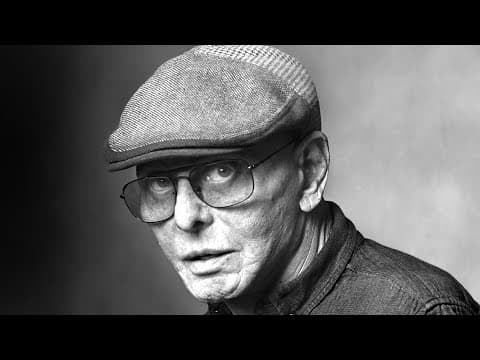
Richard Kuklinski, known as the Iceman, was a notorious contract killer who led a double life as a family man while committing over 100 murders. This blog post explores his chilling confessions, methods of murder, and the psychological factors that shaped his violent life, ultimately leading to his arrest and conviction.
Richard Kuklinski, infamously known as the Iceman, was convicted of multiple murders on May 25, 1988, marking the end of a 30-year spree of cold-blooded killings. His life as a masked criminal was juxtaposed with a seemingly normal family existence, raising questions about the duality of human nature.
In a chilling interview conducted under maximum security at Trenton State Prison, Kuklinski revealed the extent of his violent past. When asked how many people he had killed, he estimated, "approximately more than 100." His demeanor was disturbingly calm as he stated, "It doesn't bother me at all."
Kuklinski's methods were as varied as they were gruesome. He employed guns, strangulation, and even poison, showcasing a chilling creativity in his approach to murder. He described carrying multiple weapons, including three guns and a knife, and recounted a particularly shocking incident where he used a shotgun at a stoplight, killing a man without warning.
One of Kuklinski's preferred methods was cyanide, which he claimed to have used on several occasions. He explained how he could discreetly poison someone by spilling a drink on them or contaminating their food. This method was particularly insidious, as it could go undetected unless specifically tested for.
Despite his violent lifestyle, Kuklinski maintained a facade of normalcy. He was a devoted husband and father, keeping his criminal activities hidden from his family. He described his home life as perfect, stating, "We were the all-American family."
Kuklinski's upbringing was marked by abuse and neglect. Born on April 11, 1935, in Jersey City, he faced a harsh childhood with a father who was physically abusive and a mother who was equally cruel. This environment shaped his worldview, leading him to believe that violence was a means of survival.
As a teenager, Kuklinski learned that inflicting pain could earn him respect. His first murder occurred during a bar fight when he struck a man with a cue stick, leading to the victim's death. This incident marked the beginning of his transformation from victim to predator.
In the 1960s, Kuklinski's criminal activities escalated as he became involved with the Gambino crime family. He transitioned from petty crime to contract killings, becoming a feared enforcer known for his brutality. He operated out of the Gemini Lounge in Brooklyn, a notorious hub for mob-related murders.
Kuklinski's approach to murder was methodical and calculated. He often planned his crimes meticulously, even going so far as to freeze bodies to confuse the time of death. His chilling confession about dismembering victims with a chainsaw highlighted the coldness with which he approached his work.
After decades of evading law enforcement, Kuklinski's luck ran out in the 1980s. A task force was established to investigate him, leading to his arrest in December 1986. The investigation relied heavily on undercover recordings that captured Kuklinski discussing his murders in detail.
During his trial, Kuklinski confessed to several murders, including the killings of George Madeline and Louis Masgay. His demeanor in court was unsettling; he appeared almost cheerful while recounting his violent past. The evidence against him was overwhelming, and he was ultimately convicted of multiple murders.
In the aftermath of his conviction, Kuklinski expressed no remorse for his actions, stating, "I've never felt sorry for anything I've done other than hurting my family." His chilling reflections reveal a man who was deeply disconnected from the moral implications of his actions.
Richard Kuklinski's life as the Iceman serves as a haunting reminder of the complexities of human nature. His ability to compartmentalize his violent tendencies while maintaining a facade of normalcy raises profound questions about morality, identity, and the capacity for evil within us all. As law enforcement continues to uncover the depths of his crimes, the true extent of Kuklinski's legacy remains shrouded in darkness.