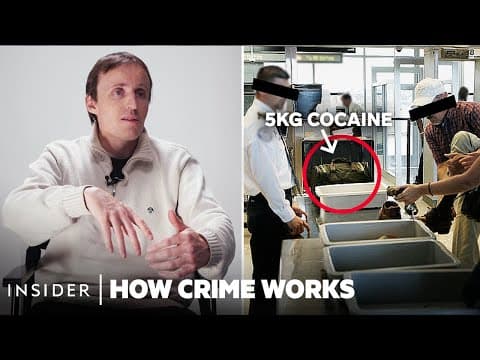
Pieter Tritton, a former cocaine smuggler, shares his experiences in the drug trade, detailing the production, smuggling methods, and the harsh realities of the cocaine business, ultimately advocating for drug legalization as a solution to the ongoing war on drugs.
My name is Pieter Tritton, also known as Posh Pete. I have smuggled over 5 million pounds' worth of cocaine internationally. In this post, I will share insights into how cocaine trafficking works, the risks involved, and the realities faced by those in the drug trade.
Cocaine is primarily produced in Peru, Bolivia, and Colombia. The process begins on rural farms where coca bushes are cultivated. Farmers harvest the coca leaves, which are then transported to laboratories for processing into cocaine. Unfortunately, these farmers are often paid poorly, needing to cultivate an acre of coca bushes to produce just one kilogram of cocaine.
The cost of cocaine in Peru can range from $700 to $1,200 per kilogram. The chemicals required for processing cocaine, such as methanol, hydrochloric acid, and acetone, are heavily regulated. To acquire these chemicals, traffickers often create fake companies to bypass restrictions, as they cannot be purchased by the general public.
One of the most successful methods I employed for smuggling cocaine was impregnating it into rubber. A Colombian associate would process the cocaine into liquid form, which was then mixed with liquid latex to create thin sheets. These sheets were concealed within the ground sheets of tents, which were then transported through customs.
When recruiting individuals to carry the tents, I sought out those with no criminal records, preferably employed and sensible. We would pay them between 10,000 and 12,000 pounds upon their return to Britain, often immediately after handing over the tent.
During my operations, we never lost a shipment, largely due to the effectiveness of our smuggling method, which was undetectable by X-ray or drug-sniffing dogs. However, we avoided trafficking through countries with severe penalties, such as the United States, Thailand, and Saudi Arabia.
Cartels play a significant role in cocaine trafficking, often using shipping containers to transport large quantities. Corruption among port officials facilitates these operations. However, I preferred smaller-scale operations, as larger networks often led to informants and betrayals.
My involvement in drug trafficking ultimately led to my arrest in Ecuador in 2005, resulting in a 12-year prison sentence. During my time in prison, I was diagnosed with complex PTSD due to the violence and chaos I witnessed.
Today, cocaine production levels are higher than ever, with increased purity due to advancements in production techniques. The rise of encrypted communication and cryptocurrencies has made it easier for traffickers to operate, complicating law enforcement efforts.
The drug trade has become more monopolized, with groups like the Albanian Mafia gaining control over trafficking in Europe. Smaller players, like myself, have been pushed out of the market.
In my opinion, the government cannot win the war on drugs. High-ranking police officials often acknowledge this reality. The only viable solution is to legalize drugs, regulate their production, and tax them to mitigate societal costs. By removing the financial incentive for trafficking, we can reduce crime associated with drug trade.
I began selling drugs at a young age, drawn by the entrepreneurial opportunities it presented. However, my experiences led me to understand the devastating impact of drug trafficking on families and communities. Since my release from prison, I have dedicated myself to educating others about the dangers of drug use.
I have authored a book titled "El Infierno," detailing my time in an Ecuadorian prison, and I am currently working on a prequel. Additionally, I am starting a legitimate business focused on importing cacao from Ecuador, steering clear of the drug trade.
The world of cocaine trafficking is fraught with danger, deception, and devastating consequences. My journey through this dark realm has taught me valuable lessons about the importance of making informed choices and the need for systemic change in how we approach drug policy.