Jim Roppel, a seasoned hedge fund manager, shares his trading journey, including early failures, learning from market legend Bill O'Neal, mastering CAN SLIM strategies, and managing large positions with discipline. He discusses identifying market leaders, handling earnings gaps, adapting to market conditions, and the impact of AI on trading. His advice emphasizes cutting losses, patience, and optimism for long-term success.
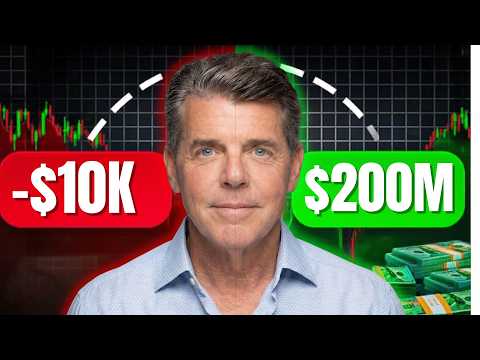
Jim Roppel, a renowned hedge fund manager trading over $200 million, shares his remarkable journey from early setbacks to mastering the art of growth stock trading. Having learned directly from market legend Bill O'Neal, Jim's story is one of perseverance, discipline, and continuous learning.
Jim candidly admits to having blown up his trading account three times, making nearly every mistake possible in the stock market, including over-margining, over-concentrating, and over-trading. His wife once urged him to quit trading due to poor tax returns, but this only fueled his determination.
It took Jim about five years to achieve meaningful profitability. During this time, he discovered the CAN SLIM methodology through Bill O'Neal's book and classes, which transformed his approach to stock selection and risk management.
Jim found CAN SLIM by chance, cutting out mini charts from newspapers and noticing recurring strong stocks. He read Bill O'Neal's book multiple times and attended his classes regularly for over 20 years. Bill's mentorship was pivotal, with personalized feedback on Jim's trades, helping him refine his strategy and discipline.
Bill emphasized cutting losses quickly and focusing on elite market leaders with strong fundamentals and liquidity. Jim learned to avoid chasing every stock and instead concentrate on high-quality, high-growth stocks.
Jim describes himself as an intermediate-term trend trader focusing on high-growth stocks, primarily in technology. Over time, he has evolved from a frenetic over-trader to a more patient investor, entering about 25 stocks a year and managing risk carefully.
He stresses the importance of liquidity, especially when managing large funds, and prefers stocks with triple-digit sales and earnings growth, strong relative strength (RS), and institutional sponsorship.
Jim uses a rigorous screening process, including the "Wanda" system, to find stocks with:
He looks for stocks making new highs with no overhead resistance and prefers those with strong leadership and proven management teams.
Earnings season is a minefield that can yield life-changing trades. Jim often buys stocks in the pre-market after a strong earnings beat, sometimes before fully understanding the news, spreading his purchases throughout the day to manage risk.
He acknowledges that many earnings gap stocks fade initially, so patience and experience are crucial. Stops are typically set based on price action, such as the bottom of the gap or key moving averages.
Early in his career, Jim took excessive risks, sometimes being 200% long on margin. Over time, he learned the importance of position sizing and risk control, now limiting exposure to about 18-22% in a single stock.
He advocates trimming or hedging positions as stocks become extended, especially when approaching key moving averages like the 50-day. Hedging strategies include selling in-the-money calls and adjusting positions dynamically.
Jim emphasizes the importance of holding onto monster winners but managing risk through trimming and hedging. He uses rules like the 3-5-7% stop loss and the 8-week hold rule to avoid premature selling during volatility.
He also highlights the inevitability of pullbacks and the need to be prepared emotionally and strategically to hold through them.
Jim stresses that the overall market trend is critical; nine out of ten stocks follow the market's direction. He monitors moving average alignments, accumulation/distribution ratings, and market volatility (VIX) to gauge market health.
He advises reducing position sizes during choppy or bearish markets and increasing exposure when the market shows bullish alignment and follow-through.
Jim is extremely bullish on AI, considering it the most significant innovation he's seen in 40 years. He believes AI will turbocharge growth across industries, creating new market leaders and opportunities.
He cautions that while AI will disrupt many companies, it will also drive margin expansion and earnings growth, potentially lifting the entire market.
Regarding trading, Jim expects AI and 24/7 markets to change trading dynamics but believes human psychology—fear and greed—will remain the primary drivers of price action.
Jim shares stories of some of his most impactful trades:
He notes that many monster stocks eventually get usurped by new technologies, so continuous vigilance is necessary.
Bill's key lessons include:
Jim recalls Bill's humility and dedication to teaching others, emphasizing that success comes from hard work and continuous learning.
Jim recommends starting with a solid foundation:
He encourages optimism and vision, reminding traders that the market rewards those who believe in big possibilities.
Jim firmly believes the "golden goose" of capitalism—the human spirit to innovate and excel—is alive and well. Despite challenges like socialism or market disruptions, innovation will continue to drive growth and create new market leaders.
He likens the golden goose to a powerful force ready to take flight, fueled by ongoing technological advancements.
Jim Roppel's journey from multiple account blowups to managing a $200 million hedge fund is a testament to resilience, learning, and disciplined trading. His insights into CAN SLIM, risk management, market leadership, and adapting to new technologies like AI offer invaluable lessons for traders at all levels.
His core message is clear: cut losses, focus on elite stocks, manage risk, stay humble, and maintain optimism for long-term success.
For more insights from Jim Roppel, visit RoelReport.com and follow him on X (formerly Twitter).