This comprehensive guide explores the identification and trading of high probability points of interest (POIs) and order blocks in smart money trading strategies. It emphasizes the importance of liquidity sweeps, market dynamics, and effective entry and exit strategies to enhance trading success.
In the world of trading, understanding how to identify high probability points of interest (POIs) and order blocks is crucial for success. This guide delves into the intricacies of these concepts, providing traders with the knowledge needed to pinpoint optimal entry and exit points in the market. By mastering these strategies, traders can significantly reduce risks and enhance their trading performance.
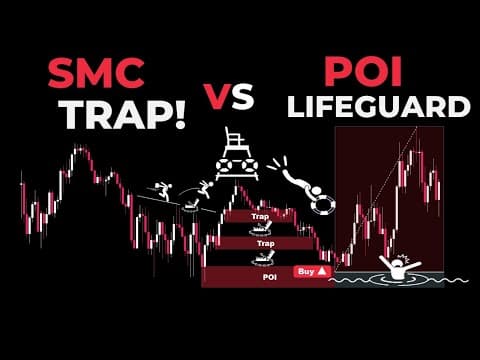
A point of interest (POI) is a specific area in the market where traders believe there is a high probability of price movement, either upward or downward. It is not synonymous with an order block; rather, it refers to zones that have taken out liquidity, typically created by a single candle that sweeps liquidity above or below previous market structures.
Identifying valid POI zones is essential for traders. Entering trades without recognizing these zones can expose traders to unnecessary risks and potential losses. By understanding POIs, traders can gain an edge in the market, allowing them to make informed decisions about when to enter or exit trades.
Order blocks are areas where significant buying or selling activity has occurred, often leading to a reversal in price direction. Smart money traders often consider these blocks as POI areas, placing buy or sell orders at these levels in anticipation of price reversals.
However, not all order blocks are reliable for initiating trades. The market does not always respect these zones, leading to potential losses for traders who rely solely on them. It is crucial to differentiate between valid order blocks and those that may not provide a high probability of success.
A key factor in identifying high probability POIs is the concept of liquidity sweeps. When the price sweeps a liquidity zone before reaching an identified order block, it increases the likelihood of a successful trade. The market relies on liquidity to sustain its movement, and failing to sweep liquidity can result in the price using that zone as a source of liquidity to propel its momentum.
Bearish POI: This is formed by the last buying candle that sweeps liquidity above the previous high, followed by a significant downward movement. For a valid bearish POI, the price must sweep liquidity above the previous high using a single candle, and the subsequent candle should not close higher than the first.
Bullish POI: Conversely, a bullish POI is created by the last selling candle that sweeps liquidity below the previous low before a significant upward movement. Similar to the bearish scenario, the price must sweep liquidity below the previous low with a single candle, and the next candle should not close lower than the first.
To effectively identify POIs, traders must understand market dynamics. For instance, during a bullish rally, multiple demand zones and order blocks may appear, leading to confusion among traders. Recognizing inducement levels—where the price misleads traders into thinking a reversal is imminent—can help avoid market traps.
When analyzing price charts, traders should look for liquidity sweeps and changes in market structure. For example, if the price sweeps liquidity below a low and then reverses, it indicates a potential bullish POI. Conversely, if the price sweeps above a high and then drops, it suggests a bearish POI.
Once a high probability POI is identified, traders should shift their focus to lower time frames to confirm entry signals. This involves looking for a change of character or a valid order block that aligns with the identified POI. Only after confirming these conditions should traders consider entering a position.
Effective risk management is crucial in trading. Traders should set stop-loss orders strategically and be prepared to adjust their positions based on market movements. Understanding the dynamics of liquidity and market behavior can help traders manage risks effectively.
Mastering the identification and trading of high probability points of interest and order blocks is essential for any trader looking to enhance their performance in the markets. By understanding the significance of liquidity sweeps, market dynamics, and effective entry strategies, traders can gain a distinct advantage. Remember, trading is not just about making profits; it requires discipline, continuous learning, and effective risk management.
Thank you for exploring this guide on smart money trading strategies. Keep practicing and refining your skills to achieve success in your trading journey.