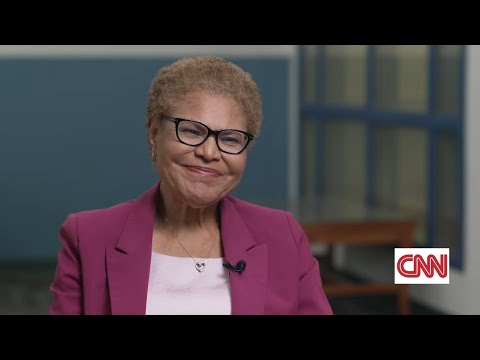
In a comprehensive interview, Mayor Karen Bass addresses her ongoing efforts to combat homelessness in Los Angeles, the challenges faced during her term, including the recent fires, and her plans for re-election. She emphasizes her commitment to ending street homelessness, improving mental health services, and rebuilding the city’s infrastructure, while also responding to criticisms and discussing her political opponents.
Mayor Karen Bass sat down for an in-depth interview to discuss her tenure as the mayor of Los Angeles, her accomplishments, challenges, and vision for the future of the city. The conversation covered critical issues such as homelessness, mental health, the recent devastating fires, and the political landscape as she campaigns for re-election.
Mayor Bass chose to conduct the interview at a location symbolic of the city’s homelessness crisis. She highlighted that health care, particularly mental health and substance abuse treatment, lies at the core of why many people become homeless. She pointed out the unfortunate reality that a hospital facility had been vacant for years and is now being repurposed to serve those struggling with substance abuse and mental illness.
The mayor discussed Proposition One, a voter-approved initiative that provides resources to build facilities focused on mental health and substance abuse treatment. This initiative is seen as a key missing link in addressing homelessness effectively.
When asked about her 2023 goal to end street homelessness by 2026, Mayor Bass acknowledged that while the goal has not yet been met, significant progress has been made. For the first time in years, street homelessness has decreased in Los Angeles for two consecutive years. She attributed past failures to bureaucratic barriers and a lack of commitment from city and county officials to end street homelessness.
The biggest obstacle identified by Mayor Bass is resistance to building interim housing. She explained the shift from old-style shelters to new, improved shelters that offer more privacy and dignity. The mayor emphasized that the city now knows how to get people off the streets and into services, with only a small number refusing due to profound mental illness or criminal behavior.
Mayor Bass supports involuntary hospitalization for those who are profoundly mentally ill and unaware of their condition, though current laws and facility availability limit this option. She cautioned against incarcerating homeless individuals, noting the high costs and overcrowding in jails.
The mayor addressed criticism regarding her absence during a major fire event while she was in Ghana. She refuted claims that she was unaware of fire warnings, stating that she was in constant communication with city officials and took the first available flight back. She expressed deep regret for not being physically present during the crisis.
Mayor Bass acknowledged that both the city and county were unprepared for the severity of the Santa Ana winds and the resulting fires. She stressed the need for better coordination and preparation for future weather emergencies.
The mayor discussed efforts to encourage rebuilding with fire-resistant materials, citing collaboration with experts like Jonathan Scott from the construction industry. The city has fast-tracked thousands of permits to aid reconstruction and is promoting home hardening to increase resilience against future fires.
Mayor Bass recounted her meeting with former President Donald Trump at the White House to address insurance and banking industry challenges faced by residents rebuilding after fires. She highlighted her experience in Congress as instrumental in navigating federal relationships and securing support.
Following an executive order directing federal staff to assist in Los Angeles, the mayor worked closely with the EPA administrator and advocated for the president to hold insurance and banking industries accountable. This collaboration has led to improved responses for affected residents.
Mayor Bass identified three key achievements during her term:
She acknowledged the difficulty in communicating these successes amid the challenges of social media and misinformation.
Regarding her opponent Spencer Pratt, Mayor Bass noted his surprising civility during their debate but expressed concerns about his lack of governmental experience and the dangerous use of AI-generated violent imagery in his campaign. She also commented on other candidates, emphasizing her practical experience and collaborative approach as key differentiators.
The mayor recognized widespread voter frustration due to economic pressures and political instability. She cautioned against the allure of "superhuman" savior figures in politics, emphasizing the importance of realistic and effective governance.
Mayor Bass outlined her plans for the future:
She stressed the importance of experience and collaboration in managing the nation’s second-largest city.
When asked about concerns regarding the pace of change, Mayor Bass acknowledged the frustrations but reaffirmed her commitment to progress and her readiness to continue serving. She emphasized that her extensive experience in government equips her to navigate complex challenges and deliver results for Los Angeles.
This interview provides a detailed look at Mayor Karen Bass’s approach to leadership, her achievements, and her vision for Los Angeles as she seeks re-election. Her focus remains on ending homelessness, improving public safety, managing crises effectively, and rebuilding the city’s infrastructure for a better future.








