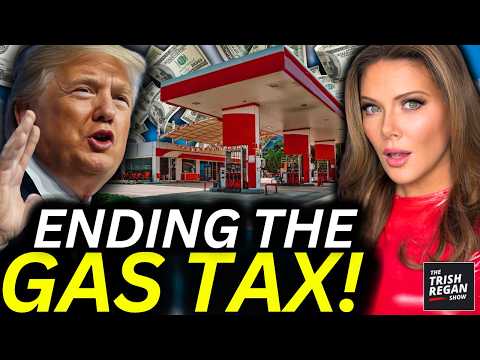
President Trump has proposed eliminating the federal gas tax to combat rising fuel prices, framing it as a strategic move against economic pressures from Iran and political opposition from Democrats. This initiative is part of a broader economic and geopolitical strategy involving sanctions on Iran, energy independence, and technological competition with China. The proposal faces political hurdles but highlights the administration's focus on energy and national security.
In a bold move to address soaring gas prices, President Trump has announced plans to eliminate the federal gas tax, a proposal that has stirred significant political debate and reflects a broader strategy involving economic pressure on Iran and energy independence for the United States.
President Trump has declared his intention to reduce, at least temporarily, the 18-cent federal gas tax to alleviate the financial burden on American consumers. This initiative is seen as a direct response to the rising fuel prices at the pumps, which have been exacerbated by geopolitical tensions and supply chain disruptions.
Trump emphasized that the tax reduction would remain in effect until it is no longer appropriate to do so, signaling a flexible approach based on market conditions. He stated that the move is necessary because high gas prices are hurting people across the country.
The proposal has ignited political controversy, particularly among Democrats, who are portrayed by some commentators as resistant to lowering gas taxes. The administration challenges Democrats to oppose the tax cut, suggesting that doing so would make them appear unsympathetic to the struggles of everyday Americans.
Senator Josh Hawley of Missouri has introduced legislation to ensure the proposal passes through Congress, highlighting the procedural hurdles the tax cut must overcome. The political theater surrounding this issue underscores the deep partisan divides on energy policy and taxation.
The tax cut proposal is intertwined with the administration's hardline stance on Iran. President Trump has firmly rejected Iran's offers for negotiation, maintaining a blockade that aims to cripple the Iranian economy. This economic pressure, dubbed "Operation Economic Fury," has led to severe inflation and mass layoffs within Iran, as reported by major news outlets.
Trump's strategy includes preventing Iran from enriching uranium and controlling the Strait of Hormuz, a critical chokepoint for global oil supply. The blockade is described as a "wall of steel," effectively stopping Iranian oil exports and contributing to the global energy supply challenges.
A key element of Trump's approach is boosting domestic oil production to reduce reliance on foreign sources. He highlighted the abundance of oil in Texas, Louisiana, Alaska, and even Venezuela, suggesting that the U.S. has sufficient resources to meet its energy needs.
The administration is focused on expanding infrastructure, such as building larger docks for oil shipments, to facilitate increased production and distribution. This emphasis on energy independence is also linked to national security concerns, ensuring that the U.S. controls its energy supply.
Beyond immediate energy concerns, the administration recognizes the importance of energy in supporting emerging technologies like artificial intelligence (AI). Trump and his advisors stress that successful AI development requires substantial energy resources, making energy policy critical to maintaining technological leadership, especially in competition with China.
The administration is preparing for discussions with China on AI and energy, underscoring the strategic importance of these sectors in global geopolitics.
Despite the challenges, some observers note that current gas prices are still lower than during previous administrations, such as under President Biden. Local gas station owners express optimism that prices will eventually decline as production ramps up and geopolitical tensions ease.
However, the economic strain on countries like Iran is severe, with inflation rates soaring and basic necessities becoming unaffordable for many citizens. The disparity between the ruling elite and ordinary people in Iran adds complexity to the situation.
President Trump's proposal to eliminate the federal gas tax is more than a simple economic measure; it is part of a comprehensive strategy addressing domestic economic relief, geopolitical tensions with Iran, energy independence, and technological competition on the world stage.
While the proposal faces political opposition and legislative hurdles, it reflects the administration's commitment to leveraging all available tools—the so-called "Trump card"—to support American consumers and national interests.
As the situation unfolds, the interplay between energy policy, international diplomacy, and technological advancement will continue to shape the economic landscape and global relations.
This article has synthesized the key points from recent statements and developments regarding President Trump's energy and foreign policy initiatives, providing a detailed overview for readers seeking to understand the current dynamics affecting gas prices and international relations.








