The Great Potato Famine of the 1840s devastated Ireland due to potato blight and monoculture farming. Today, rising temperatures and pesticide resistance threaten potatoes again. Scientists and farmers are developing diverse solutions, including breeding resilient strains and using genetic editing, to prevent a future famine.
Back in the mid-1800s, humanity encountered one of the most infamous and deadly food catastrophes of all time: the Great Potato Famine. At a time when potatoes provided many communities with most or all of their daily nutrients, a devastating disease tore across farmlands, destroying crops and leaving millions to starve. While this historical event is often discussed in classrooms, the issues surrounding potato cultivation are far from resolved. With pesticide resistance and global temperatures on the rise, potatoes may be in trouble again. Here’s what scientists and farmers are doing right now to prevent the next Great Potato Famine.
Potatoes were first domesticated more than 7,000 years ago by people living near the Andes Mountains in South America. The diverse climate of the Andes allowed for the growth of numerous potato varieties. In fact, the International Potato Center in Peru holds almost 5,000 varieties of potatoes, showcasing their incredible diversity. However, when potatoes were introduced to Europe by colonizers, this diversity was not replicated. Instead, farming practices favored monocultures, leading to a reliance on only a few potato species.
Potatoes became a staple in Ireland, especially among those who could not cultivate their own food on large farms. They are easy to grow, even on small, less fertile plots of land, and are packed with nutrients. By the late 1700s and early 1800s, many Irish people relied heavily on potatoes for their daily sustenance. Unfortunately, this reliance would soon lead to tragedy.
In the 1800s, a fungus-like pathogen known as potato blight emerged, causing devastating effects on potato crops. The initial signs of blight include small green lesions on leaves, which can quickly develop into white mildew and rotting blotches, ultimately destroying the plants. In South America, the diverse potato varieties helped contain outbreaks, but the monoculture practices in Europe meant that once blight took hold, it could devastate entire fields.
During the 1840s, Ireland faced one of the worst outbreaks of potato blight, exacerbated by unhelpful policies from the UK that restricted Irish farmers' ability to grow food for themselves. The result was the infamous Irish Potato Famine, which led to the deaths of around one million people and forced another million to emigrate. The famine had a lasting impact on Ireland's population and culture.
It wasn't until later in the 19th century that scientists discovered a solution to potato blight: the Bordeaux mixture, a combination of lime and copper sulfate that effectively killed the pathogen. This marked the beginning of modern fungicides, which have protected potato crops for over a century. Today, more than 300 million tons of potatoes are produced annually, making them one of the world's most important food crops, second only to rice and wheat.
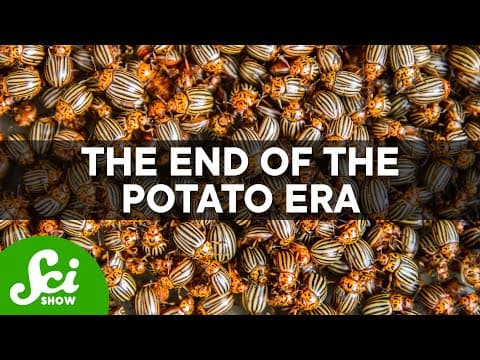
Despite the advances in pest control, potato blight remains a significant threat. Over the past few decades, several outbreaks have occurred, and many tons of potatoes are lost each year due to infection. The adaptability of potato blight means that it is constantly developing resistance to chemical treatments. Additionally, pests like the Colorado potato beetle pose a serious risk, as they can also develop resistance to pesticides and migrate to new areas.
The changing climate adds another layer of complexity. Rising global temperatures, increased droughts, and extreme weather events are expected to favor pests like the potato beetle while also creating conditions conducive to potato blight. For instance, Germany lost 30% of its potato crops due to a drought in 2018. Predictive models suggest that without intervention, global potato crops could decline by as much as 25% in the coming decades, with some regions facing nearly total loss.
Fortunately, scientists and farmers are actively working on solutions to prevent another potato famine. Some of these solutions involve breeding more resilient potato strains. Certain potato plants have shown the ability to survive harsh conditions better than others, leading to the development of new strains that can withstand droughts and heat waves. For example, in India, the kufri pukhraj potato matures early and is drought-resistant, while the kufri sindhuri is particularly heat-resistant.
However, breeding for multiple traits can be challenging. This is where genetic editing comes into play. Recent studies have shown that by deleting specific genes in potatoes, scientists can enhance their resilience to drought and resistance to blight.
In addition to genetic solutions, farmers are employing various agricultural techniques. For instance, covering potato fields with straw mulch has been shown to reduce the impacts of both potato blight and beetles. Moreover, certain beneficial root bacteria can promote healthy plant growth and help potatoes thrive even in adverse conditions.
The Great Potato Famine of the past was devastating primarily because people were unprepared for it. Today, we have a wealth of knowledge and tools at our disposal to prevent a similar catastrophe. Through a combination of specialized farming techniques, targeted breeding, and genetic engineering, we can safeguard the future of potatoes. As we continue to innovate and adapt, let us hope that scientists succeed in their quest to protect this vital food source, ensuring that we can continue to enjoy our beloved potato dishes for generations to come.