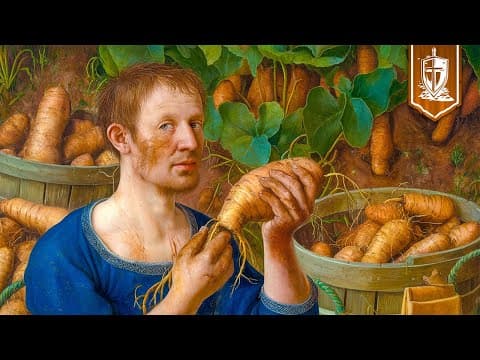
Before potatoes became the staple crop in Europe, medieval farmers relied on resilient superfoods like parsnips, emmer wheat, and fava beans. These crops thrived in harsh conditions, provided essential nutrients, and played a crucial role in sustaining populations. As modern agriculture faces challenges, revisiting these ancient crops may offer sustainable solutions for the future.
Before potatoes took over Europe, people had plenty of other amazing crops to rely on. These lost foods survived harsh winters, grew in poor soil, and kept medieval folks full and strong. Over time, however, they were forgotten. In this post, we will explore some of these medieval superfoods that might be even better than potatoes.
Before potatoes crossed the Atlantic in the 1500s, parsnips ruled European dinner tables for centuries. These pale, carrot-like vegetables were ubiquitous in medieval kitchens, serving as the equivalent of modern French fries. Medieval farmers grew parsnips by the wagonload for good reason:
Parsnips were so important that they appeared in medieval taxation records, with farmers paying a portion of their harvest as tax to lords or the church. Monasteries maintained large parsnip fields to feed the poor during winter, acting as medieval food banks.
Another crucial crop was emmer wheat, one of the first crops humans ever domesticated, dating back roughly 10,000 years. By medieval times, it had already been feeding civilizations for millennia. Emmer wheat was special for several reasons:
However, emmer gradually disappeared in favor of common wheat, which was easier to process. Despite its nutritional advantages, emmer was pushed out as agriculture industrialized.
Fava beans, also known as broad beans, were medieval Europe's primary protein source long before modern meat production became commonplace. These legumes were essential for several reasons:
Fava beans were so essential that local ordinances in parts of England required households to dedicate a portion of their gardens to growing them. They were often prepared in various ways, including soups, stews, and even as patties during Lent when meat consumption was forbidden.
Buckwheat, despite its name, is not related to wheat at all. It is actually a seed related to rhubarb and was a crucial crop for medieval farmers:
Medieval cooks used buckwheat in porridge, pancakes, rustic bread, and even beer. Its ability to improve soil health made it a valuable crop, but as agriculture industrialized, it fell out of favor due to its quirky growing habits.
Good King Henry, a hardy green, was another important crop that could withstand harsh winter conditions. It was versatile and nutritious:
Despite its popularity, Good King Henry almost completely disappeared from diets by the 19th century as farming became more commercialized.
Barley was perhaps the most defining crop of medieval life, serving as food, drink, and a staple ingredient:
Barley brewing created opportunities for women in medieval society, as brewing was often considered women's work until the later Middle Ages.
Today, many food experts and farmers are looking back at these resilient crops with renewed interest. As modern agriculture faces challenges such as climate change, these ancient varieties offer surprising solutions:
Small-scale farmers and chefs are already leading the revival of these crops, with emmer wheat appearing as farro on restaurant menus and craft brewers experimenting with historical grain varieties.
In conclusion, perhaps it is time we learn from the practical wisdom of medieval farmers who managed to feed populations without modern agricultural practices. Rediscovering these ancient crops could provide valuable insights into sustainable farming and nutrition for future generations.