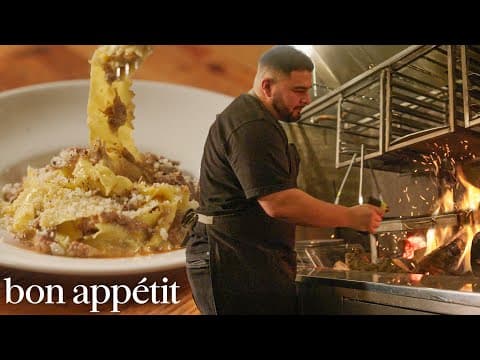
Antico Novo, an Italian restaurant in Los Angeles, focuses on ancient cooking techniques and hyper-regional dishes. Chef Aruro Roas leads a dedicated team in preparing traditional meals using fire cookery and unique ingredients, emphasizing consistency and flavor development throughout the day.
Antico Novo is an Italian restaurant located in a strip mall in Los Angeles, dedicated to the art of fire cookery and the revival of nearly forgotten dishes from Italy's countryside. The restaurant honors hyper-regional dishes, showcasing the rich culinary traditions of Italy. Chef Aruro Roas, the chef de cuisine, leads a team of about 15 people, ensuring that every dish meets the highest standards of taste and quality.
As the day begins, Chef Roas prepares for a busy service. At 10:00 AM, he checks the massive prep list displayed on a whiteboard in the kitchen. Each station has its own prep list, detailing the components needed for each dish. This meticulous organization is crucial for maintaining consistency in a smaller restaurant like Antico Novo.
One of the restaurant's signature techniques is cooking with fire, a method that Chef Roas became familiar with through his experiences in the Italian countryside. He explains that many farms have traditional cast iron woodfire stoves, and he aims to replicate that experience in his kitchen. The choice of wood is also important; almond wood is preferred for its gentle smoke, which enhances the flavor of the meat without overpowering it.
At 11:00 AM, the prep team arrives, and the kitchen buzzes with activity. Chef Roas begins by inspecting a 25-pound goat sourced from Anderson Ranch in Oregon, which will be used in a traditional pasta dish called fileta from Calabria. This dish is a testament to the restaurant's commitment to honoring the stories and traditions of Italian cooking.
Chef Roas carefully butchers the goat, ensuring it is prepared for roasting. He opens the goat up to allow for even cooking and flavor development. The goat will be roasted over the fire for several hours, imparting a rich smoky flavor that is characteristic of traditional Italian cuisine.
As the goat cooks, Chef Roas prepares various ragus, including one made from seasoned rabbits and beef cheeks. These meats are cooked down until tender and then ground together with parmesan and escarole, creating a flavorful filling for pasta. The use of unusual cuts of meat, often referred to as "poor man's cuisine," reflects the restaurant's philosophy of utilizing every part of the animal.
Throughout the day, Chef Roas checks the pasta production, ensuring that the consistency and texture are perfect. He oversees the preparation of different types of pasta, including papardelle and ravioli, each requiring specific dough formulations. The chef emphasizes the importance of feeling the dough to assess its hydration and elasticity, adapting to seasonal changes that affect the ingredients.
At noon, the team begins the process of making focaccia, a task that requires careful attention and technique. Chef Roas explains that the yeast must not come into contact with salt too early, as it can kill the yeast and prevent proper rising. The focaccia dough undergoes several folds to build structure, a process that is crucial for achieving the desired texture.
Around 12:15 PM, Chef Roas meets with purveyors from Truffle Boys to select fresh truffles from Italy. Building relationships with suppliers is essential for ensuring the quality of ingredients used in the restaurant. The chef inspects the truffles for aroma, structure, and size, selecting the best ones for his dishes.
As the clock approaches 1:00 PM, the line cooks arrive, and Chef Roas wraps up the final preparations for service. He checks the meats, ensuring they are perfectly cooked and ready to be incorporated into the dishes. The goat, now beautifully roasted, is flipped to achieve an even crispness on both sides.
By 2:20 PM, the focaccia is ready for its final fold, and Chef Roas emphasizes the importance of technique in this step. As service time approaches, he conducts a final check of all components, ensuring everything is seasoned and ready for the guests. The kitchen is a hive of activity, with the team preparing for the rush of diners.
During service, Chef Roas takes on the role of conductor, ensuring that each dish is prepared correctly and served at the right time. He maintains a high standard of quality, tasting every component and guiding his team through the busy service. The guests can see the kitchen's operations, adding to the excitement of the dining experience.
Antico Novo is more than just a restaurant; it is a celebration of ancient Italian cooking techniques and regional flavors. Under the leadership of Chef Aruro Roas, the team works tirelessly to revive forgotten dishes and honor the culinary traditions of Italy. Through meticulous preparation and a commitment to quality, Antico Novo brings a taste of Italy's rich heritage to Los Angeles, one dish at a time.