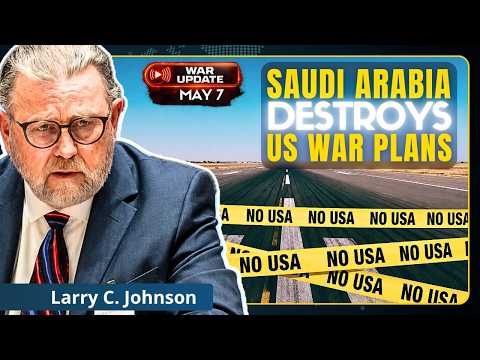
Saudi Arabia has ceased allowing US military operations from its territory, effectively ending Operation Freedom. This move, amid ongoing tensions with Iran, reflects growing Gulf Arab disillusionment with US protection and a pivot towards China and Russia's regional security framework. Despite US hopes, Iran remains firm on sanctions relief demands, while the US faces dwindling military resources and rising domestic economic pressures.
In a significant development in the ongoing Iran conflict, Saudi Arabia has reportedly stopped allowing the United States to use its airbases for military operations, effectively ending the US-led Operation Freedom. This decision marks a critical shift in regional dynamics and highlights the growing complexities in US-Iran relations and Gulf Arab alliances.
Larry Johnson, a seasoned analyst on US-Iran affairs, provides insight into the current state of the conflict. The US administration under Donald Trump has exhibited inconsistent policies, oscillating between aggressive military posturing and attempts at negotiation. While there have been hopes for a diplomatic resolution, fundamental disagreements remain, particularly regarding sanctions relief.
Iran demands immediate lifting of sanctions and the return of frozen assets, citing past experiences where agreements like the JCPOA were undermined by unilateral US actions. Conversely, the US prefers a phased approach to easing sanctions, creating a deadlock.
The announcement of Operation Freedom was reportedly made without consulting Saudi Arabia, leading to their strong objection. Saudi Arabia has now informed the US that it will no longer permit air operations from its territory. This move is confirmed by military sources and reflects Saudi frustration over being sidelined and exposed to attacks despite US promises of protection.
The Gulf Arab states, including Qatar, Kuwait, Bahrain, and the United Arab Emirates, are reassessing their reliance on US military support, especially after the US air defense systems failed to prevent significant damage to their bases during recent attacks.
China and Russia are actively engaging with Gulf states to propose a new regional security architecture that excludes the US. This coordinated effort aims to establish a framework based on coexistence rather than deterrence through military threat.
Recent diplomatic meetings, including Iranian Foreign Minister Arachi's visit to Beijing and discussions between Chinese and Russian officials, underscore this strategic pivot. China has also encouraged its refineries and banks to ignore US sanctions on Iranian and Russian oil, signaling defiance against Western pressure.
The US faces significant challenges in sustaining its military campaign. Missile inventories, including Tomahawks and Patriot interceptors, are reportedly depleted by 50-90%, limiting offensive and defensive capabilities.
Economically, the US blockade on Iran is largely ineffective, with many Iranian ships successfully bypassing it. Iran maintains access to alternative trade routes through the Caspian Sea, Turkmenistan, and Pakistan, which has opened multiple transportation corridors.
The global oil market is also impacted, with 20% of the world's oil supply threatened by the Strait of Hormuz blockade. Oil prices have surged, causing inflationary pressures worldwide, including in the US, where gasoline prices have risen significantly, affecting everyday expenses.
Despite official narratives, the actual price of oil at delivery points like Singapore far exceeds futures market prices, indicating market manipulation. This discrepancy exacerbates inflation and economic strain on consumers.
The US administration is caught between maintaining pressure on Iran and managing domestic economic fallout, including rising fuel costs that affect public sentiment.
Contrary to US intelligence assessments suggesting internal Iranian discord, Iran's leadership is reportedly more united than ever, bonded by shared experiences in the Iran-Iraq war.
Iran remains firm on its demands for immediate sanctions relief and security guarantees against future attacks. While still open to negotiations, Iran insists on these conditions as prerequisites.
Israel remains a significant spoiler in the peace process, continuing military operations in Lebanon and Gaza. Israeli leadership is reportedly unsettled by US negotiations with Iran that exclude Israeli input, increasing pressure on the US administration to maintain a hardline stance.
The cessation of US military operations from Saudi Arabia and potentially other Gulf states like Qatar signals a diminishing US influence in the region. Gulf states are exploring alternatives with China and Russia, who offer a new security framework focused on coexistence and economic connectivity.
This shift could lead to a de-escalation of the conflict, driven by economic imperatives and changing geopolitical alliances. However, the US faces internal challenges, including depleted military resources and rising domestic economic pressures, which may force a reassessment of its Iran policy.
The Iran conflict is at a critical juncture, with Saudi Arabia's withdrawal of military support to the US marking a pivotal moment. The growing alliance between Iran, China, and Russia, coupled with Gulf Arab disillusionment with US protection, suggests a realignment of regional power structures.
US policy inconsistencies, military resource constraints, and economic challenges complicate the path forward. Iran's steadfast demands and unified leadership further solidify its position.
As the situation evolves, the international community watches closely, anticipating whether diplomatic solutions will emerge or if the conflict will persist amid shifting alliances and strategic recalibrations.
For more detailed analysis and updates, visit Larry Johnson's homepage at sonar21.com or subscribe to his Substack for free access to his insights.








