Silver prices are surging due to market manipulation, increased demand from China, and geopolitical tensions involving the US, China, and Russia. The physical silver market is tightening, lease rates are volatile, and major financial institutions like JP Morgan Chase face challenges. Experts predict silver will outperform gold significantly in the near future, potentially reaching unprecedented highs.
Silver prices have been showing remarkable strength recently, with significant daily gains that hint at a major market shift. The days of minor fluctuations, known as "dollar days," seem to be behind us, and larger price jumps of $5, $10, or even $20 in a day are becoming more common. This article explores the factors driving silver's rise, the market manipulation involved, geopolitical influences, and what the future may hold for this precious metal.
Silver is arguably the most important asset on the planet, even more critical than some leading technology companies like Nvidia. This is due to silver's unique conductive and thermodynamic properties, which are essential for manufacturing high-speed computer chips and various electronic devices. Without silver, many modern technologies, including the very platform enabling this discussion, would not exist.
Despite its importance, silver prices have been artificially suppressed for decades, with market rigging dating back to the 1850s. The futures and options markets, controlled by major financial institutions and governments, illegally set silver prices far below their true market value. This manipulation is widely recognized by countries like China and Russia, as well as informed observers worldwide.
The only way to discover silver's true value is through free trading in the physical market, which requires overpowering the manipulative forces in the futures market.
Recent geopolitical developments add complexity to the silver market. Former President Donald Trump’s visit to China coincides with China importing more silver than it has in 20 years, signaling strategic accumulation. China imported over 800 tons of silver in March alone, with over 50 million ounces entering the country in the first quarter of the year.
Trump, China’s President Xi Jinping, and Russian President Vladimir Putin are reportedly collaborating in secret to dismantle what is described as the "deep state" or "evil cabal" controlling global affairs. This alliance, while shrouded in secrecy, could have profound implications for global trade, including the silver market.
Historically, gold has outperformed silver over long periods. However, recent data shows silver is beginning to outperform gold significantly:
Although gold has outperformed silver over the last 20 years, this trend is expected to reverse soon, with silver prices accelerating faster due to tightening supply.
Silver supply is relatively steady, with about 800 to 830 million ounces mined annually. Industrial demand remains consistent, but price volatility is extreme due to market manipulation. This volatility discourages mining companies from expanding production, as unpredictable prices make business planning difficult.
The question arises: what price would it take to incentivize holders to melt down silver items like coins and bars to supply the market? Experts suggest that at very high prices, such as $800 per ounce, holders would be reluctant to sell, anticipating further gains and fearing the collapse of fiat currencies.
Silver lease rates have shown extreme volatility since 2008, particularly after JP Morgan was implicated in market manipulation. The bank leases silver at negative interest rates to sublease it, maintaining control over the physical metal. Other banks like Bank of America, Deutsche Bank, and Wells Fargo have also been involved.
This leasing system creates artificial supply and demand dynamics, contributing to price volatility. Investors are advised to hold physical silver rather than relying on ETFs or paper silver, which may be nationalized or inaccessible during a market crisis.
JP Morgan Chase, historically the largest holder of silver derivatives, has seen a shift in its position. As of the third quarter of last year, it is no longer the largest net derivative holder, dropping to third place. This change suggests other players are exiting derivatives, possibly anticipating a market upheaval.
Data from last year shows JP Morgan took in more silver than it delivered in nine out of twelve months, indicating efforts to rebuild physical silver inventories. However, in the first five months of this year, the bank has had to provide more metal than it took in, signaling tightening supply.
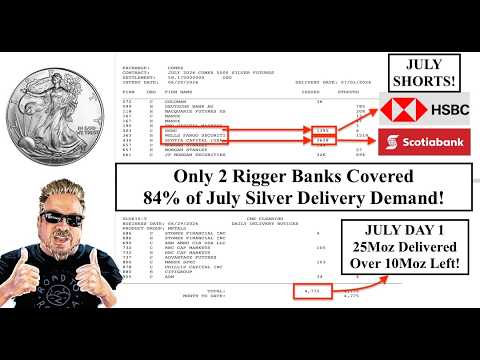
Recent contract rollovers have shown unusual behavior, with 79 million ounces not rolled over but bought out in cash, indicating a lack of physical silver to deliver. This is a strong sign of market stress.
Currently, about 5 million ounces remain undelivered 13 days into the delivery month, representing 20% of expected deliveries. This shortage may lead to increased deliveries in the coming days as lease agreements are settled.
Silver is poised for a significant price increase, potentially reaching $888 per ounce, a number symbolically important in Chinese culture. The combination of geopolitical tensions, market manipulation unraveling, and physical supply constraints creates a perfect storm for silver's price to soar.
Investors are encouraged to acquire physical silver and be cautious with paper assets and cryptocurrencies, which may face severe disruptions during financial crises.
The silver market is undergoing transformative changes driven by geopolitical alliances, market manipulation exposure, and shifting supply-demand dynamics. Silver is expected to outperform gold dramatically in the near future, with prices potentially reaching unprecedented highs. Holding physical silver is increasingly important as the market prepares for what could be a historic surge.
Stay informed and consider the implications of these developments on your investments and financial security.
This analysis is based on current market observations and geopolitical events and should be considered as part of a broader investment strategy.