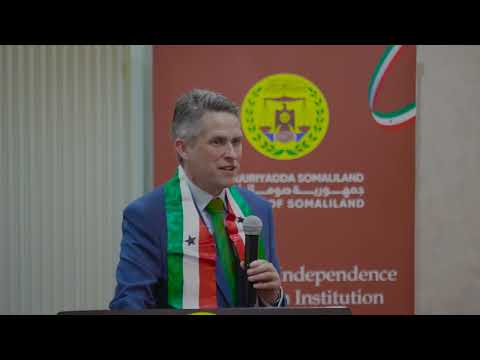
Sir Gavin shares his profound experience visiting Somaliland, highlighting its resilience, democratic values, and progress despite lack of international recognition. He contrasts Somaliland's achievements with the turmoil in Somalia and advocates for global acknowledgment of Somaliland's sovereignty and potential as a stable nation in a challenging region.
In a heartfelt address, Sir Gavin shares his personal journey and reflections on Somaliland, a region that has endured immense hardship yet emerged as a symbol of hope and resilience. Despite being unrecognized internationally, Somaliland has demonstrated remarkable progress in governance, democracy, and social development. Sir Gavin emphasizes the need for the world to acknowledge Somaliland's achievements and potential.
Sir Gavin begins by recounting his initial knowledge of Somaliland, which was primarily through reports of the tragic genocide the region suffered. His first visit to the Horn of Africa was to Mogadishu, Somalia's capital, where he witnessed firsthand the devastation caused by war. He describes Mogadishu as a once-beautiful city ravaged by conflict, with a government struggling to maintain control even over the capital itself.
He observed a country divided and plagued by terrorism, contrasting sharply with the aspirations of a nation seeking to build a stable state to serve its people.
Motivated by his experiences in Somalia, Sir Gavin expressed a desire to visit Somaliland, a place not officially recognized but seemingly doing many things right. Upon arriving in Hargeisa, Somaliland's capital, he was struck by the nation's commitment to its people.
He witnessed democratic elections where every citizen had a vote, a strong emphasis on education for both boys and girls, and a dedication to freedom. Somaliland appeared to embody the values that Western nations often advocate for in good governance and citizenship.
Sir Gavin highlights a paradox: while Somaliland adheres to democratic norms and values, it remains unrecognized by Britain and other countries. Conversely, Somalia, which has struggled with governance and stability, receives more international support.
This discrepancy motivated Sir Gavin to advocate for Somaliland's recognition, viewing it as a noble cause to support a nation that has demonstrated resilience and good governance despite significant challenges.
The people of Somaliland have faced numerous battles, building their nation largely on their own. Emerging from the rubble of genocide and conflict inflicted by the Mogadishu regime, they have rebuilt cities, established businesses, and fostered hope.
Despite being in a volatile region with challenging neighbors and limited assistance, Somaliland continues to serve as a beacon of what a nation should aspire to be.
Sir Gavin expresses hope that his institute can be a powerful ally and constant partner to Somaliland's leadership and people. The goal is to support Somaliland in making strong, logical arguments for recognition in courts of law and on the international stage.
He emphasizes the importance of using every means necessary to ensure the world recognizes Somaliland's true nature and potential.
Sir Gavin is confident that truth and good intentions will ultimately overcome the malign efforts of Somaliland's southern neighbor. He believes that together, Somaliland and its supporters will triumph, allowing Somaliland to shine brightly for generations to come.
Sir Gavin's reflections underscore Somaliland's remarkable journey from tragedy to a hopeful future. His call for international recognition is rooted in the values Somaliland upholds and the resilience it has shown. As Somaliland continues to build its nation, global acknowledgment and support remain crucial for its sustained success and stability in the Horn of Africa.
Thank you for reading this comprehensive reflection on Somaliland's path and the advocacy for its rightful place in the international community.








