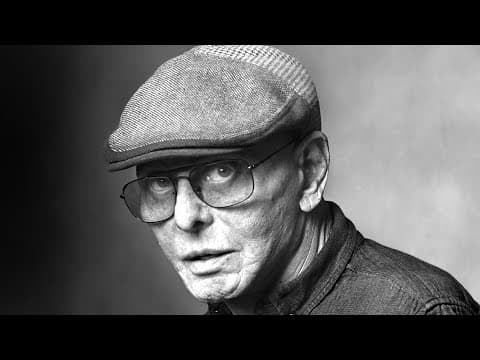
Ivan Milat, known as the Backpack Killer, terrorized Australia in the late 1980s and early 1990s, murdering seven young backpackers in the Bangalow State Forest. His violent upbringing, criminal history, and eventual capture reveal a disturbing portrait of a man whose actions left a lasting impact on the nation. Despite his conviction, questions about his potential accomplices and the extent of his crimes linger, culminating in a legacy of horror that continues to haunt Australia.
In the realm of true crime, few stories are as haunting as that of Ivan Milat, a man whose ordinary facade concealed a monstrous reality. Known as the Backpack Killer, Milat's gruesome acts of violence transformed the picturesque Australian Outback into a chilling hunting ground for unsuspecting travelers. This blog post delves into the life of Ivan Milat, exploring his troubled upbringing, the horrific crimes he committed, and the lasting impact of his actions on Australia.
Ivan Milat was born Robert Marco Milat on December 27, 1944, in Guildford, New South Wales, a suburb of Sydney. He was the fifth of 14 children in a family marked by violence and dysfunction. His father, a war veteran, was known for his abusive behavior, often seen beating his children with a piece of wood. This environment fostered a sense of anger and rebellion in Ivan and his siblings, leading to early run-ins with the law.
Growing up on a farm, Ivan and his brothers were notorious troublemakers, engaging in petty crimes from a young age. By the age of 13, Ivan's antisocial behavior led to his placement in a religious boarding school. However, his criminal activities escalated, culminating in a series of thefts and violent incidents throughout his teenage years.
In 1962, at the age of 18, Ivan attempted to rob a taxi driver, resulting in the driver being shot and paralyzed. Shockingly, an innocent man was wrongfully convicted for this crime, while Ivan faced no consequences. His criminal behavior continued to spiral, leading to multiple arrests for theft and robbery throughout the 1960s and early 1970s.
In 1971, Ivan kidnapped two 18-year-old hitchhikers at knife point, sexually assaulting one of them. Despite the testimony of the victims, he was acquitted of the charges, a pattern that would continue throughout his criminal career. In a desperate attempt to evade prosecution for another rape charge, Ivan faked his own suicide, only to resurface in New Zealand before returning to Australia.
By the late 1980s, Ivan Milat's violent tendencies had escalated to a horrifying level. Between 1989 and 1992, seven young backpackers vanished while traveling through Australia. Their bodies were later discovered in the Bangalow State Forest, revealing a pattern of brutal murders that shocked the nation.
The victims included:
Each crime scene bore chilling similarities, including the presence of 22 caliber shell casings and makeshift campsites near the victims' remains. The brutality of the murders, including stabbings and execution-style killings, painted a grim picture of a serial killer at work.
The investigation into the backpacker murders was slow and fraught with challenges. It wasn't until 1993 that a significant breakthrough occurred when Paul Onions, a British backpacker who had narrowly escaped an attack by Ivan, came forward with his story. His testimony helped police connect Ivan to the murders.
In February 1994, police began surveillance on Ivan's home, gathering evidence that linked him to the crimes. They discovered weapons matching those used in the murders and personal items belonging to the victims. On May 5, 1994, Paul Onions identified Ivan as his attacker, leading to Ivan's arrest.
Ivan Milat's trial began in March 1996, with overwhelming evidence presented against him. Despite his claims of innocence, the jury found him guilty of all seven murders, sentencing him to life in prison without the possibility of parole. His trial revealed the extent of his violent behavior and the impact of his crimes on the victims' families.
Even after his conviction, questions about Ivan's potential accomplices and the full extent of his crimes lingered. In 2005, a deathbed confession from Ivan's former lawyer suggested that Ivan's sister may have been involved in the murders, raising further speculation about the Malat family's dark legacy.
In 2019, Ivan was diagnosed with terminal cancer. Despite attempts by authorities to elicit confessions from him, he remained unrepentant, famously stating, "People die, they should just get over it." Ivan Milat passed away in October 2021, leaving behind a legacy of horror that continues to haunt Australia.
The story of Ivan Milat is a chilling reminder of the darkness that can lurk beneath the surface of seemingly ordinary lives. His heinous acts not only claimed the lives of seven young backpackers but also left a lasting scar on the Australian psyche. As discussions about his potential accomplices and unsolved cases continue, the legacy of Ivan Milat serves as a cautionary tale about the complexities of human nature and the capacity for evil.