Precision fermentation is revolutionizing the food industry by creating animal-free proteins, fats, and nutrients, potentially leading to a significant shift towards veganism. This technology, which has already been successfully applied in insulin production and cheese-making, is gaining traction with investments and innovations in alternative foods, including honey, silk, and dairy products. As public acceptance grows, the future of food may see a dramatic reduction in animal agriculture.
In recent years, the food industry has witnessed a remarkable transformation with the advent of alternative proteins and nutrients. This shift is not just about reducing animal consumption; it is about innovating food production through technologies like precision fermentation. This blog post explores how precision fermentation could pave the way for a more vegan world, the technologies involved, and the implications for the food supply.
Precision fermentation is a cutting-edge technology that allows for the production of proteins, fats, and other nutrients without the need for animals. Unlike traditional fermentation, which has been used for centuries to create products like beer and yogurt, precision fermentation involves genetic engineering of microbes such as yeast and bacteria. By inserting specific genes into these microorganisms, we can produce desired molecules that are then extracted and refined.
According to the Good Food Institute, there are three main types of fermentation:
The history of precision fermentation is not new. A significant example is the production of insulin. Initially extracted from animals, insulin production shifted to precision fermentation in the 1980s, with E. coli bacteria programmed to produce insulin. By 1999, 99% of insulin used was derived from this method, demonstrating public acceptance of lab-produced alternatives.
Another example is the production of rennet, an enzyme used in cheese-making. Traditionally sourced from the stomach linings of calves, rennet is now predominantly produced through precision fermentation, with 80% of it made this way today.
As we look towards the future, several exciting developments in precision fermentation are emerging:
The company Malo is producing honey without bees through precision fermentation. This honey mimics the taste and texture of traditional honey, and it has been well-received in high-end restaurants, showcasing its potential in the market.
Silk, traditionally harvested from silkworms, can now be produced through precision fermentation. This method eliminates the need to boil thousands of silkworms alive, making it a more ethical and efficient process.
C16 Biosciences is developing a method to produce palm oil alternatives through yeast fermentation. This innovation addresses the environmental concerns associated with palm oil production, which is linked to deforestation and habitat destruction for orangutans.
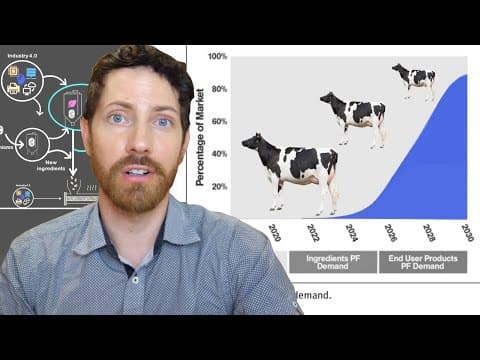
One of the most significant impacts of precision fermentation could be on the dairy industry. Companies like Perfect Day are producing whey protein through fermentation, which has a significantly lower environmental footprint compared to traditional dairy farming. Reports indicate that precision fermentation can achieve a 10 to 20 times feedstock efficiency compared to cows.
Nestlé and Danone are already investing heavily in precision fermentation technologies. Nestlé has launched an animal-free whey protein powder, while Danone is exploring various fermented dairy products. These developments signal a potential decline in traditional dairy farming within the next decade.
While precision fermentation is gaining traction, cultured meat is also making headlines. Recent studies indicate that cultured chicken could be produced at a fraction of the cost of traditional meat, with projections suggesting prices as low as $6 per pound. Public acceptance is growing, with surveys showing that around 60% of people are willing to try cultured meat.
The advancements in precision fermentation and alternative proteins present a promising future for food production. As public acceptance increases and investments in this technology grow, we may see a significant shift towards a more vegan world. This transition not only has the potential to reduce animal suffering but also to create a more sustainable food system.
As we continue to explore these innovations, it is essential for consumers, especially those who advocate for veganism, to support and educate others about these developments. The future of food is here, and it is time to embrace it.