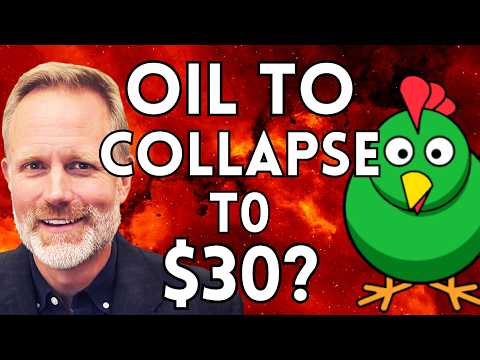
The ongoing Iran war has caused a global oil shock, but experts predict that once the conflict ends, oil prices will collapse to around $25-$30 per barrel due to increased supply and demand destruction. The energy market is undergoing a major shift with fuel switching, geopolitical realignments, and technological innovations shaping the future landscape. Investors should focus on volume production and infrastructure diversification rather than price speculation.
The war involving Iran has created significant disruptions in global oil and gas markets, leading to a surge in prices and supply concerns. However, energy expert Doomberg offers a comprehensive analysis suggesting that this shock may be temporary, with profound long-term implications for the energy sector.
The conflict has led to the closure of the Strait of Hormuz, attacks on tankers, and increased geopolitical tensions, which traditionally would push oil prices to extreme highs. Surprisingly, despite these factors, oil prices have remained relatively controlled, largely due to coordinated government interventions, including the release of strategic petroleum reserves (SPR) by G7 nations.
Doomberg notes that governments are actively managing oil supply to prevent prices from skyrocketing, acting as counterparties to bullish investors. This intervention has kept prices from reaching levels seen in previous crises, such as the 2008 spike to $147 per barrel.
Once the war concludes, Doomberg predicts a significant collapse in oil prices, potentially down to $25-$30 per barrel in today's dollars within two to four years. This forecast is based on:
He emphasizes that all shortages historically lead to gluts, and the current crisis will accelerate this cycle.
The energy landscape is witnessing a split between the petro-dollar and petro-yuan blocs, with the U.S. becoming energy self-sufficient due to shale production, reducing its reliance on Middle Eastern oil. Conversely, China and Russia are backing Iran, signaling a realignment of global energy alliances.
Regions like Africa and the Arctic are emerging as new arenas for energy competition. The U.S. and Canada are poised to become "Fortress North America," focusing on self-sufficiency and regional energy security.
While new production increases take time, there are signs of incremental supply growth in regions such as Guyana, Venezuela, Argentina, and Brazil. The U.S. strategic petroleum reserve releases are structured to be replenished, effectively trading future production for current supply.
Logistics and supply chain considerations, such as shorter shipping times from Alaska to Asia compared to the Middle East, are influencing trade flows and energy sourcing decisions.
Natural gas prices have not mirrored the oil price spike due to co-production with oil in shale wells, leading to an oversupply of gas in regions like the U.S. and Canada. This has resulted in extremely low or even negative natural gas prices in some hubs.
Meanwhile, LNG prices remain higher globally, with some regions switching to coal due to cost considerations. The natural gas market's complexity underscores the importance of understanding specific grades, locations, and delivery timelines.
The war is accelerating fuel switching trends, particularly away from oil for electricity generation. Approximately 4.5 million barrels per day of oil are used for electricity worldwide, a practice expected to decline rapidly outside the Middle East due to economic and environmental factors.
Technologies enabling dual-fuel engines and fuel flexibility are becoming increasingly valuable. The crisis is also catalyzing investments in alternative energy sources, including nuclear power, although geopolitical risks in the Middle East pose challenges.
Despite risks, the conflict is likely to strengthen policy support for nuclear energy as countries seek to reduce dependence on volatile fossil fuel markets. The fate of nuclear reactors in the Middle East remains uncertain, but the broader trend favors increased nuclear adoption.
Political factors have historically constrained oil production more than geology. Recent developments, such as the potential easing of restrictions in Venezuela and Argentina, could unlock millions of barrels per day of new supply.
California's energy policy and production challenges highlight how politics can impact domestic energy landscapes, with potential implications for national energy security.
Doomberg advises investors to focus on companies involved in volume production outside the Strait of Hormuz and infrastructure diversification, such as pipelines and railroads, rather than betting solely on price spikes.
The energy sector's evolution suggests that long-term growth will come from increased global energy consumption and technological innovation rather than short-term price volatility.
Financial advisors John Lodra and Mike Preston emphasize the complexity and unpredictability of energy markets. They caution against relying on average outcomes and stress the importance of adapting investment strategies based on market signals.
They highlight the recent volatility in precious metals and energy stocks, advocating for risk management techniques such as protective puts and diversified portfolios.
The Iran war has undeniably disrupted global energy markets, but the long-term outlook points to a rebalancing characterized by increased supply, fuel switching, and geopolitical realignments. Investors and policymakers alike must navigate this evolving landscape with a focus on adaptability, risk management, and strategic diversification.
Understanding these dynamics is crucial for anticipating future trends in oil prices and the broader energy sector.
This analysis draws on insights from Doomberg and financial experts, providing a nuanced perspective on the current energy crisis and its implications for the future.