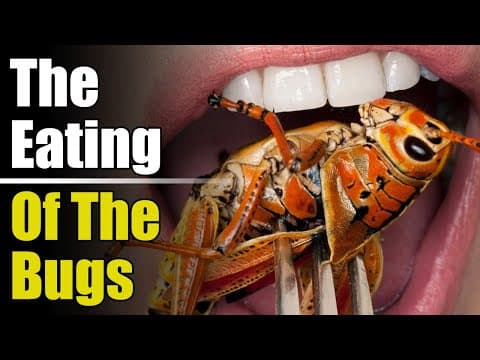
This article explores the controversial push for insect consumption as a sustainable food source, examining the motivations behind it, the nutritional implications, and the environmental arguments presented by proponents. It critiques the feasibility and safety of integrating insects into human diets, while questioning the underlying agendas of organizations promoting this shift.
In recent years, a peculiar sentiment has emerged in discussions about the future of food: "You will eat the bugs, you will live in the Pod, you will owe nothing, you will be happy." While often attributed to Klaus Schwab of the World Economic Forum (WEF), these phrases do not originate from him directly. However, they encapsulate the essence of the WEF's vision for a transformed global economy, as outlined in Schwab's books, The Great Reset and The Great Narrative. This vision promotes a shift from shareholder capitalism to stakeholder capitalism, where companies and governments collaborate for a sustainable future.
The WEF's agenda has faced significant criticism. Organizations like the Transnational Institute have labeled it a silent coup aimed at capturing global governance. Critics argue that the push for stakeholder capitalism undermines democratic processes and imposes top-down solutions to complex problems. Schwab's writings and the WEF's initiatives suggest a future where equitable power distribution, sustainable development, and environmental justice are prioritized. However, the specifics of these proposals, particularly the promotion of insect consumption as a primary food source, warrant closer examination.
One of the most discussed aspects of the WEF's agenda is the promotion of insects as a sustainable alternative to traditional meat sources like beef, pork, and poultry. Proponents argue that insect farming has a lower environmental impact, producing fewer greenhouse gases and requiring less land and water. However, this argument is not as straightforward as it seems.
As someone who has experimented with eating insects in various contexts, I can attest to their potential as a protein source. However, my personal dietary choices have shifted towards vegetarianism due to health concerns and ethical considerations regarding animal welfare. While it is possible to maintain a balanced diet without meat, many people find it easier to obtain necessary nutrients from animal products. The argument that insects are a superior protein source often overlooks the nutritional complexities involved in human diets.
The environmental case for insect consumption is often touted as a solution to climate change. Yet, studies indicate that poultry farming, for instance, produces fewer greenhouse gases than insect farming. The WEF's shifting metrics—such as focusing on protein yield per pound—can mislead the public. Comparisons between processed insect powders and fresh meat can skew perceptions of nutritional value.
Insect farming is not without its challenges. The environmental impact of large-scale insect production, including energy consumption for climate-controlled farming, raises questions about its sustainability. Moreover, the processing required to make insects safe for human consumption—such as sterilization to eliminate pathogens—adds layers of complexity and energy use that contradict the environmental benefits claimed by advocates.
The consumption of insects poses potential health risks. Insects can carry parasites and pathogens, and the lack of butchery in insect consumption means that consumers may inadvertently ingest harmful bacteria and contaminants. Studies have shown that a significant percentage of insects intended for human consumption harbor pathogens that could pose risks to human health.
Another concern is the potential for allergic reactions. Research indicates that individuals allergic to shellfish may also be at risk for allergies to edible insects due to cross-reactivity. This raises significant public health concerns, especially as insect consumption becomes more mainstream.
The push for insect consumption in Western nations faces cultural resistance. Unlike many cultures where insect consumption is traditional, Western societies often view it with revulsion. The United Nations' declaration of a right to food emphasizes access to culturally appropriate food, which complicates the promotion of insects as a staple protein source in regions where such practices are not customary.
While humans can technically consume insects, the question remains whether we should. The nutritional, environmental, and health implications of widespread insect consumption are complex and fraught with challenges. The push for insects as a primary food source appears less about sustainability and more about broader socio-economic agendas. As we navigate these discussions, it is crucial to critically assess the motivations behind the promotion of insect consumption and consider the implications for our health, culture, and environment.