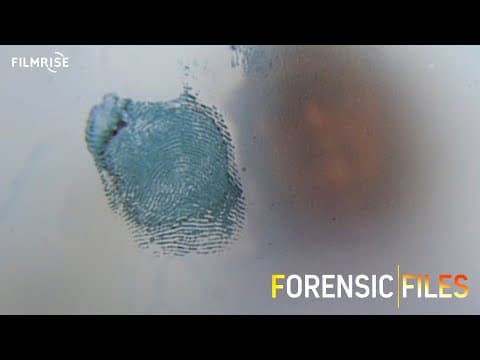
In May 2001, the bodies of two young women were discovered in Texas, leading investigators on a complex journey to identify a serial killer. Through meticulous forensic work, including the recovery of a fingerprint from a victim's skin and tire impressions, police arrested Jose Castillon, who was later sentenced to life in prison for the murders.
In May 2001, Texas City, Texas, became the scene of a horrific crime that would challenge investigators and forensic experts alike. The discovery of two young women's bodies in a remote marshland marked the beginning of a complex investigation into a potential serial killer.
On May 16, 2001, municipal workers stumbled upon the bodies of 31-year-old Dana Feazell and 32-year-old Cammy Keleman. The victims were found about 120 feet apart, both nude except for their shoes, and showing signs of violence. Their clothing was scattered around the scene, and forensic investigators estimated they had been dead for less than six hours, indicating a time of death around midnight.
Both women had troubled backgrounds, working as prostitutes. Dana Feazell struggled with lifelong drug problems, while Cammy Keleman was described as having manic depression. Their families expressed sorrow over their tragic paths, emphasizing that no one deserves such a violent end.
The crime scene was disorganized, suggesting it might have been the killer's first murder. Investigators found two white washcloths, shattered glass, and beer cans at the scene, all of which could provide crucial evidence. The presence of shattered glass indicated that one of the victims had kicked out the glass from the assailant's vehicle during the struggle.
With the chilling warning from a criminal profiler that the murderer would likely strike again, investigators worked quickly. Just before the bodies were transported to the morgue, an investigator noticed a blood smear on Cammy Keleman's thigh that appeared to contain a fingerprint. However, collecting a usable print from skin is notoriously difficult due to its porous nature.
Using a chemical called Amido Black, which reacts with proteins in blood, investigators enhanced the visibility of the fingerprint. Despite the challenges posed by the skin's texture, FBI image analyst Richard Vorder Brugge was able to digitally enhance the print, revealing a clear fingerprint that would later match a suspect.
In addition to the fingerprint, investigators found a tire impression at the scene. The clarity of the impression was remarkable, allowing technicians to read the brand of the tire, which was identified as a rare Commander brand snow tire. This led investigators to trace the tires back to a specific area in Colorado, where they were sold.
Investigators reached out to local prostitutes, hoping to gather information about the suspect. A breakthrough came when one woman reported an attack three days prior to the murders, describing her assailant as Hispanic, in his early 30s, with a dagger tattoo on his forearm, and driving a white car. She also preserved the washcloth used to gag her, which matched the ones found at the murder scene.
Detective Paul Edinburgh made a crucial discovery when he spotted a suspicious white car with a license plate beginning with "C-4-1." The driver, 30-year-old Jose Castillon, matched the description provided by the survivor. Upon questioning, Castillon denied involvement in the murders, but evidence began to mount against him.
Investigators found that Castillon had recently moved to Texas from Colorado and had purchased a set of Commander-brand snow tires. Additionally, the broken window of his car matched the glass found on one of the victims. Most importantly, Castillon's fingerprints matched the bloody print found on Cammy Keleman's thigh.
As investigators pieced together the evidence, they sought to understand Castillon's motive. Analysis of beer cans found at the crime scene revealed that Castillon had purchased them on the night of the murders. It was believed that he had picked up both women, possibly intending to party, but instead committed the brutal murders.
Jose Castillon was arrested and charged with two counts of murder. Facing overwhelming evidence, he ultimately pled guilty to capital murder and kidnapping, receiving a life sentence without parole. The case highlighted the importance of forensic science in solving crimes, demonstrating how a seemingly useless piece of evidence, like a fingerprint on skin, can become critical in the pursuit of justice. The investigation not only brought closure to the families of the victims but also prevented further tragedies at the hands of a potential serial killer.