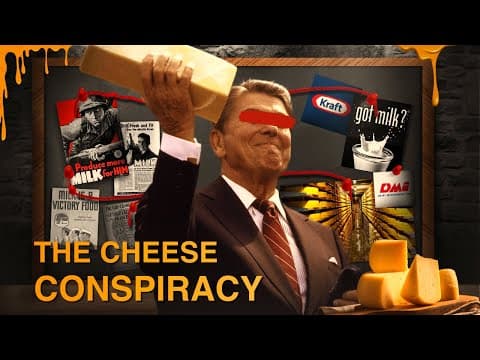
This blog post explores the conspiracy theory surrounding the U.S. government's secret cheese storage facilities, the historical context of dairy management, and the marketing strategies that led to the popularization of milk and cheese consumption in America.
The idea that the government is hiding billions of pounds of cheese in secret tunnels beneath the United States may sound absurd, but it has roots in a complex history of dairy management and economic strategy. This blog post delves into the origins of this conspiracy theory, the role of government in dairy production, and how marketing campaigns like "Got Milk?" have shaped public perception and consumption of dairy products.
The conspiracy theory surrounding government cheese tunnels dates back to the 1970s, a time when the U.S. government began to intervene heavily in the dairy market. The story begins with the establishment of the Commodity Credit Corporation (CCC) in 1933, during the Great Depression. The CCC was created to stabilize agricultural markets, particularly for dairy, which was seen as a vital component of the economy.
In 1973, the U.S. faced an energy crisis that led to a significant increase in dairy prices. To protect farmers and ensure a stable supply of dairy products, the government began purchasing excess dairy from farmers. This practice continued into the late 1970s when President Jimmy Carter promised to invest $2 billion into the dairy industry, leading to the government buying up any excess dairy produced.
As the government accumulated vast quantities of excess milk, it began converting this milk into cheese, which is easier to store. By the early 1980s, the government had amassed approximately 500 million pounds of cheese, leading to the creation of underground storage facilities, including a notable one near Kansas City, Missouri. These facilities became known as the cheese caves, where the government stored massive quantities of cheese at controlled temperatures.
The issue of excess cheese came to public attention in December 1981 when Secretary of Agriculture John R. Block famously presented a moldy block of cheese at the White House, highlighting the government's wastefulness. This revelation led to the introduction of the government cheese program, which distributed cheese to welfare programs, forever embedding the term "government cheese" in American culture.
Government cheese became a symbol of poverty for many, while others fondly remembered it as a staple of their childhood. The program continued until the 1990s, but the government still held onto vast quantities of cheese, which have since grown to approximately 1.4 billion pounds.
As the government sought to reduce its cheese purchases, it turned to marketing strategies to encourage American consumers to buy more dairy products. This led to the establishment of the Dairy Management Incorporated (DMI) in 1995, which aimed to promote dairy consumption without promoting specific brands.
The DMI played a crucial role in the success of the "Got Milk?" campaign, which began in California in the early 1990s. This campaign, along with others, aimed to normalize milk consumption and promote its health benefits, particularly among children. Schools began offering milk as a standard option, reinforcing the idea that milk is essential for growth and development.
The DMI also collaborated with fast food chains to increase cheese usage in their products. This included partnerships with companies like Pizza Hut and Domino's, which led to the introduction of cheese-laden menu items. The DMI's influence extended to lobbying for cheese in various food products, effectively embedding cheese into American diets.
The government's approach to dairy management raises questions about the ethics of using taxpayer money to support large dairy corporations while smaller farms struggle. The mandatory tax imposed on dairy farmers to fund marketing efforts benefits larger corporations, creating an uneven playing field in the dairy industry.
While milk is generally considered a healthy option, the excessive consumption of cheese has been linked to health issues such as obesity and high cholesterol. The average American's cheese consumption has skyrocketed from about 7-8 pounds per year in the 1970s to approximately 41 pounds today, raising concerns about the long-term health implications of such dietary changes.
The story of government cheese tunnels and the "Got Milk?" campaign illustrates the complex interplay between government policy, economic stability, and consumer behavior. While the government aimed to stabilize the dairy market, the methods employed have led to unintended consequences, including the promotion of excessive cheese consumption. As consumers, it is essential to remain aware of the motivations behind marketing campaigns and the impact of government policies on our diets and health.