Indomie, an Indonesian instant noodle brand, has become a cultural phenomenon in Nigeria, driven by strategic marketing, local adaptation, and the entrepreneurial spirit of the Tolaram Corporation. This blog explores the origins of Indomie, its rise in Indonesia, and its remarkable success in Nigeria, highlighting the interplay of culture, economics, and consumer behavior.
Despite Indonesia not being particularly known for wheat, it is the world's second-largest consumer of instant noodles, with 14.5 billion servings consumed in 2023. Surprisingly, Nigeria has emerged as a significant market for the Indonesian noodle brand Indomie, which is now considered one of the most popular packaged foods in Africa. This blog post delves into the fascinating journey of how Indomie became a sensation in Nigeria and beyond.
Indomie was founded in 1972 by Indonesian entrepreneur Djajadi Djaja, inspired by the success of instant noodles pioneered by Taiwanese-Japanese entrepreneur Momofuku Ando. The name "Indomie" combines "Indonesian" and "Mie," meaning noodles. Unlike its competitor Supermi, which used imported flour, Indomie sourced its flour locally from Bogasari Flour Mills, a company established by Sudono Salim in partnership with Malaysian tycoon Robert Kuok.
The establishment of Bogasari Flour Mills in 1969 was pivotal for the Indonesian noodle industry. Initially, Salim's focus was on selling flour to noodle and bread makers, as rice was the staple food in Indonesia. However, during a rice shortage in the late 1970s, the government encouraged the promotion of flour-based products, leading to a surge in instant noodle production.
Indomie initially sold noodles in a soup format, similar to Japanese ramen. In 1982, the introduction of a dry version called Mi Goreng revolutionized the market, as it was easier to prepare. By 1994, Indofood, the parent company of Indomie, controlled 80% of the Indonesian instant noodle market. The affordability, convenience, and taste of Indomie made it a staple for many Indonesians, with over 110 flavors available, including the popular Mi Goreng.
Indomie began its international journey in the late 1980s, initially spreading through word-of-mouth among Indonesian workers abroad. The brand found significant success in the Middle East and Africa, particularly due to its halal certification. In Saudi Arabia, Indomie captured over 95% of the instant noodle market, and a factory in Syria continued operations despite the ongoing civil war.
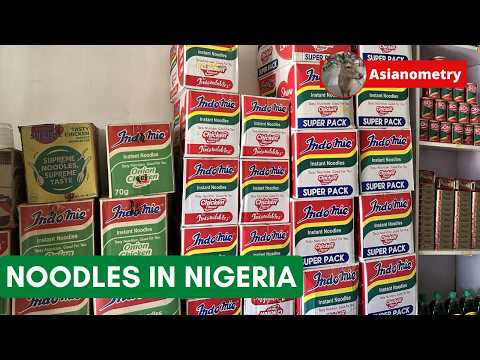
Nigeria, like Indonesia, is a diverse country with a rich culinary heritage. Despite a lack of wheat in traditional Nigerian cuisine, instant noodles gained popularity, with Nigerians consuming about 3 billion servings in 2023. The entry of Indomie into Nigeria can be traced back to the Tolaram Corporation, founded by Khanchand Vaswani, who initially established a textiles business in Indonesia before expanding into Nigeria.
In 1988, Tolaram began importing Indomie noodles to Nigeria, recognizing the potential for success similar to that in Indonesia. The company targeted busy mothers, positioning Indomie as an affordable and filling meal for families. However, initial sales were slow as Nigerians were unfamiliar with the product and its preparation.
To educate consumers, Tolaram launched marketing campaigns demonstrating how to cook Indomie. Despite these efforts, it took several years for sales to pick up. In 1995, Tolaram established a joint venture with Indofood to manufacture Indomie locally, significantly reducing costs associated with imports.
The launch of new flavors, particularly Onion Chicken in 2000, marked a turning point for Indomie in Nigeria. This flavor, along with others like Pepper Chicken and Jollof, resonated with local tastes and propelled Indomie to the forefront of the Nigerian noodle market. By 2004, Tolaram had expanded its production capacity, and by 2010, they were producing a billion packs a month.
Indomie's success in Nigeria led Tolaram to shift its focus from B2B commodities to consumer brands. The company invested heavily in vertical integration, establishing its own supply chains for packaging, seasoning, and flour. Tolaram's long-term commitment to Nigeria allowed it to navigate the country's challenging infrastructure and economic landscape.
In addition to Indomie, Tolaram has formed joint ventures with major brands like Kellogg and Colgate-Palmolive, further solidifying its presence in the Nigerian market. The company is also involved in significant infrastructure projects, such as the Lekki Deep Sea Port, aimed at enhancing trade and economic development in Nigeria.
The story of Indomie is a remarkable example of how a product can transcend cultural and geographical boundaries. From its origins in Indonesia to its status as a beloved food in Nigeria, Indomie's journey reflects the power of strategic marketing, local adaptation, and entrepreneurial vision. As Tolaram continues to expand its influence in West Africa, Indomie remains a testament to the enduring appeal of affordable and convenient food options in diverse markets.