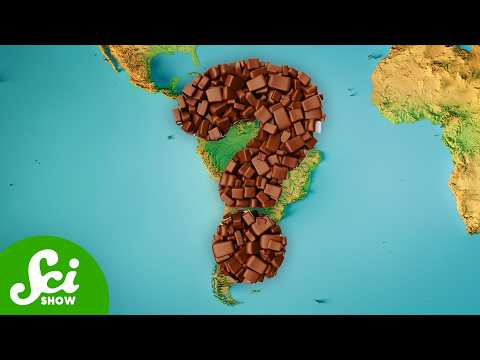
Despite chocolate's popularity, the origins of cacao remain uncertain. Research suggests that cacao likely originated in northwest South America, with evidence of domestication occurring in various cultures, including the Olmec in Mexico and the Mayo-Chinchipe in Ecuador. Understanding cacao's history is crucial for its future cultivation, especially in the face of climate change.
Chocolate is one of the world’s most beloved foods, yet its origins remain shrouded in mystery. While we know that chocolate comes from the cacao tree, the details surrounding its domestication and the journey from wild to cultivated varieties are less clear. This blog post explores the fascinating history of cacao, its domestication, and the implications for the future of chocolate production.
The cacao tree, scientifically known as Theobroma cacao, is primarily grown in tropical regions around the world. However, its origin story dates back approximately 8 to 13 million years ago in northwest South America. Researchers have identified that wild cacao trees in this region exhibit the highest levels of genetic diversity, which is crucial for understanding the plant's domestication.
Genetic diversity is essential for the survival and adaptability of a species. When a species spreads, individuals that break away from the main population may lose genetic variation. This means that if a lone cacao tree carries a specific genetic trait, that trait is what will be passed on to its offspring. Therefore, finding a population with high genetic diversity can indicate the original population of a species. In the case of cacao, this suggests that T. cacao likely originated in South America.
While it is clear that cacao originated in South America, the question of who first domesticated it is more complex. Initially, credit for the domestication of cacao was given to the Olmec civilization, which thrived in what is now Mexico from around 1200 to 400 BCE. Evidence shows that cacao was significant to the Olmec, being used in food, drinks, and even as currency.
A 2018 study focused on a cacao variety known as Criollo, traditionally believed to have been bred in Mesoamerica. This research indicated that Criollo plants were being selectively bred for desirable traits such as flavor and disease resistance approximately 3600 years ago. However, this raises the question: Did the Olmec domesticate cacao first?
Cacao seeds are not particularly adept at traveling long distances. They require specific conditions to remain viable, which complicates the narrative of their spread. It is possible that the Olmec obtained cacao seeds through trade with South American cultures, as there is evidence of extensive trade networks between these regions.
Further complicating the story, a 2018 archaeological study in Ecuador revealed that the Mayo-Chinchipe culture, dating back 5300 years, had evidence of cacao use long before the Olmec. Researchers found starch grains, chemical signatures of theobromine, and distinct T. cacao DNA in ancient pottery, suggesting that cacao was utilized in South America well before it reached Mesoamerica.
A 2024 study examined over 350 ceramics from various South American cultures, confirming the presence of T. cacao DNA and chemical signatures linked to cacao. This research indicated that multiple cultures across South America were likely domesticating cacao and trading it among themselves around 5000 years ago. This suggests that the Olmec were not the first to domesticate cacao but rather received it through trade.
Understanding the domestication of cacao is not just an academic exercise; it has real-world implications for the future of chocolate production. As climate change poses challenges to traditional cacao cultivation, insights into how ancient cultures adapted cacao to different environments can inform modern breeding practices. Cacao is a vital crop for many countries, and ensuring its resilience is crucial for both economic stability and our enjoyment of chocolate.
The history of cacao is a complex tapestry woven through time and geography. While we may not have all the answers regarding its origins, ongoing research continues to shed light on this beloved plant. As we strive to secure our chocolate supply for the future, understanding the past will be key to navigating the challenges ahead. After all, in these unprecedented times, a little chocolate can go a long way in making life a bit sweeter.