The RICO Act revolutionized law enforcement's approach to organized crime, enabling authorities to dismantle the Italian Mafia by connecting lower-level criminals to their bosses, ultimately leading to significant convictions and a decline in Mafia power.
In August 2022, the FBI executed a series of raids, arresting individuals who appeared to run legitimate businesses but were deeply entrenched in organized crime. This scenario is a stark reminder that the Italian Mafia, despite its historical decline, still operates under the shadows of society. This blog post explores how one simple law, the RICO Act, fundamentally altered the landscape of organized crime in America, particularly for the Italian Mafia.
The roots of the Mafia can be traced back to 19th century Sicily, where impoverished men formed clans to extort protection money from wealthy landowners. This practice of extortion was simple yet effective: create a threat and demand payment to avoid it. As these Sicilian clans expanded their operations, they eventually made their way to the United States during a massive wave of Italian immigration between 1880 and 1920.
By the early 20th century, millions of Italians had migrated to the U.S., seeking better opportunities. While many sought honest work, others saw America as a land ripe for exploitation. The Mafia began to formalize its operations, establishing rules and structures that would define organized crime in America. Newspapers of the time reported on the rise of gangs like the Black Hand, which engaged in extortion similar to their Sicilian predecessors.
As the Mafia grew in power, it expanded its operations into various illegal activities, including drug trafficking and gambling. The Prohibition era of the 1920s provided a significant boost to organized crime, as gangsters capitalized on the illegal alcohol trade. Figures like Al Capone and Charles “Lucky” Luciano emerged as prominent leaders, establishing a network of crime families across major cities like New York and Chicago.
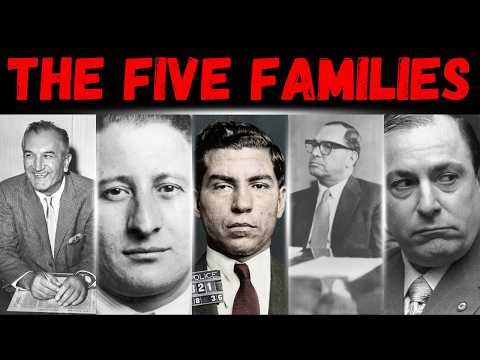
The Mafia became a complex organization with various families, including the Five Families of New York: Bonanno, Colombo, Gambino, Genovese, and Lucchese. These families operated under a system known as the Commission, which aimed to regulate conflicts and maintain order among the various factions. However, internal power struggles and violent turf wars often erupted, leading to increased law enforcement scrutiny.
Despite the Mafia's extensive reach and influence, law enforcement struggled to combat organized crime effectively. Corruption within police forces and the difficulty of connecting crime bosses to specific criminal acts made it challenging to dismantle these organizations. The situation called for a new approach.
In 1970, the U.S. government introduced the Racketeer Influenced and Corrupt Organizations Act (RICO). This groundbreaking legislation aimed to target organized crime by allowing prosecutors to charge individuals involved in a criminal enterprise, even if they did not directly commit a crime. The law was intentionally vague, enabling authorities to connect lower-level criminals to their bosses through a web of conspiracy.
Under the RICO Act, prosecutors could link multiple crimes—such as bribery, murder, and drug trafficking—to a single organization. This meant that even if a crime boss had no direct involvement in a specific crime, they could still be charged if they benefited from the criminal enterprise. This shift in legal strategy allowed law enforcement to cast a wider net over organized crime.
The introduction of the RICO Act had immediate and profound effects on the Mafia. High-profile arrests began to occur, and notorious figures like Carmine Galante and Frank Tieri were convicted under its provisions. The law not only targeted the leaders of crime families but also instilled a sense of paranoia among mobsters, who feared being implicated in crimes they did not commit.
Throughout the 1980s and 1990s, the RICO Act facilitated the convictions of numerous Mafia leaders, including Paul Castellano and John Gotti. The Mafia's once-untouchable status began to erode as law enforcement successfully dismantled key figures and organizations. The Mafia's operations became increasingly fragmented, and their influence waned significantly.
Despite the decline in power, the Italian-American Mafia still exists and continues to engage in criminal activities. Recent arrests under the RICO Act demonstrate that law enforcement remains vigilant in combating organized crime. The Justice Department continues to utilize RICO to target not only the Italian Mafia but also other organized crime groups, including Russian and Asian syndicates.
The RICO Act represents a pivotal moment in the fight against organized crime in America. By enabling law enforcement to connect the dots between lower-level criminals and their bosses, the law has significantly weakened the Mafia's grip on society. As we reflect on the history of the Italian Mafia, it is essential to recognize the ongoing challenges posed by organized crime and the importance of legal frameworks like RICO in addressing these issues.