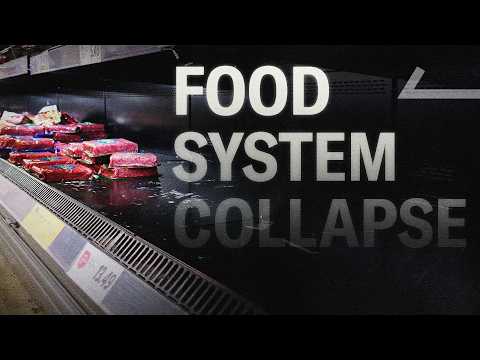
JBS, the world's largest meat producer, has been embroiled in scandals and corruption while steadily taking over the American meat industry. This blog explores the implications of their dominance, the impact on small ranchers, and the risks to our food supply.
There is a force in our meat industry that many consumers are unaware of. This is the story of JBS, a Brazilian meatpacking giant that has been steadily taking over the American meat industry for years. With a history of corruption and scandal, JBS's influence raises serious questions about the future of our food supply.
JBS, the world’s largest meat producer, has been plagued with numerous scandals. Executives Joesley and Wesley Batista have faced investigations for corruption, including allegations of bribing Brazilian inspectors to clear tainted meat for export. The company has also been involved in price-fixing, wage-fixing, environmental violations, and discrimination in their plants. Despite these issues, JBS recently debuted on the New York Stock Exchange, raising concerns about the implications for American investors and consumers.
The question arises: what is the real cost of cheap, corporate meat? Mike Callicrate, an independent rancher, highlights the challenges faced by small producers in an industry dominated by a few large players. He notes that the consolidation of the meatpacking industry has left ranchers with little market access, forcing them to accept prices set by just a handful of companies.
Mike Callicrate operates Ranch Foods Direct, a vertically-integrated meat business focused on local, ethical, and sustainable meat production. He emphasizes that the slaughter and processing of livestock are where large meatpackers exert their control over pricing. With only three major packers in the business, ranchers are left with no choice but to accept low prices for their cattle.
Callicrate describes JBS as a predator in the industry, having grown from a non-existent player in the U.S. market to the largest meat company in the world. Chloe Sorvino, a food industry reporter, explains that the Batista brothers used bribes and corruption to finance their expansion into the U.S. market, acquiring significant American meatpacking assets along the way.
The consolidation in the meat industry is alarming. According to Sorvino, the top four players control 80 to 85% of the beef market, over 70% of the pork market, and more than 60% of the chicken market. This level of concentration impacts every American who buys meat, as it limits competition and drives down prices for ranchers.
JBS's recent IPO could exacerbate these issues. With access to U.S. investors and pension funds, JBS will have more capital to finance acquisitions, further consolidating the market and diminishing the power of farmers and ranchers. Carson Jorgensen, a sixth-generation lamb rancher, warns that the sheep industry serves as a warning for what could happen to the beef industry if action is not taken.
The consolidation of meat processing has led to the decline of local processing facilities. Jorgensen recounts how the Mountain States Rosen Co-Op, a family-owned operation, filed for bankruptcy during the COVID-19 pandemic. JBS's refusal to transfer contracts to new buyers ultimately led to the closure of a critical processing plant, leaving ranchers with fewer options.
AJ Richards, an entrepreneur promoting regional meat systems, expresses concern that JBS going public could be the final nail in the coffin for many independent ranchers. As large meat processing plants gain more control over pricing, alternative supply chains struggle to compete. Richards emphasizes the need to preserve family farms and ranches, which are disappearing at an alarming rate.
Despite JBS's troubling history, the U.S. government has continued to support the company with millions of dollars in contracts for public institutions. This reliance on cheap meat raises ethical questions about the true cost of our food supply. As Carson Jorgensen points out, the focus on profit over sustainability could lead to a breakdown of the system.
The rise of JBS and its dominance in the American meat industry is a complex issue that affects consumers, ranchers, and the overall food supply. With a history of corruption and a troubling consolidation of power, the future of our food system hangs in the balance. It is crucial for consumers to be aware of these dynamics and advocate for a more equitable and sustainable food system that supports independent producers and prioritizes food safety over profit.