This blog post explores whether resting crêpe batter improves the texture and flavor of crêpes. Through a series of tests, it concludes that resting for one hour significantly enhances the crêpes, while resting for 24 hours offers only marginal improvements.
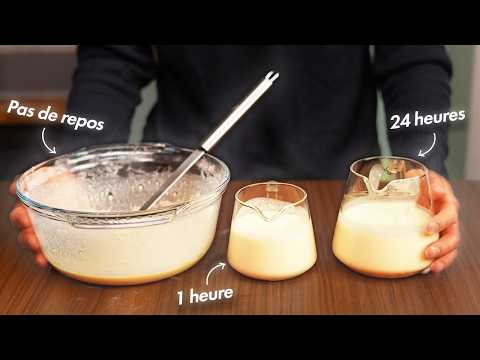
Crêpe batter is often considered simple and straightforward, but there is a culinary dogma that suggests it must rest before cooking. This raises the question: does resting the batter truly make a difference in the cooking process, texture, or flavor? In this post, we will explore this question through a series of tests and a classic crêpe batter recipe.
To conduct our experiment, we will start with a traditional crêpe batter recipe that yields approximately twelve large crêpes. Here are the ingredients:
To begin, heat a non-stick skillet over high heat with a bit of butter until it just starts to brown. Pour in the batter and cook the first crêpe. The initial crêpe is often a test of the skillet's heat and the batter's consistency.
Upon tasting, the immediate crêpe is found to be edible but somewhat brittle, likely due to the gluten not having had time to relax. The flavor of the egg is prominent, and while the texture is acceptable, it remains somewhat dense.
After allowing the second portion of batter to rest for 1 hour, we repeat the cooking process. The crêpe cooked from the rested batter shows noticeable improvements. It is less prone to tearing and has a more pleasant texture. The flavors are better integrated, and the presence of rum is more pronounced.
Finally, we cook the crêpes made from the batter that rested for 24 hours. The texture is even smoother and more velvety, with a subtle flavor of rum that has permeated the batter. However, the improvement over the 1-hour rested batter is marginal, estimated at about 10-15% better.
The key to understanding the benefits of resting crêpe batter lies in the components of flour: starch and gluten.
Additionally, resting allows the flavors to meld, creating a more harmonious taste rather than distinct flavors of individual ingredients.
Based on the experiments conducted, the optimal resting time for crêpe batter is 1 hour. While resting for 24 hours does yield slightly better results, the difference is not significant enough to warrant the extra wait for most casual cooks.
Next time you prepare crêpes, you can confidently choose to let your batter rest for an hour, knowing it will enhance the flavor and texture of your crêpes without unnecessary delay. If you're curious about exploring different types of pancakes, consider checking out other recipes that might surprise you!