The murder of 82-year-old Kathryn Bishop in Hummelstown, Pennsylvania, was solved through meticulous forensic investigation, revealing a complex narrative of violence, robbery, and the critical role of trace evidence in identifying the perpetrator, Tim McEnany.
The murder of Kathryn Bishop, an 82-year-old retiree, shocked the small community of Hummelstown, Pennsylvania. Unlike typical break-ins, forensic evidence indicated that the perpetrator had broken out of the crime scene rather than breaking in. This blog post delves into the details of the case, the investigation, and how forensic science played a pivotal role in solving this tragic crime.
On a fateful morning, a city employee discovered that Kathryn's side door had been broken into and alerted the police. When her daughter, Janet Seitz, arrived, she was met with the devastating news that her mother had been brutally beaten to death. The scene was described as violent, with signs of a struggle evident through defense wounds on Kathryn's arms and a pool of blood around her head.
Kathryn Bishop was known to be a quiet yet feisty individual who trusted those around her. Her home was a place of comfort, but on that tragic night, it became the site of a horrific crime. A half-finished crossword puzzle and a broken pen in her hand suggested she was awake and engaged in her usual activities when the attack occurred.
Despite the violent nature of the crime, investigators found it peculiar that nothing appeared to be stolen from the home. The medical examiner estimated that Kathryn was killed between 9:00 and 10:30 PM, and the broken glass from the side door was found outside, indicating that the perpetrator had exited through that door.
A neighbor reported hearing noises around 10:30 PM and saw a shadowy figure fleeing from Kathryn's home. This sighting, combined with the medical evidence, helped establish a timeline for the crime. However, the lack of witnesses and concrete evidence posed a significant challenge for investigators.
As the investigation progressed, forensic analysis became crucial. The medical examiner's autopsy revealed that Kathryn had been struck over 60 times, with suffocation being the cause of death. During routine evidence collection, a fiber not consistent with Kathryn's clothing was found, along with a paint chip from her hand.
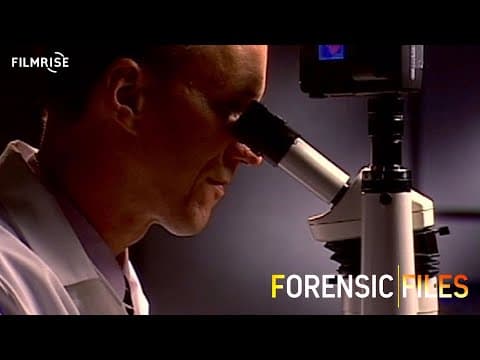
Forensic analyst John Evans examined the paint chip and discovered it matched the paint around Kathryn's basement window, suggesting that the killer had entered through there. Additionally, marks on the washing machine indicated that someone had crawled up the siding to reach the window.
Investigators compiled a list of individuals who had been in Kathryn's home recently. Among them were two chimney cleaners, Tim McEnany and Andrew Reichman, who had been at her house on the day of the murder. They claimed to have left around 6:30 PM and spent the night at a nearby bar, where they were seen by patrons.
While their alibi seemed solid, Kathryn's daughter recalled seeing cash in her mother's home that day, which was later found missing. This raised suspicions about the chimney cleaners, especially after a tip suggested they may have traveled to Atlantic City after the murder.
A search of McEnany's home revealed fibers from his black t-shirt that matched those found on Kathryn's body. Despite the defense's attempts to discredit the evidence, an independent forensic expert confirmed the findings, stating that the fibers were identical.
Further investigation into McEnany's cell phone records revealed two calls made to Kathryn's home shortly after the estimated time of her murder. This evidence suggested that he may have been attempting to confirm her presence before committing the crime.
Tim McEnany was charged with second-degree murder, robbery, and conspiracy. During the trial, he exhibited erratic behavior, even attempting to jump out of a window in the courtroom. Ultimately, he was convicted and sentenced to life in prison, while Andrew Reichman was never charged due to a lack of evidence linking him to the crime.
The case of Kathryn Bishop serves as a poignant reminder of the power of forensic science in solving crimes. The meticulous collection and analysis of trace evidence led to the identification and conviction of Tim McEnany, showcasing how even the smallest details can unravel a complex narrative of violence and betrayal. This investigation not only brought justice for Kathryn but also highlighted the importance of forensic evidence in the pursuit of truth.