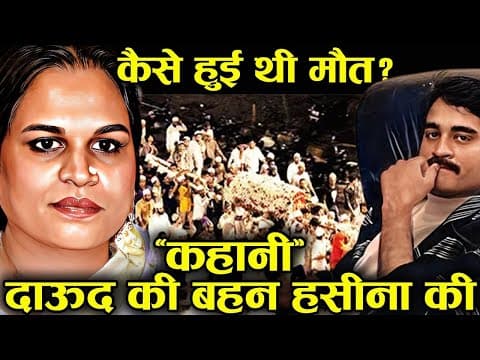
Haseena Parkar, sister of notorious gangster Dawood Ibrahim, rose to power in Mumbai's underworld after her husband's murder, becoming a feared figure in the city's crime scene. Her life story intertwines with the violent history of Mumbai's gangs, showcasing her influence and the eventual downfall due to health issues.
Haseena Parkar, often referred to as the Godmother of Mumbai, was a significant figure in the city's underworld, particularly known for her connections to her brother, the infamous gangster Dawood Ibrahim. Her life story is a blend of tragedy, power, and crime that reflects the tumultuous history of Mumbai's criminal landscape.
Born in 1959, Haseena was the seventh of ten siblings in the Ibrahim Kaskar family, which hailed from Ratnagiri, Maharashtra. Her brother Dawood, along with another sibling, Shabir, founded the D-Company, a notorious crime syndicate. Haseena had four sisters, but none were involved in the criminal activities that defined her family's legacy.
Haseena's journey into the underworld began after the murder of her husband, Ismail Ibrahim Parkar, in 1991. At just 17 years old, she had married Ismail, who ran a small hotel and occasionally worked as a junior artist in films. On July 26, 1991, Ismail was shot dead by armed assailants, an act that would ignite Haseena's transformation into a powerful crime figure.
Following her husband's death, Haseena took control of her life and began to manage her brother's extensive criminal empire in Mumbai. Dawood, who had fled India, continued to exert influence from abroad, but Haseena became the face of the D-Company in Mumbai. She was known to have a say in every construction project in the city, with her approval being a prerequisite for any building to be erected.
Haseena's criminal activities included extortion, protection rackets, and involvement in various illegal transactions. She became a key player in Mumbai's underworld, with her network extending across the city. Her rise was marked by a series of violent confrontations, particularly with rival gangs.
During the early 1990s, Mumbai was rife with gang wars, particularly between Dawood's D-Company and the rival gang led by Arun Gawli. The conflict escalated when Dawood ordered the assassination of Gawli's brother, leading to a cycle of revenge that further entrenched Haseena's position in the underworld.
Haseena's involvement in the criminal world was not just limited to her brother's operations; she also established her own syndicate, managing numerous illegal businesses and properties. Her influence grew to the point where she was involved in the Bollywood film industry, negotiating overseas rights for films and allegedly participating in hawala transactions.
Despite her power, Haseena's criminal activities eventually caught up with her. In 2007, she was implicated in a case involving extortion and illegal property dealings. Following an investigation, an FIR was filed against her, prompting her to go into hiding. Her network was so extensive that she managed to evade capture, even as law enforcement intensified their efforts to apprehend her.
Haseena Parkar's life came to an end on July 6, 2014, when she suffered a heart attack during Ramadan. She had been battling migraines for several months, which had limited her interactions with others. Despite her declining health, she continued to manage her affairs, leveraging her family's name to maintain her influence in the underworld.
At the time of her death, it was estimated that Haseena had amassed a fortune exceeding 5000 crores, a testament to her reign as one of Mumbai's most feared and powerful figures.
Haseena Parkar's life story has been the subject of fascination, leading to portrayals in Bollywood films that depict her rise and fall. Her legacy remains a significant chapter in the history of Mumbai's underworld, illustrating the complex interplay of crime, power, and familial ties.
In conclusion, Haseena Parkar's journey from a young bride to a feared crime lord encapsulates the darker side of Mumbai's history, marked by violence, betrayal, and the relentless pursuit of power. Her story serves as a reminder of the impact of crime on society and the personal tragedies that often accompany it.