Many retirees focus on generating income from their portfolios, but this often leads to unnecessary tax burdens. The key to a successful retirement strategy lies in controlling when and how taxes are paid by strategically placing investments across different account types. This article explains the concept of asset location, why chasing yield can be costly, and how to optimize your portfolio for tax efficiency and flexibility in retirement.
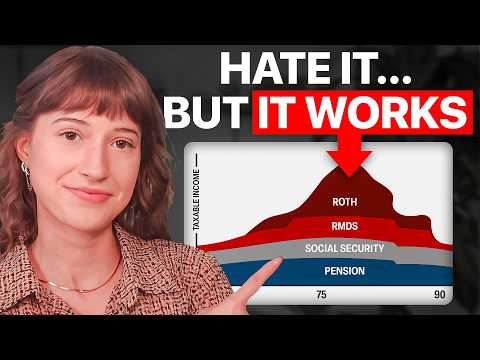
Nobody talks about this strategy because it's too boring. And that's exactly why it works. While many investors chase yield, build dividend portfolios, and try to make their money feel safe, the retirees whose money works hardest aren't trying to recreate their employment paycheck from their portfolio. Instead of asking, "How do I make my portfolio pay me more?" they ask, "How do I keep more of what my portfolio already makes?" This subtle but crucial difference changes how you should think about every account you own.
I'm Rachel Camp, a CFP professional and founder of Camp Wealth. My firm helps people confidently retire before age 65. When I work with clients near retirement, one of the first things I examine is not just what they own, but where they own it. Often, portfolios that look reasonable on the surface quietly generate more tax than necessary—not because of what they own, but because of why and where they own it.
The same investment placed in the wrong account can cost thousands of dollars a year in unnecessary taxes, and most people have no idea it's happening.
In this article, I will explain why the "live off income" strategy, which sounds responsible, can actually work against you. I will also clarify what asset allocation is, why asset location is one of the most underrated levers in retirement, and share the framework I use to decide what belongs where so your portfolio is easier to live on and cheaper to run.
Note: This article is for educational purposes only and not personalized investment, tax, or legal advice. What's right for you depends on your specific accounts, tax situation, and goals.
Most retirees enter retirement with a clear goal: they want their portfolio to pay them. They want to live off income and protect their principal. This feels right and sounds right. After decades of building a balance, selling shares feels like spending down the NASDAQ. So, living off dividends and interest without touching principal feels disciplined, conservative, and responsible.
However, this framing misses a critical point: income is not the same as control.
A portfolio built specifically around generating income can create tax bills you did not choose, at amounts you didn't choose, and at times you didn't choose. This lack of control can be costly.
To be clear, dividends are not bad, and income-producing investments are not to be avoided entirely. We are total return investors, caring about the full picture: price appreciation plus income together.
The problem arises when the primary reason for owning an investment is because it pays you. This often sacrifices the one thing that makes retirement genuinely easier: control over when and how taxes show up.
The goal is not to maximize income but to maximize after-tax spending power. These are not the same, and the gap between them is where most retirees leave money on the table year after year without seeing it on a statement.
Consider Tom (64) and Linda (62), retiring this year with $2.2 million saved across three accounts:
On paper, this looks well-diversified with real tax flexibility. But inside those accounts lies the problem.
Their taxable brokerage account is loaded with a high dividend ETF, a covered call fund paying around 8% annually, and a total bond market fund added for stability. Their Roth accounts hold a mix of the same dividend-heavy funds, and their 401(k) is in a target date fund.
Their logic was simple: they want income, so the brokerage account throws off cash, and they don't have to sell anything. This is understandable but structurally very expensive.
Every year, the funds in the taxable account generate income: qualified dividends, non-qualified dividends, short-term distributions from the option strategy, and bond interest taxed at ordinary income rates.
Income in a taxable brokerage account shows up on your tax return whether you need it or not. Tom and Linda don't get to decide when, how much, or whether it's a good year to recognize income. The fund distributes, the 1099 arrives, and they pay the tax.
Bond fund returns come almost entirely from yield (interest), which is taxed at ordinary income rates every year—not the lower long-term capital gains rate. Tom and Linda pay ordinary income tax annually on their bond fund interest in an account where better options exist.
The covered call fund generating 8% income also has a meaningful portion of distributions taxed as ordinary income, not qualified dividends. This means a chunk of their yield goes straight to the IRS on money they might not even be spending yet.
Tom and Linda built a machine that produces cash but also automatically produces tax bills annually, whether they want them or not. This is the control they give up.
This brings us to a crucial concept: asset location, not asset allocation.
This matters because not all accounts tax you the same way. You have three fundamentally different tax environments, each with a job:
Examples: 401(k), Traditional IRA
Examples: Roth IRA, Roth 401(k)
Investments here should generate as little automatic income as possible. Typically, broad index funds with low turnover are ideal because they grow in value without distributing taxable income annually.
The goal is to avoid chasing yield in taxable accounts when the tax cost outweighs the benefit.
Income-producing investments, especially bonds, belong here. Since growth is tax-deferred, bond interest compounds without creating annual tax events. You only pay taxes upon withdrawal, giving you control over timing and amount.
This is the best place for your highest growth, longest runway investments, typically broad equity index funds. These assets benefit most from tax-free growth and withdrawals. Income-heavy strategies and bonds do not need Roth protection as much.
Tom and Linda had it almost entirely backwards:
The fix doesn't require selling everything overnight. Over time, moving the right investments into the right accounts can substantially improve the tax experience of retirement.
A common objection to moving away from yield-chasing strategies in taxable accounts is the need for regular income.
The solution is to create your own dividend. Instead of owning funds that distribute income automatically, focus on maximizing total return—the highest return for the appropriate risk level, combining appreciation and income.
When you need cash in retirement, you sell investments. This gives you the same cash but with a different tax experience:
This flexibility has real dollar value. It helps manage taxable income intentionally, affecting tax brackets, Medicare premiums, health insurance premium tax credits, and senior deductions.
A dividend strategy in taxable accounts gives you income on the fund's schedule. Creating your own dividend gives you income on your schedule. This control is the foundation of the boring but effective strategy.
This investing strategy that changes retirement is not about generating more income but about controlling when and how income shows up. By understanding and applying asset location principles, you can make your portfolio easier to live on and cheaper to run.
This strategy may not be flashy or complicated, but it quietly improves your retirement's flexibility and tax efficiency, adapting to life's inevitable changes.
Now that you understand why controlling income and taxes matters more than chasing yield, you can start viewing your accounts through a more useful lens and make informed decisions about where your investments belong.
If you want personalized help, consider consulting a financial professional to tailor these principles to your specific situation.