This article explores the current unique wealth opportunities emerging from the gold market's forced sell-off, the resurgence of coal driven by energy price shocks, and a predictable pharmaceutical patent cliff leading to massive M&A activity. These three windows represent significant investment potential created by the gap between price and value during times of market stress and transition.
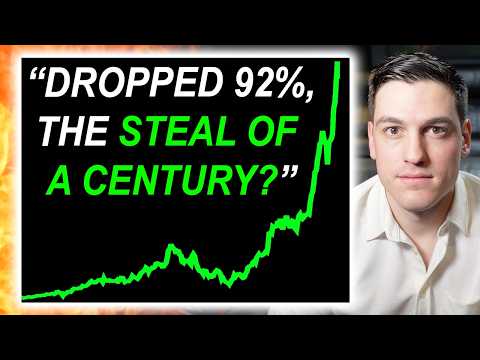
Right now, the gold market is undergoing a significant event that few are explaining correctly. In the last 30 days, $11 billion has left gold ETFs in a single wave. Turkey liquidated 60 tons of bullion in two weeks, and Gulf sovereign wealth funds are withdrawing physical gold from London vaults at rates unseen in 70 years. Despite gold being an asset expected to rise during war, it fell 21% from its January peak.
Financial channels are asking why gold is falling during a war, but the more important question is: what does this create? Over 40 years of studying markets and debt cycles, it has become clear that major wealth events often appear as crises when they happen. Currently, three separate wealth windows are opening simultaneously, a phenomenon not seen since 1979.
When markets face an oil shock combined with a hawkish central bank response, leveraged funds running multi-asset strategies get caught. These funds are typically long energy and short volatility. When oil prices spike above $110 per barrel and the Federal Reserve signals it cannot cut rates due to inflation, these funds face margin calls. To meet these calls, they sell their best-performing assets first — gold, which had risen 65% in the prior 12 months.
This forced selling is not a loss of faith in gold but a necessity. Historical data from BNP Paribas shows that during previous economic shocks in 2008, 2020, and 2022, gold initially fell as investors sold profitable assets to raise cash but later recovered and reached new highs.
In March 2026, $1 billion left gold ETFs, primarily from institutional investors meeting margin calls, not retail investors selling. The structural reasons to own gold — de-dollarization, fiscal deficits, and central bank diversification — remain intact. Major banks like JP Morgan and Deutsche Bank maintain year-end 2026 gold price targets of $6,300 and $6,000 respectively, implying significant upside from current prices around $4,300.
Turkey's central bank, holding over 111 tons of gold at the Bank of England, sold approximately 60 tons to defend its currency amid a record low Turkish lira. Gulf sovereign wealth funds also showed a 45-ton outflow from London bullion markets. These sales are emergency liquidity measures to pay for oil, which has increased 40% in price over 60 days, not a loss of belief in gold.
Once the emergency subsides, these entities are expected to return urgently to gold buying, as their reserve diversification mandates require it. The World Gold Council forecasts central banks will purchase approximately 850 tons of gold in 2026, consistent with last year's pace.
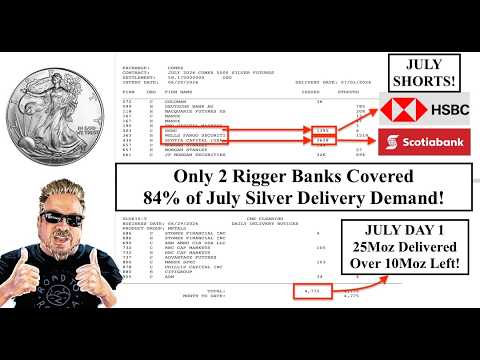
Unlike gold, silver has both investment and industrial demand. It is now in its fifth consecutive year of industrial supply deficit, driven by solar panels, electric vehicles, and AI data center infrastructure — all inelastic buyers of silver regardless of price.
Despite this, silver trades below levels suggested by industrial demand fundamentals. The gap between paper silver (futures, ETFs) and physical silver is a significant structural distortion that has built over the past decade. Historically, when this gap closes, it does so rapidly, signaling a strong price recovery.
Coal has been associated with decline and ESG restrictions for the past decade, leading to systematic avoidance by institutional capital and suppressed investment in coal mining. However, the current energy shock has changed the economics of energy sources.
When Brent crude oil trades above $100 per barrel, utilities make arithmetic decisions rather than ideological ones. With natural gas prices spiking due to supply chain disruptions, coal-fired power plants have become the cheapest alternative in Europe. Utilities are rebuilding coal inventories for a potentially longer and colder burning season.
In India, coal supplies nearly 79% of domestic energy despite rapid solar and wind capacity expansion. Coal production reached over 1 billion tons in fiscal year 2024-25, with consumption projected to grow 2.5% in 2026. India's oil import dependence of nearly 89% makes every oil price shock an emergency, prompting increased domestic coal output.
In the United States, the administration has signed executive orders to reinvigorate domestic coal production, including environmental regulation waivers. This has led to upward revisions in US coal demand forecasts for 2026.
A decade of ESG-driven divestment has created supply shortages in coal mining. Rising demand due to energy price shocks is meeting constrained supply, setting the stage for powerful commodity price moves. This is a cyclical opportunity, not a permanent reversal of the energy transition.
Coking coal, used in steel production, has a separate demand driver: defense spending surges. Steel is essential for ships, tanks, artillery, and fortifications. With multi-year defense spending increases underway in the US, Europe, and allies, coking coal prices are forecasted between $215 and $222 per ton through 2027.
Coal India, a state-owned enterprise and one of the world's largest producers, is up 11.3% year-to-date in 2026, outperforming the broader Nifty50 index, which is down 6%. This reflects institutional money rotating into a sector previously avoided.
The global pharmaceutical industry faces a patent cliff with approximately $300 billion in annual drug revenue losing patent protection by 2030. This is a known, scheduled event, not speculation.
Pharmaceutical companies cannot develop new blockbuster drugs quickly enough, as internal development takes 10 to 15 years and costs approximately $2.2 billion per asset. Their primary response is acquisition.
Stifel Securities estimates major pharmaceutical companies have $1.2 trillion in combined M&A firepower. Total pharma M&A deal value reached $240 billion in 2025, an 81% year-over-year increase. In the first two weeks of January 2026 alone, $9.2 billion in deals were announced, with projections of over 20 acquisitions exceeding $1 billion in 2026.
Big pharma companies are searching for small biotech firms with promising drug candidates. Acquisitions often come with significant premiums (30% to 100% above market price). Investors in the right biotech companies before acquisition can capture these premiums.
Biotech carries high risks: clinical trial failures, FDA delays, and potential company failures. Diversified exposure through broad-based biotech ETFs or larger integrated pharmaceutical companies is advisable.
What unites these three wealth windows — gold and silver, coal, and biotech — is the gap between price and value. Price reflects current market conditions influenced by forced selling, panic, margin calls, and oil shocks. Value reflects what assets are worth when conditions normalize.
Moments of maximum confusion create the widest gap between price and value, which is where wealth is created. These moments are uncomfortable and feel dangerous but have historically led to significant wealth creation.
In 1979, gold fell sharply as the Federal Reserve raised rates aggressively to fight inflation driven by an oil shock. Most investors sold, but those who held or bought saw gold rise more than 200% in the following three years. While not predicting identical outcomes, the mechanism is similar today.
There are two types of investors at inflection points:
Currently, forced selling, emergency liquidity needs, and margin calls are driving price declines, not changes in underlying asset value. Investors who understand this have a temporary advantage.
Markets are efficient in the long run but inefficient in the short run, especially during moments of maximum confusion. The three windows of opportunity — precious metals, coal, and biotech — are open now but will not remain so indefinitely. Understanding the mechanics behind these opportunities is key to positioning before the crowd catches on.
This moment represents a rare alignment of wealth creation opportunities driven by structural market forces, energy price shocks, and predictable industry transitions. Recognizing and acting on these sequences can be the last big wealth opportunity before retirement.