This article explores how Social Security benefits in 2026 compare across the population, emphasizing the importance of understanding your benefit percentile rather than just the average. It discusses key factors influencing benefits, including claiming age, work history, earnings, spousal coordination, and the earnings test. Strategic planning is crucial to integrate Social Security into a broader retirement income plan effectively.
You might wonder how your Social Security check compares to others. Many assume their benefit is around the average, but this assumption can be misleading. David Cabiness, a Certified Financial Planner, explains the nuances of Social Security benefits in 2026, how your projected check ranks among others, and how to approach this from a comprehensive wealth management perspective.
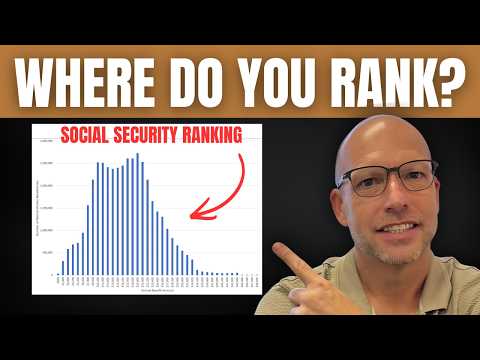
Most people have heard that the average Social Security retirement benefit is about $2,100 per month. However, this average alone tells very little because it flattens the reality and hides the distribution of benefits. What truly matters is your rank or percentile among all recipients.
The majority of Social Security recipients receive benefits between roughly $1,100 and $2,400 per month, with over half clustering in this range. If your benefit is near the average, you are likely in the broad middle—not necessarily doing well or poorly.
The Social Security formula is intentionally progressive:
This means higher earners do not automatically rank near the top in benefit amounts.
Here are some approximate benchmarks for 2026 Social Security benefits and their corresponding percentiles:
Reflect on where your projected benefit falls based on your Social Security statement rather than assumptions.
Many successful professionals, executives, and business owners find their Social Security benefits cluster between $3,000 and $4,000 rather than at the very top. Achieving higher tiers requires deliberate planning, including:
Delayed credits are guaranteed increases, making timing a powerful lever.
Social Security calculates benefits based on your highest 35 earning years. If you have fewer than 35 years, zeros are included, which can lower your average. Working additional years with strong earnings can replace lower income years and increase benefits.
Benefits are tied to your earnings history up to taxable wage caps. While returns diminish at higher incomes, later career earnings can replace lower earning years and strengthen your benefit formula.
For married couples, planning is about optimizing household benefits. Often, the lower earner claims earlier while the higher earner delays, balancing immediate cash flow with long-term survivor protection.
Claiming benefits before full retirement age while continuing to work above certain earnings thresholds can reduce benefits. Understanding this can prevent unnecessary reductions and frustration.
Social Security is one component of a comprehensive retirement income strategy that may include:
The goal is not always to maximize the Social Security check alone but to optimize overall income, tax efficiency, flexibility, estate coordination, and spousal protection.
Social Security remains one of the few retirement levers you can control through timing, coordination, and strategic planning. Thoughtful management of these factors can create meaningful financial differences over time.
David Cabiness emphasizes that retirement planning is about how income, taxes, investments, and lifestyle work together intentionally. For those seeking strategic oversight, professional guidance can be invaluable in navigating these complex decisions.