Charcoal, discovered accidentally by ancient peoples, revolutionized cooking and metallurgy due to its lightweight, high heat, and low smoke properties. Its production methods have evolved from simple pits to modern retorts, making it a vital fuel source in many parts of the world.
In the exploration of cooking fuels, charcoal stands out as a remarkable innovation that has shaped culinary practices throughout history. This blog post delves into the origins, properties, and production methods of charcoal, illustrating why it is considered the first great cooking fuel.
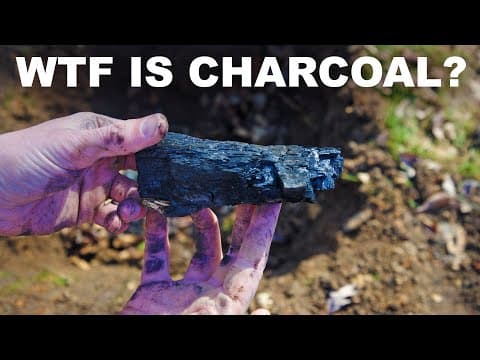
The journey of charcoal likely began with ancient peoples who, after a night of fire, discovered black chunks in the ashes the next day. These remnants, lighter than wood and burning hotter, were the first instances of charcoal. This discovery would have been significant for early humans, especially for those who were migratory or engaged in hunting and gathering. Charcoal's lightweight nature made it easy to transport, while its superior burning qualities made it an ideal fuel source.
Charcoal offers several advantages over traditional wood:
These properties made charcoal essential not only for cooking but also for metallurgy, particularly in the production of weapons and tools.
While charcoal and coal share similarities, they are produced through different processes. Coal is formed from ancient plant matter that has undergone significant geological changes over millions of years, resulting in a dense, carbon-rich substance. In contrast, charcoal is created by burning wood in a low-oxygen environment, which preserves the carbon structure while removing moisture and other volatile compounds. This process leaves behind a porous material that can be used for various applications, including water filtration.
Historically, charcoal production involved various ingenious methods to create a low-oxygen environment:
Activated charcoal is produced by further processing charcoal to increase its porosity. This is typically done by exposing it to steam or inert gases at high temperatures. Interestingly, the act of quenching charcoal with water may have been an early form of activation, as the sudden release of steam could expand the charcoal's structure, enhancing its filtering capabilities.
Charcoal briquettes, commonly found in stores, are manufactured by compressing charcoal dust with binding agents. While they are convenient, they differ from natural charcoal in that they are denser and less porous. This makes them heavier and less efficient for certain applications compared to traditional chunk charcoal.
Charcoal represents a significant advancement in cooking fuel, combining practicality with efficiency. Its lightweight nature, high heat output, and clean-burning properties have made it a staple in many cultures around the world. As we continue to explore sustainable cooking methods, charcoal remains a testament to human ingenuity and the quest for better fuel sources. Whether used in traditional cooking or modern grilling, charcoal is indeed one of the best fuels in the world, embodying the energy of sunlight captured over millennia. Let's embrace this ancient fuel and enjoy the deliciousness it brings to our meals.