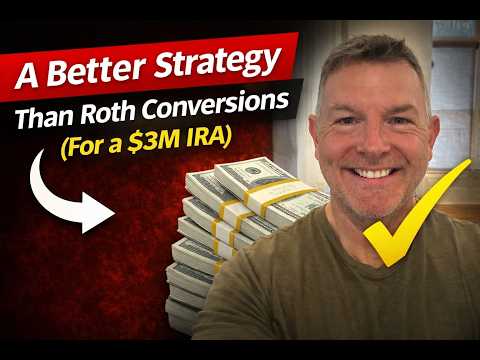
This article explores the financial strategy considerations for a couple in their mid-50s with a $3 million pre-tax IRA, a $54,000 pension, and $450,000 in cash. It compares Roth conversions versus living off cash and IRA distributions, highlighting tax implications, healthcare costs, and the impact of having no children on the decision to convert. The conclusion suggests that Roth conversions may not be advantageous for those without heirs.
Roth conversions are often touted as a beneficial strategy for managing retirement accounts, especially large IRAs. However, for a married couple in their mid-50s with a $3 million pre-tax IRA, a $54,000 annual pension, and $450,000 in cash, the decision is not straightforward. This article examines whether Roth conversions are the optimal approach or if alternative strategies might be more suitable.
The couple has access to healthcare through an employer retirement plan, which costs about $900 per month. Although they could qualify for Obamacare premium credits, the speaker advises staying on the employer plan due to its reliability and the unpredictability of Obamacare and Medicare Advantage plans. The recommendation is to choose the safe bet if affordable.
The couple faces three primary options for funding their retirement lifestyle:
Roth conversions reduce total taxes by roughly $332,000 over the retirement period.
Healthcare expenses increase with age and are higher when not performing Roth conversions due to the impact of IRA distributions on Medicare premiums.
The $332,000 savings in taxes and healthcare costs with Roth conversions translates to lower overall retirement spending. However, this saving comes with increased upfront tax payments.
A key motivation for Roth conversions is to avoid the "widow's tax trap," where the surviving spouse faces higher taxes due to RMDs. However, since the couple has no children, the speaker argues that leaving a large Roth IRA to charity (which is tax-free) may not justify the upfront tax cost of conversions.
The couple could withdraw approximately $100,000 annually from their IRA, combined with their $54,000 pension, to meet their $150,000 income needs. This approach results in:
Instead of using cash for living expenses or Roth conversions, the couple could invest their $450,000 in a taxable brokerage account, such as a total stock market index fund. This investment would grow tax-efficiently, benefiting from minimal taxes on dividends and a step-up in cost basis upon inheritance by the surviving spouse.
| Aspect | Roth Conversion Strategy | No Roth Conversion Strategy |
|---|---|---|
| Total Taxes Paid | $857,000 | $1,091,000 |
| Healthcare Costs | Lower | Higher |
| Effective Tax Rate | Lower upfront, lower later | Lower initially, higher later |
| RMDs | Reduced after 75 | Higher throughout retirement |
| Cash Flow | Higher taxes upfront | Taxes spread over time |
| Estate Considerations | Leaves Roth to charity (tax-free) | Leaves IRA with higher taxes |
For this couple, Roth conversions save money on taxes and healthcare costs but require paying significant taxes upfront. Given they have no children and will likely leave assets to charity, the benefits of Roth conversions diminish. The speaker recommends:
This strategy allows the couple to enjoy their retirement without the complexity and upfront tax burden of Roth conversions, while still managing tax liabilities effectively.
Roth conversions are not a one-size-fits-all solution. For couples with large IRAs but no heirs, the traditional approach of withdrawing from pre-tax accounts and investing cash reserves may be more advantageous. Each individual's circumstances vary, so consulting with a financial advisor is essential to tailor strategies accordingly.
The key takeaway is that Roth conversions, while beneficial in many scenarios, may not always be the best strategy, especially when considering estate plans and the presence or absence of heirs.