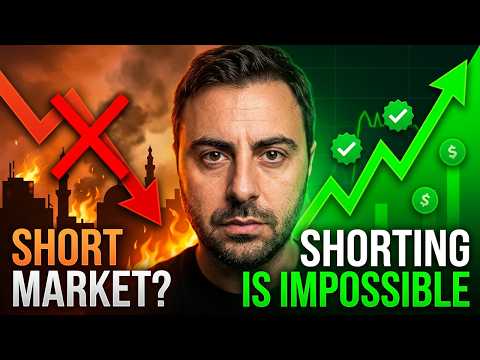
The current market cannot be shorted due to excessive liquidity, despite the Middle East crisis causing turmoil. Gold and silver face short-term volatility from a US dollar liquidity crisis in the UAE, while government bonds are poor investments amid rising inflation and capped yields. The best strategy is to maintain liquidity, avoid leverage, and prepare for long-term resilience as markets remain driven by headlines rather than fundamentals.
On April 22, 2026, the global financial landscape is facing unprecedented challenges. The Middle East is engulfed in conflict, particularly impacting the UAE, and yet, paradoxically, shorting the market is not a viable strategy. This article explores why the market remains resilient despite geopolitical turmoil, the impact on gold, silver, and government bonds, and how investors should position themselves to navigate the turbulence ahead.
The ongoing conflict in the Middle East, especially in the UAE, has triggered a severe US dollar liquidity crisis. This crisis stems from two main factors:
Since all regional currencies are pegged to the US dollar, this outflow has intensified the liquidity crunch. The UAE, which pledged up to $1.4 trillion in investments in the US economy last year, has now requested a currency swap line from the US, effectively a bailout.
The closure of the Strait of Hormuz exacerbates the situation, and with ceasefire prospects uncertain, the risk of further military escalation looms large.
Long-term fundamentals for gold and silver continue to strengthen daily. However, in the short term, these precious metals are not immune to market turbulence. The liquidity crisis in the Middle East has created a squeeze on US dollar liquidity, which negatively affects gold and silver prices.
This phenomenon was anticipated over a month ago, highlighting that gold and silver face their worst enemy in a liquidity crisis. The current environment causes volatility and pressure on these metals, despite their underlying value increasing as confidence in traditional policy and price discovery erodes.
Market sentiment today is heavily influenced by headlines and social media narratives rather than fundamentals. A striking example is traders relying almost exclusively on former President Trump's posts on Truth Social to guide trading strategies and algorithms, despite these posts often containing misinformation.
This reliance has pushed stocks back to all-time highs, with sentiment indicators like the CNN Fear & Greed Index flashing greed. Oil prices, despite the worst supply shock in history, have not reached previous all-time highs, yet the market exhibits euphoria and fear of missing out.
This pattern mirrors the lead-up to the 2020 market crash, where initial concerns were dismissed by reassuring headlines, pushing markets to highs before an inevitable crash occurred.
The market currently has an abundance of liquidity, which will likely increase further as central banks print money to offset the economic damage caused by the Middle East war. This environment makes shorting the market extremely risky due to the difficulty in timing such trades and the poor risk-reward ratio.
Warren Buffett's current strategy exemplifies this approach: he is holding nearly $400 billion in cash, waiting for the bubble to burst to buy assets cheaply. This demonstrates that sitting on liquidity is the modern way to effectively short the market.
Government bonds, essentially future fiat money, are among the worst investments today. Governments worldwide, especially the US, show little intention of reducing deficit spending and are actively capping yields while inflation continues unabated.
This disconnect means bonds are unlikely to provide real returns and may expose investors to significant risks.
Given the current market dynamics, the prudent approach is to prioritize resilience:
Patience and capital preservation will be far more valuable than attempting to predict headlines, social media posts, or short-term market spikes and crashes.
The current market environment, shaped by geopolitical conflict and liquidity crises, defies traditional trading strategies like shorting. Gold and silver face short-term challenges but remain strong long-term assets. Government bonds are unattractive due to inflation and yield caps. Investors should focus on liquidity, avoid leverage, and prepare for a market cycle that will eventually turn, rewarding those who have preserved capital and exercised patience.
Thank you for engaging with this analysis. Stay informed, stay resilient, and navigate the markets wisely.