Editorial Team
7 min read
Whoop’s new Humans feature adds followers, comments and photos to members’ health readings. It expands an existing social product while testing whether personal connections can strengthen a paid wearable membership.
Whoop launched Humans on November 12, turning sleep, recovery and workout readings into material friends and family can follow and discuss inside its app. For the Boston company, which sells screenless fitness bands through a wearable membership, the feature adds a personal audience to measurements members already check each day.
The business question is whether personal connections give members another reason to keep paying. Whoop says it has more than three million members worldwide, that members open its app more than eight times daily, and that 57% belong to an existing Whoop Team. Those figures, supplied in its launch announcement, describe an established audience for social features, rather than a network starting from scratch.
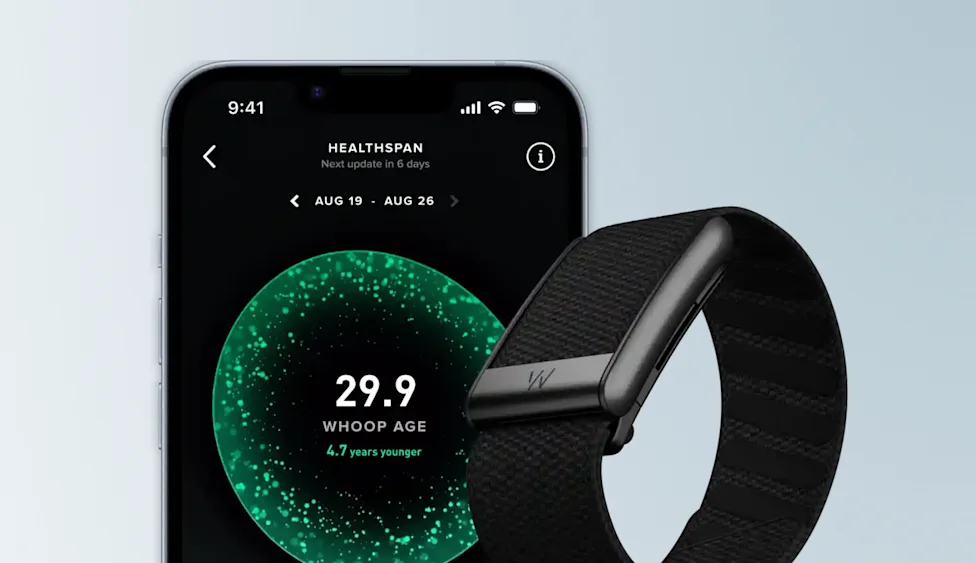
WHOOP’s band and Healthspan interface. Humans adds social features to the wearable membership’s app. Image: WHOOP. Source: Yahoo Tech.
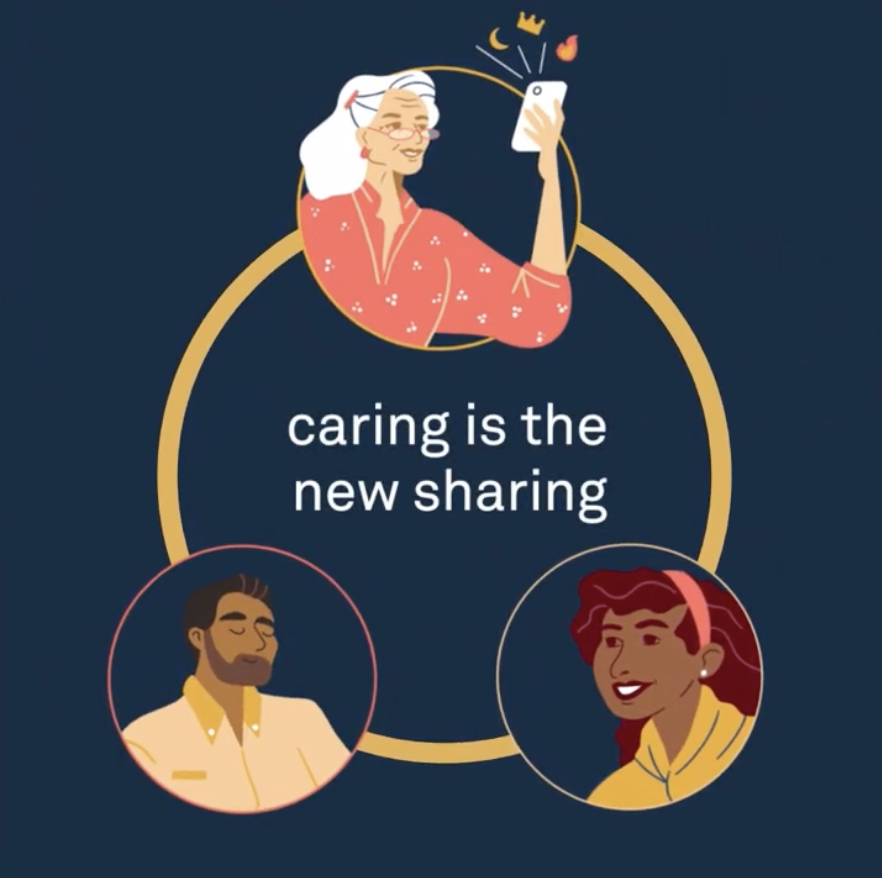
Oura used this illustration in its June 2023 Circles announcement, an earlier example of social sharing around wearable scores. Image: Oura. Source: Oura.
Humans is rolling out to every membership tier at no extra cost, the company said in a launch interview. Members can share selected sleep and recovery readings, workouts and achievements, with followers able to react and comment.
The distinction from Teams is who sees whom. Teams organize members into groups and leaderboards, where group members see one another’s information. Humans lets people establish individual connections. A trainer, for example, could follow clients without those clients seeing each other’s readings. Teams remain available within the Humans tab, which Whoop says was previously called Community.
There is an important qualification to the opt-in description. Whoop’s product guide says new followers send requests that members accept or decline, but people already connected through a small team will follow one another automatically because they were already sharing data. The guide does not define the small-team threshold.
The accompanying Moments feature attaches a photo and note to an activity, achievement or daily score. Each Moment is private by default, with a separate choice to show it to accepted followers. It can therefore serve as a personal record even without an audience. The update also adds story-style views that break down sleep scores and workout effort.
Sharing health scores is already part of the wearable market. Oura, the health-tracking ring company, introduced Circles in June 2023, allowing members to share Readiness, Sleep and Activity scores with trusted groups and respond with emojis. Its launch guide described circles of up to 20 people, with members choosing which scores to share. It also described checking in when a partner’s Readiness score fell—the same support use case Whoop now emphasizes. Humans adds individual follow relationships, comments and photo posts to Whoop’s own social tools; social support through wearable readings already has a direct competitive precedent.
Whoop’s founder and chief executive, Will Ahmed, is pitching Humans against online networks filled with bots and artificial content. He leads a company founded in 2012 that has raised more than $900 million in venture capital, according to its company announcement. His company’s earlier focus on athletic performance has broadened into personal health.
Ahmed calls Humans the “most verifiably human network ever launched.” The stated mechanism is that underlying physiological readings originate from a wearable device. That explains the source of the measurements, but leaves a larger verification claim unproven.
As a separate analysis of the announcement notes, the release describes no independent account audit or process establishing that the wearer is the account holder. It also does not explain how photos and comments are checked for automation or AI generation. The hardware and paid membership make participation more costly than opening a free social account. They do not, by themselves, establish who authored a comment or whether a photo was generated with AI. The announcement provides no quantified comparison of fake-account prevalence.
Members can select which metrics to share, including heart-rate variability and resting heart rate, remove followers, and temporarily hide shared readings through Stealth Mode without resetting their preferences. They can also make themselves unsearchable. Activities marked sensitive are not shared by default, and members choose which workout types and achievements appear.
Ahmed said in the launch interview that health alerts and medical information are not shared at all. Members can report comments and photos, and Whoop says it reviews reported content. He also said the company neither sells member data nor licenses it to third parties.
Those controls matter as Whoop moves further into health services. Its platform has added FDA-cleared ECG capabilities, blood-pressure insights, blood testing and medical-record uploads. Ahmed said he expects families to be substantial users of Humans and reported growth over the past 18 months among people older than 60, without giving a numerical breakdown.
Younger users make consent a practical question too. The launch report puts Whoop’s minimum membership age at 13, with higher limits in some countries. Asked whether a parent could follow a teenager’s data, Ahmed pointed to privacy controls without answering directly. The ability to approve followers is clear; how those choices work within family relationships remains less fully explained.
Whoop has substantial funding behind its wider health strategy. In its March 31 financing announcement, the company said it raised $575 million at a $10.1 billion valuation to support growth in the United States and international expansion. It also said it operated cash-flow positive in 2025. That historical cash-flow statement is distinct from current profitability, which Ahmed declined to disclose in the Humans interview, along with revenue.
Ahmed said in that interview that software-platform membership had grown more than 70% annually for three consecutive years and forecast nearly four million members by year-end. He said Whoop would eventually go public, without giving a date.
Competition extends beyond social features. The syndicated launch interview points to Google’s new Fitbit Air fitness band and a reported Apple band in development; the latter is a prospective competitor. Whoop is also widening distribution: devices are due in about 500 Ulta beauty stores from March 2027, with an eventual target above 1,000. Ahmed said its female audience had more than doubled from last year, without disclosing the base.
The companies are competing over healthcare services, too. Asked in the launch interview about Oura’s announced $625 million purchase of on-demand physician service Counsel Health, Ahmed said he expected more consolidation among wearable, AI and clinician-focused companies and described Whoop as a potential acquirer.
Payment data provides a reason to examine renewal, with important limits. An analysis of Consumer Edge’s consumer transaction panel found that 50%–56% of Whoop monthly-plan subscribers acquired in 2024 were still transacting with the company 12 months later. The figure was 43% for the second-quarter 2025 cohort. That quarter included Whoop’s May 2025 product and pricing relaunch; the timing alone does not establish why retention changed.
The analysis identified monthly subscribers through at least two Whoop payments of $20–$50 within 120 days of their first observed transaction. It counted a customer as retained if they transacted on or after the relevant month. People who converted to prepaid plans before month 12—about 2% of monthly subscribers—were not captured as retained. The page does not disclose cohort sample sizes or a geographic scope. These are observed payment cohorts, not a retention rate for all Whoop members.
The same analysis put Oura’s 12-month retention at 83%–86%, but the economics differ: it described Whoop’s $25–$40 monthly plans as carrying a 12-month commitment, versus Oura’s cancellable $5.99 monthly plan. Those subscription charges are not a comparison of total wearable ownership costs. Nor do these pre-launch cohorts measure anything about Humans’ effects.
For Humans itself, the evidence still needed is more immediate: how many members use it, whether they maintain those connections, and whether sharing improves renewal or support. Ahmed said beta users engaged more with low recovery readings than near-perfect ones, but provided no figures. That is a useful product observation, not yet a measured health benefit or a demonstrated business result.
Apple reportedly has Face ID prototypes for its second foldable iPhone, but integration into the outer display may miss the expected 2027 release. The experience on the unfolded phone remains unresolved.
A federal court made protections for Eyes Up and ICE Sightings – Chicagoland permanent, restricting government pressure on Apple and Meta while leaving the platforms’ own decisions unresolved.
Xiaomi says its 18 Pro phones will support Google Maps, Spotify and YouTube Music on their rear displays, alongside AI-generated mini-apps. The software addresses a limitation of the previous generation, but everyday usefulness remains unproven.
Italy’s privacy regulator says Facebook accessed Android users’ photos, videos and metadata without specific consent. Meta plans to appeal, while the order requires gallery suggestions to be switched off by default and separately authorized.
Microsoft’s November 13 Release Preview builds expand Windows Search into a place to change settings and let users customize File Explorer’s right-click menu. The changes target different Windows 11 versions and are rolling out gradually.
Independent Office and web-browsing tests support long battery life for HP’s Intel OmniBook 5 14, without verifying its 42-hour local-video maximum. Memory, display and price vary substantially by configuration.
Nvidia’s GeForce evangelist has rejected speculation that its gaming graphics business is ending. His reply leaves launch schedules, supply and affordability unanswered as data centers dominate the company’s revenue.
Intel regained five percentage points of desktop x86 CPU shipment share in Q3 2026, while AMD advanced in a growing server market. Mercury Research points to supply and channel differences as possible explanations, rather than a demonstrated shift in gaming preference.
SendCutSend’s reported Series B puts a $2.1 billion valuation on a manufacturer born from Jim Belosic’s car projects. Automated ordering makes small jobs practical, but expanding factories must still deliver on speed, quality and cost.
SpaceX’s 15th Starship test reached orbit and began deploying Starlink satellites, but Super Heavy was diverted offshore and exploded. An upper-stage return remained pending, leaving the company’s full-recovery ambition unproven.
Honor’s 700, 700 Pro and 700S will bring built-in rear displays to its midrange line. A November 23 launch will test the price of a package combining selfie previews, electronic pets and company-promoted health checks.
The German drone supplier says its fleet is operating normally after a precautionary Bundeswehr grounding. Reports of malware in the software-update chain leave questions about the intrusion’s reach and responsibility.
Microsoft plans to retire some Word compatibility settings from December 2026. Affected older documents may change pagination or image placement, but the settings list and rollout coverage remain unclear.
Apple has scheduled November 13 preorders for three LG security devices priced from $199.95 to $299.95, with December availability. Buyers also need to account for home-hub requirements and an iCloud+ subscription for event history.
AMD’s rumored Siren Halo APU could pair dedicated GDDR7 graphics memory with LPDDR system memory. The claim suggests a change from earlier Halo designs, but the naming, specifications and possible Xbox connection remain unconfirmed.
Apple’s smart display and fourth-generation streaming box are now available for $299 each, but app gaps, device requirements and Siri access on older hardware complicate the buying decision.
Microsoft is investigating printing failures after its November 2026 Windows security updates. The trigger is a document image rendered with zero height or width, including invisible objects used in layouts or inserted by document-generation tools.
Microsoft halted deployments and configuration changes during a widespread Microsoft 365 outage, saying unexpectedly unavailable servers were overloading the remaining infrastructure. Email, Teams and AI service connectors faced disruption while the cause remained under investigation.
Google is rolling out digital home keys for Android, starting in Google Home Public Preview. The feature supports tap and hands-free unlocking, but requires specific locks and a Google hub, while household access stays managed in Google Home.
Published tests of Humble Bundle’s redesigned storefront found missing two-factor authentication settings and fewer checks on password and email changes. Users face account-control concerns, but neither a breach nor AI involvement has been established.