Editorial Team
4 min read
Microsoft released KB5138318 to fix a crash triggered by November’s Windows Server 2025 security hotpatch in specific IPv6 configurations. The corrective update takes effect without a restart, but requires an existing baseline and servicing stack.
Microsoft has released an unscheduled correction to a Windows Server 2025 hotpatch that could make some servers crash when an IPv6 route timer expired. The November 25, 2026 out-of-band update, KB5138318, brings the operating system to build 26100.33732 and takes effect without restarting the device, according to Microsoft’s release notice.
For administrators, the consequence is an availability problem inside an update mechanism designed to reduce interruptions. Microsoft’s server operating system can receive hotpatches while running, but this incident shows that avoiding an installation restart does not eliminate the possibility of a crash caused by the update itself.
Microsoft says the problem follows installation of November’s Windows security hotpatch, KB5131077. Some Windows Server 2025 devices with Router Advertisement enabled and receiving time-bound IPv6 routes could stop unexpectedly when a route timer expires. The resulting stop error is 0x139, KERNEL_SECURITY_CHECK_FAILURE.
Those conditions matter: the notice describes a particular networking configuration, not a crash affecting every Windows Server installation. A report reproducing Microsoft’s description likewise identifies the release as a correction to the preceding hotpatch. Microsoft’s applicability field names Windows Server 2025 Datacenter: Azure Edition; it should not be read as a blanket applicability statement for all editions.
The new package is classified as a non-security cumulative update, even though it repairs a fault following a security hotpatch. An account of Microsoft’s fix also emphasizes that it takes effect without a reboot.
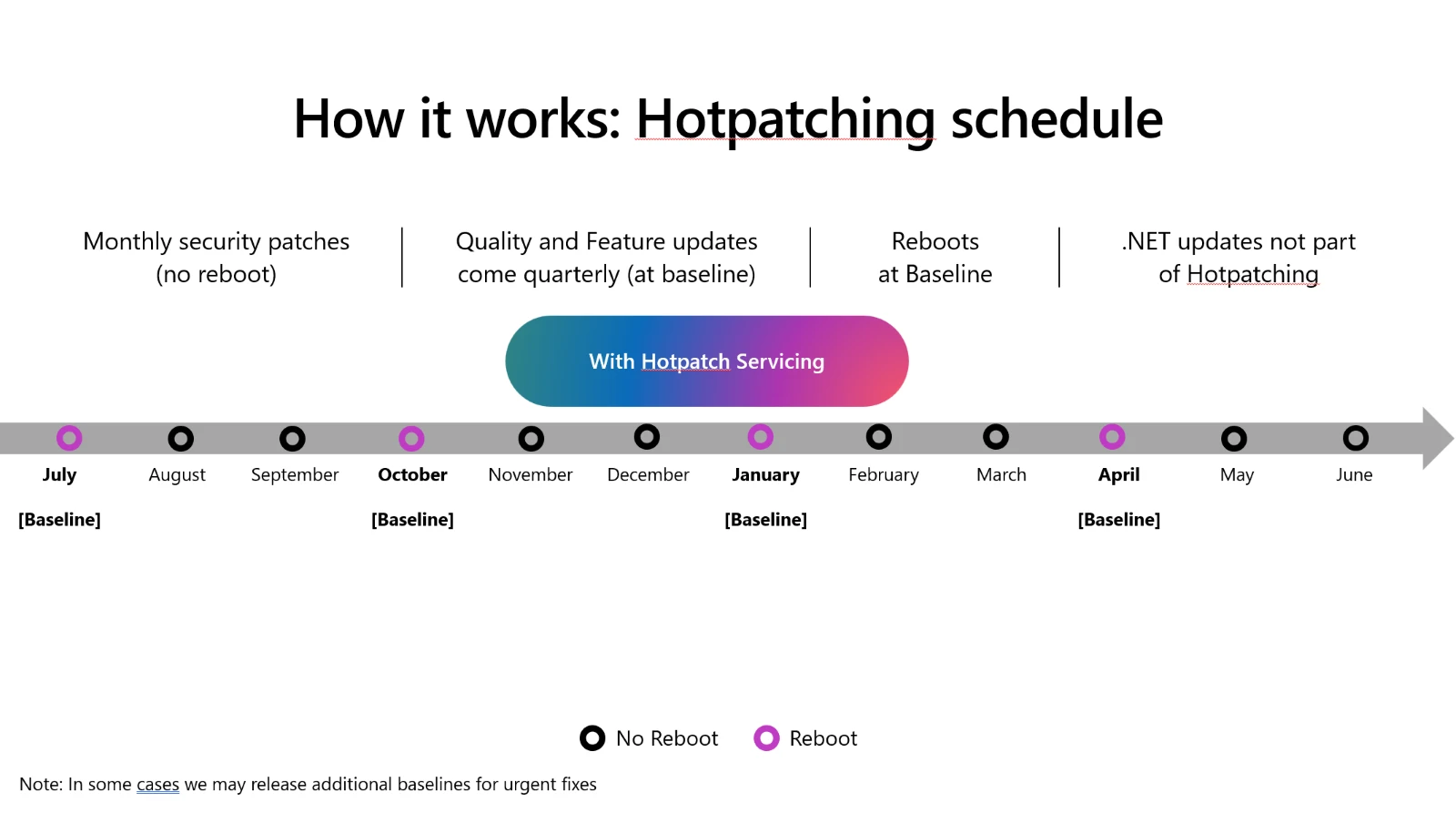
Microsoft’s company-reported Hotpatch schedule shows quarterly baseline restarts. Additional baselines may be released for urgent fixes. .
Roborock lists the Qrevo 2 Pro at $449.99, about 44% below its displayed reference price. The vacuum-and-mop robot automates mop care, but water-tank upkeep, app settings and mixed review findings limit the hands-off promise.
Hotpatching changes running software by patching its in-memory code. In an explanation updated in July 2025, Microsoft said the capability had already been available for years in Windows Server Datacenter: Azure Edition before its expansion beyond Azure through Azure Arc.
Microsoft’s planned schedule has baseline updates in January, April, July and October, each followed by two hotpatch months. The vendor describes this as reducing monthly update restarts from 12 a year to about four, with up to eight hotpatches annually. It also warns that security needs can require an additional update needing a restart during a hotpatch month. Four is therefore the planned baseline schedule, not a guaranteed annual ceiling or a measured uptime result for this corrective release.
Microsoft contrasts hotpatching with traditional latest cumulative updates, which can include security fixes, other bug fixes and new features. The quarterly baseline brings those broader changes into the hotpatch schedule.
The wider service also has deployment and cost distinctions that this package’s Azure Edition applicability field does not resolve:
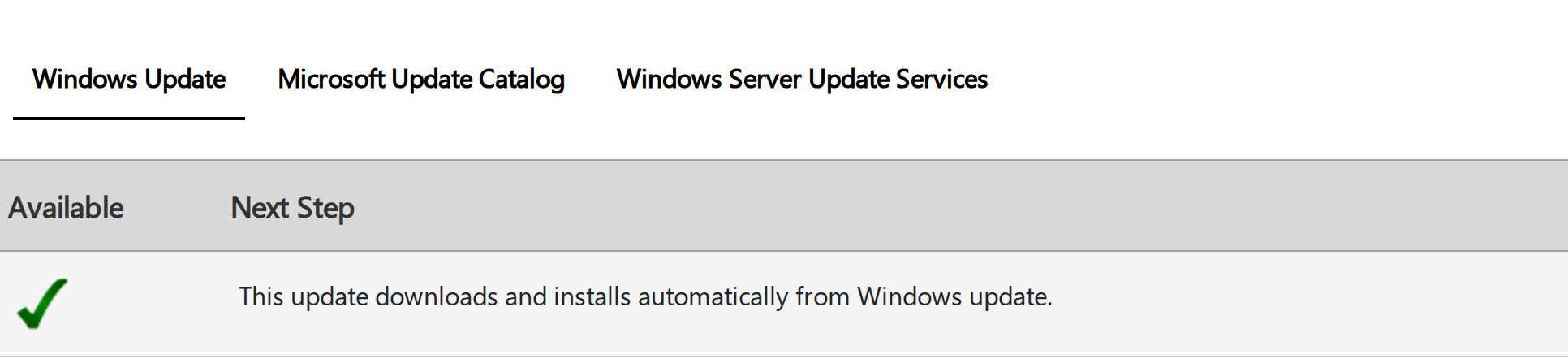
Microsoft’s release notice lists automatic delivery through Windows Update for KB5138318. Source: Microsoft Support.
Microsoft says KB5138318 downloads and installs automatically through Windows Update. Its channel table marks Microsoft Update Catalog and Windows Server Update Services as unavailable for this package.
Before installation, the server must have October’s baseline update KB5126646 and servicing stack version 26100.33634 or later. The servicing stack is the component that installs Windows updates. Microsoft’s package also includes servicing stack update KB5131079, version 26100.33822; that inclusion does not erase the stated prerequisite.
Administrators can check the installed stack from an elevated command prompt with DISM /Online /Get-Packages | findstr /i "ServicingStack". Microsoft says the returned Package Identity must show version 26100.33634 or later. Servers with previous updates installed will download and install only the new updates in the package.
The immediate checks are whether a server matches the documented edition and IPv6 conditions, meets the prerequisites and receives build 26100.33732. Microsoft says it is not currently aware of issues with the correction, but its notice provides neither an affected-server count nor an estimate of downtime caused by the IPv6 fault. Those missing measures leave the scale of the original failure unresolved.
A Weibo leaker claims to have obtained ceramic components for Apple's expected 2027 anniversary iPhone. Reports infer a possible limited edition from low planned capacity, but the component, production approval and retail plan remain unresolved.
Edovia’s Screens 5.10.6 puts a remote desktop above a keyboard and trackpad on a half-folded iPhone Duo. The layout makes an existing computer more accessible, with hardware, network and software costs still attached.

Amazon’s 18-core M5 Pro MacBook Pro with 24GB memory and 2TB storage costs $100 more than the 15-core version. The advertised $500 saving uses a reference price; Apple’s launch prices complicate the wider discount claims.

Amazon's Black Friday sale puts the 256GB MacBook Neo at $599.99 and the 512GB model with Touch ID at $699.99 across all four colors. The discounts largely reverse Apple's summer price increase rather than establish a substantially cheaper entry point than at launch.
Finnable raised ₹405 crore to expand lending, technology and partnerships, with Bharat Value Fund supplying ₹150 crore. Its shift toward loans on its own balance sheet has lifted margins, while rising costs make sustained profitability the next test.
The crowdfunded small Android phone promises 12GB of RAM and 256GB of storage at unchanged backer prices. Funding, battery specifications and certification remain unresolved ahead of a May 2027 shipment target.
X’s first parental controls let adults limit teens’ time, recommendations and contacts without reading messages. The optional supervision follows protections already offered by Instagram, while leaving questions about age checks and safety outcomes.
Amazon’s reported $699 Black Friday offer restored the 512GB MacBook Neo’s March launch price and narrowed its premium over the 256GB sale model to $50. Only Blush qualified, and a later update listed $749.
Apple Kukatpally will open at Lake Shore-Y Junction Mall, taking the iPhone maker’s company-owned retail network in India to seven stores across six cities and adding direct retail to its existing Hyderabad operations.
Allstate's outage disrupted customer and agent access for a third day ahead of Thanksgiving. Oklahoma lawmakers sought late-fee waivers and protection against coverage lapses, while local accounts showed payment access varied and the cause remained unexplained.
KaOS 2026.11 removes the Plasma desktop and Qt 5 from its repositories, completing a transition to Niri and Noctalia already under way in September. Existing Plasma installations remain installed but lose maintenance, while the replacement still has authorization problems.

Amazon lists December 31, 2026 as the minimum security-update date for its 2018 Paperwhite and 2019 Kindle. Qualifying purchases can carry a longer guarantee, and the policy announces no store shutdown.

An Amazon drone struck a cable and a neighboring garage after delivering shampoo near Detroit. The FAA is investigating as Prime Air expands, but the cause and broader accident rate remain unresolved.
Leaked materials point to a 7-inch, 120Hz Lenovo handheld for Android games and PC or console streaming. Existing rivals and Lenovo’s own C700 make the missing price, final hardware and service support central to its appeal.
A Chinese distribution-forum report points to lower allocations through January 2027, adding to concerns over GeForce availability. Nvidia has not confirmed the cut, and its model coverage and reach outside China remain unclear.
Some Android beta testers can reportedly turn videos into animated WhatsApp stickers with original audio, sound effects or voice recordings. The feature expands existing sticker tools, while keeping sound muted until recipients choose to play it.
A supply-chain report puts 2027 shipment targets below 2026 goals at Apple, Samsung and most major rivals, including cuts of about 29% at vivo and 25% at Xiaomi. Primary market research shows why memory shortages threaten affordable phones most, but the targets remain unconfirmed.
Mark Gurman says Apple has long had iPads running macOS internally, but is adapting Mac features for iPadOS rather than developing a consumer release. A separate large foldable faces display-production problems, a reported $3,000–$5,000 price range and an unresolved operating-system choice.
One Windows 11 user reported lower idle write activity after removing Adobe’s PDF extension and clearing associated background data. The reported 300GB total comes from a counter that includes non-disk transfers, leaving actual SSD writes and the scope of the problem unresolved.