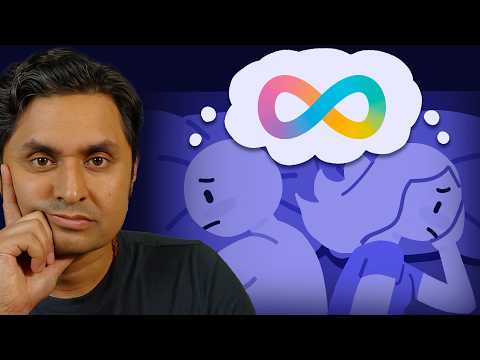
This article explores 10 behaviors adults commonly display when they lacked comfort as children. It explains co-regulation, the biological process of calming through connection, and how its absence leads to self-soothing behaviors such as silence when upset, repetitive actions, seeking warmth, altered relationships with food, difficulty crying around others, resistance to comfort, self-narration, private pain, overfunctioning as comforters, and feeling calm only when alone. Understanding these,
When a child is distressed, what calms them is not willpower but another person. A hand on the back, a voice that says, "I'm here," a body that holds still while theirs shakes. This process is called co-regulation.
Co-regulation is the biological process where a child's nervous system borrows calm from someone else's. It is not a luxury but the fundamental way a human being learns to settle. When a baby cries and a caregiver responds with presence, a steady heartbeat, a calm voice, and a warm hold, the baby's system learns that it can come down from distress without doing it alone. Over time, this teaches the child how to self-regulate. However, self-regulation is built on top of co-regulation; it is the sequel, not the starting point.
Imagine a child who never received this comfort—not because they were hated or hit, but because when they cried, no one came; when scared, no one held them; when falling apart, no one helped put the pieces back. The absence was quiet, and the child adapted by learning to comfort themselves alone with whatever they had: silence, warmth, food, repetition, control.
The world might see such a child as strong and resilient, praising their self-reliance. But this self-reliance is actually a wound wearing the clothes of maturity.
This article walks through 10 behaviors adults exhibit when they were never comforted as children, showing what these behaviors looked like then and what they have become now. Each habit started as a child's best attempt to do alone what two people were supposed to do together.
As a child, crying out loud brought no help—sometimes no response, sometimes being told to stop. Noise did not bring comfort, so the child stopped making noise. Now, as an adult, when something hurts, you don't call anyone or cry out loud. Instead, you go quiet, retreating into your own body to process pain internally. Others may think you are handling it, but you are surviving alone because your nervous system never learned that another person's voice could be part of the solution.
Without a caregiver's rhythm to borrow, the child created their own: rocking, twisting hair, rubbing thumbs together. This metronome was invented because nobody else provided one. As an adult, this manifests as scrolling for hours without absorbing anything, picking at skin, fidgeting, tapping, or organizing unnecessary things. These repetitive actions are the adult version of a child rocking themselves to sleep in a room where no one was coming. The rhythm is comfort, and the body still reaches for it when the world gets loud.
When human warmth was unavailable, the child found the next closest thing: a blanket pulled tight, a radiator pressed against, warm water. Physical heat mimicked the temperature of being held without requiring another person. Now, adults take long showers when stressed, hold hot mugs with both hands, or curl under heavy blankets even in summer. These are somatic stand-ins—your nervous system reaching for the sensation of co-regulation from objects because it never learned to receive it from people. The warmth is not a preference but a prosthetic for human touch.
Food became the one variable the child could control. When comfort from people was unreliable, the kitchen was consistent—a snack after a hard day or refusing to eat to control something when everything else felt unmanageable. Now, adults may eat past fullness when anxious, not because of hunger but because consuming creates a brief physical sense of being filled. Alternatively, they may lose appetite entirely when stressed, as the body shuts down intake to survive. The body learned early that comfort and consumption are linked and still runs that equation when things get hard.
Crying in the presence of others produced no change—the parent did not soften, arms did not open, and tears fell to silence, awkwardness, or commands to stop. The body received a clear signal: vulnerability in the presence of others produces nothing and worse, exposure without relief. Now, adults can cry alone—in the shower, car, or late at night—but when someone is watching, tears lock, the throat tightens, and eyes burn but won't release. This is not toughness but a learned association of audience with absence of response, leading to a refusal to be vulnerable in a room that does not trust.
Comfort either did not come, came late, came wrong, or was conditional. The system stopped expecting comfort and reclassified it as unfamiliar, then suspicious, and finally something to pull away from instinctively. Now, when a partner offers a hug or a friend offers to sit with you, your body tenses or urges you to refuse. This is not rejection but an immune response—your nervous system treating incoming care like an unrecognized substance.
No one narrated the child's pain or reassured them. So, the child built their own inner voice, becoming their own parent and narrator. This calm, steady internal presence says, "You've got this," coaching through anxiety and decisions. People call this self-awareness, but it is also the sound of a child who built their own parent out of words because the real one never showed up.
Sharing pain did not produce results; it was met with dismissal, change of subject, or silence. Gradually, the child stopped sharing pain, like stopping reaching for a hand that was never there. Now, adults go through breakups, losses, diagnoses, and grief silently. Others find out weeks later and ask why they were not told. The answer is too old and deep to explain quickly. Telling never made the pain smaller, so the body stopped bothering, riding the wave alone because that was what always worked.
Having never been comforted, the child studied comfort from the outside, learning to provide it to others. Giving comfort was the closest they could get to understanding what it felt like. Now, adults are the friend who holds space, the partner who knows what to say, the person who shows up with soup and steady presence. This generosity is genuine, but underneath is a quiet ache. Providing what was never given to oneself is a nervous system trying to close a loop it was never part of.
Without co-regulation, the body never learned that another person's presence could settle it. Instead, it learned that others are unpredictable and the only reliable path to calm is removing the variable entirely. Adults notice their shoulders drop when the last person leaves, breathing deepens when the house goes quiet, and muscles unclench in solitude in a way they never do in company. This is not introversion but a nervous system that only knows how to settle solo. The loneliest part is that one may deeply want to be soothed by someone, but the body does not know how to let it happen, choosing the solo route not because it rejects connection but because connection and calm were never wired together.
If these behaviors resonate, it is important to understand that the self-soothing built was not a flaw but a feat of engineering. A child alone without tools figured out how to calm a nervous system designed to be calmed by two. This workaround keeps one alive and functioning but does not keep one held.
At some point, the body that learned to settle alone starts to ache for what it was supposed to have from the beginning: someone else's calm offered freely, without conditions or earning it.
You do not have to unlearn self-soothing; you just have to learn that it was never supposed to be the only option. Co-regulation is not weakness but the original design.
Understanding these patterns can be the first step toward healing and learning to receive comfort as an adult, rewriting the nervous system's story to include connection and calm together.
This exploration sheds light on the innocent behaviors of people who raised themselves and the deep need underlying their self-reliance. Recognizing these patterns can foster compassion and guide the journey toward healthier emotional regulation and connection.